
Last updated November 17, 2026
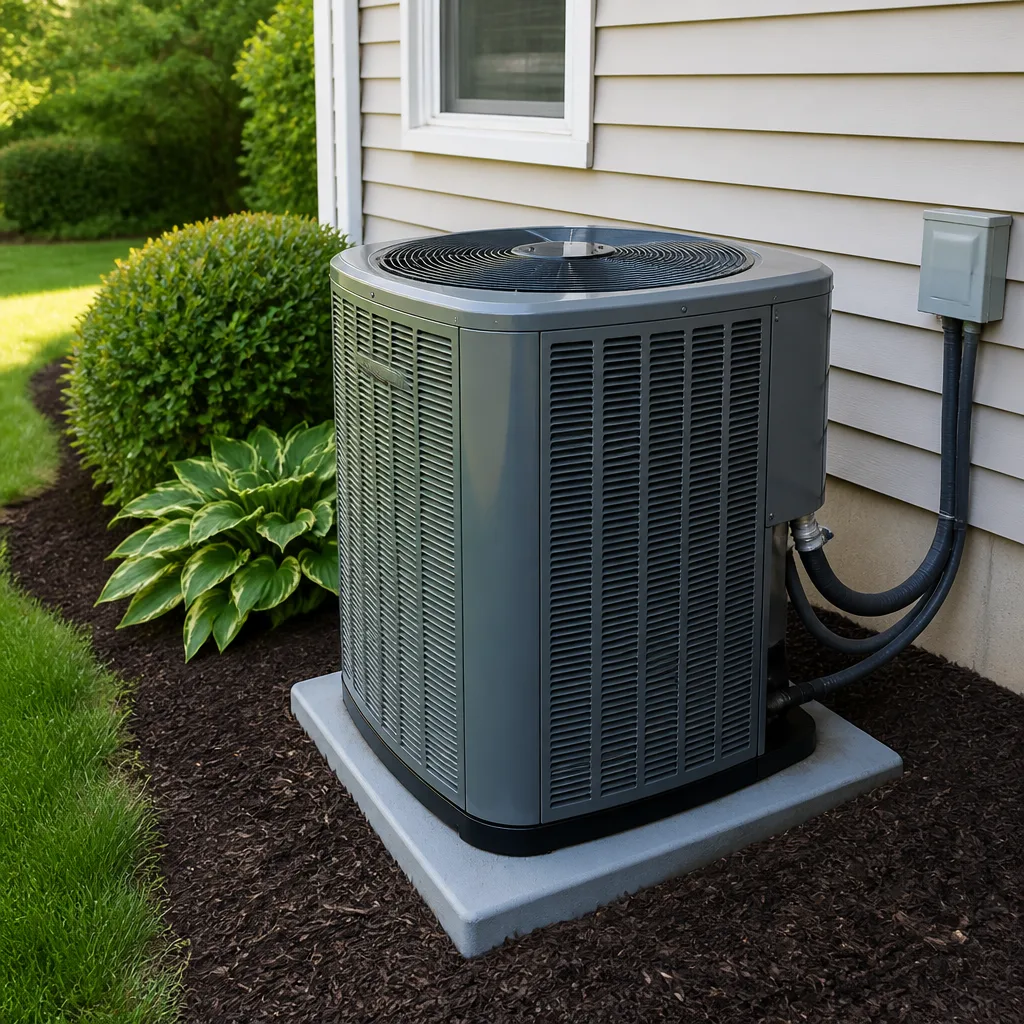 AC repair
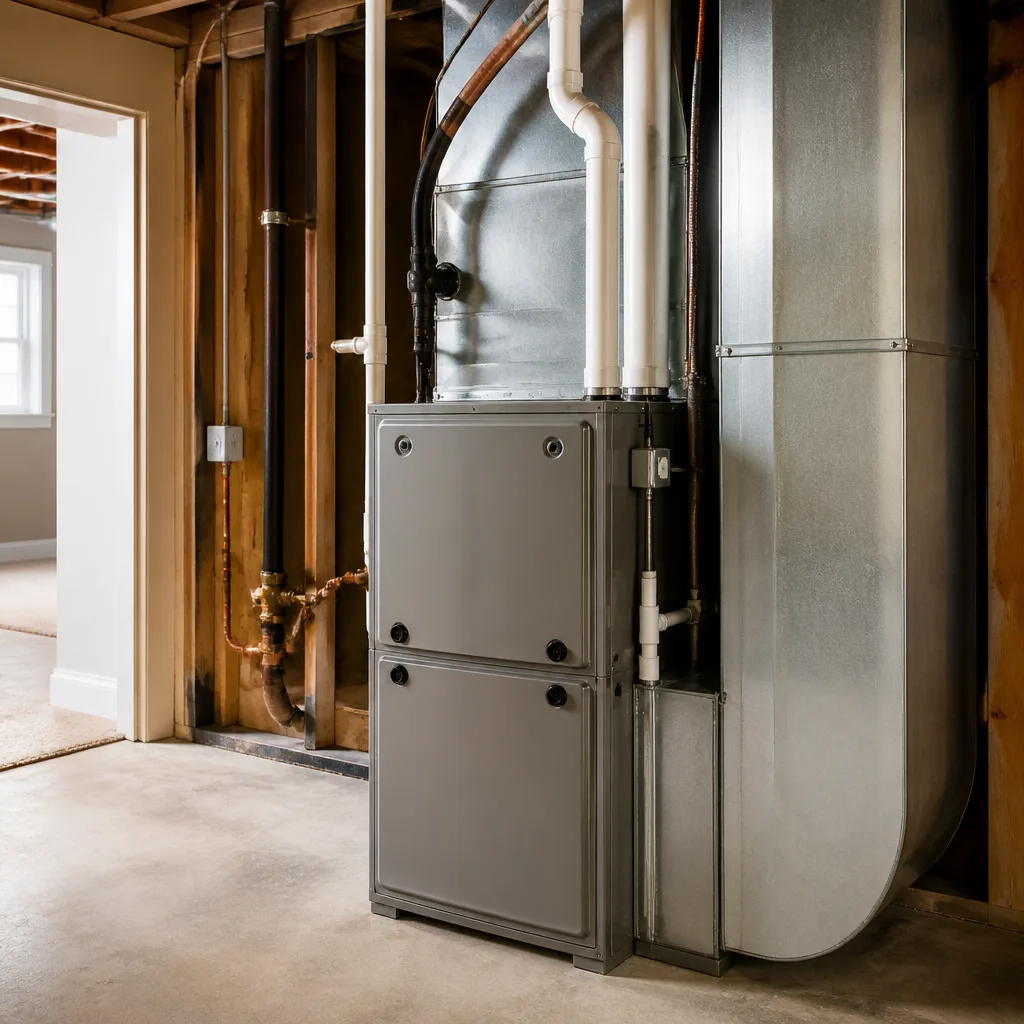 Furnace & heating
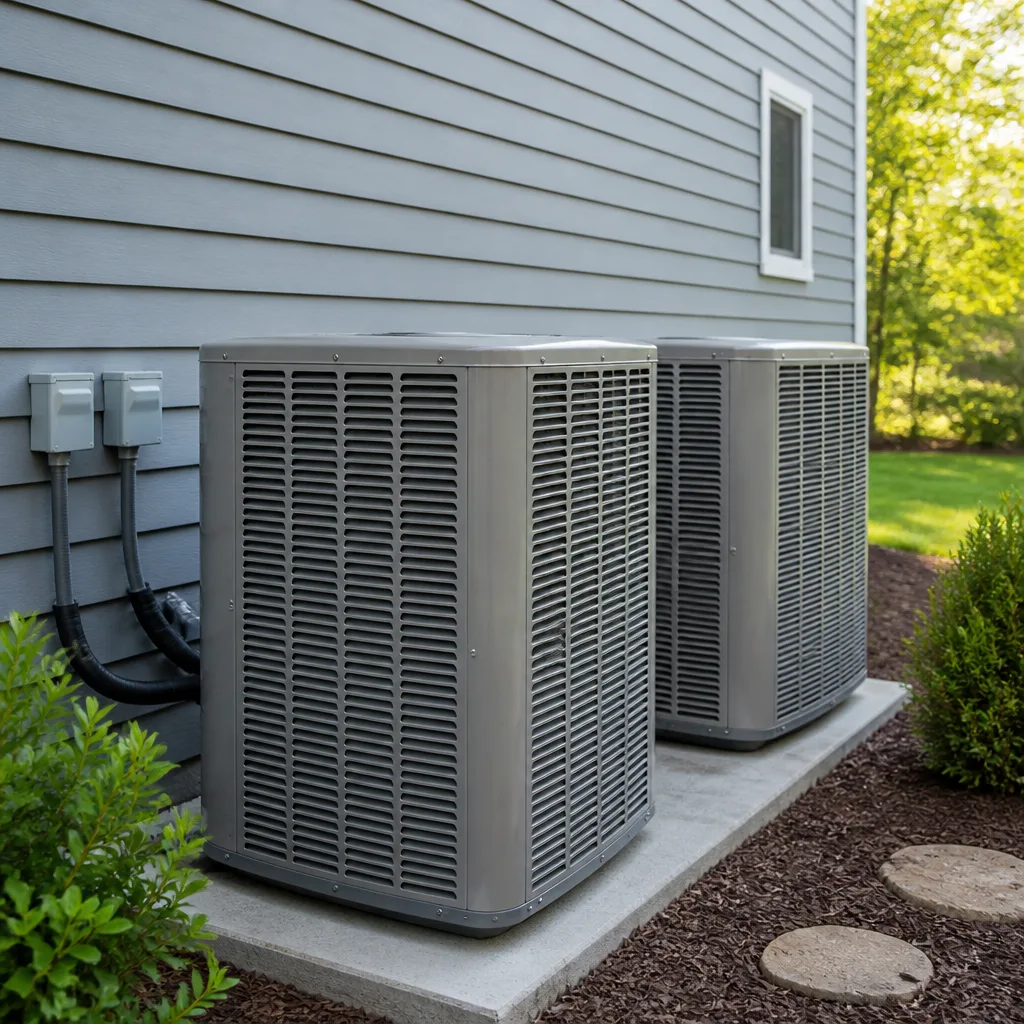 Heat pumps
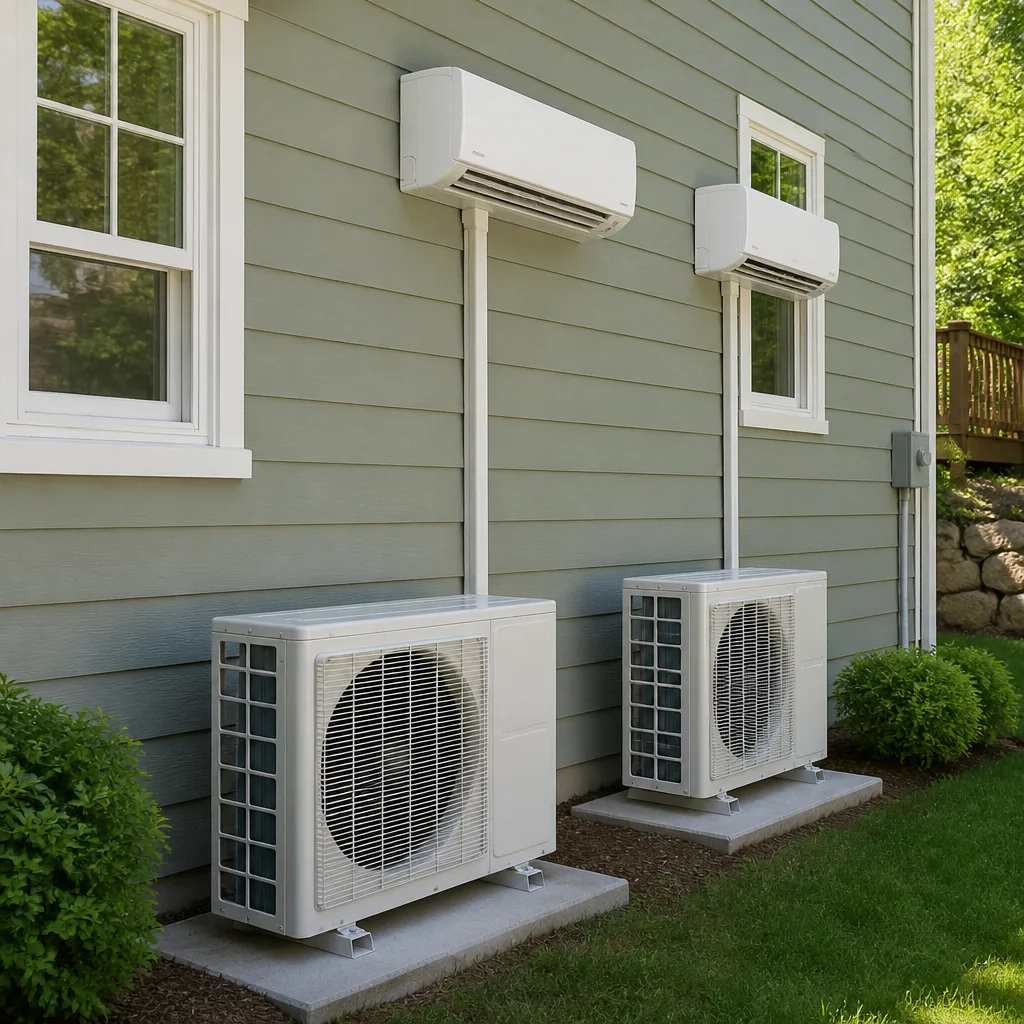 Ductless mini splits
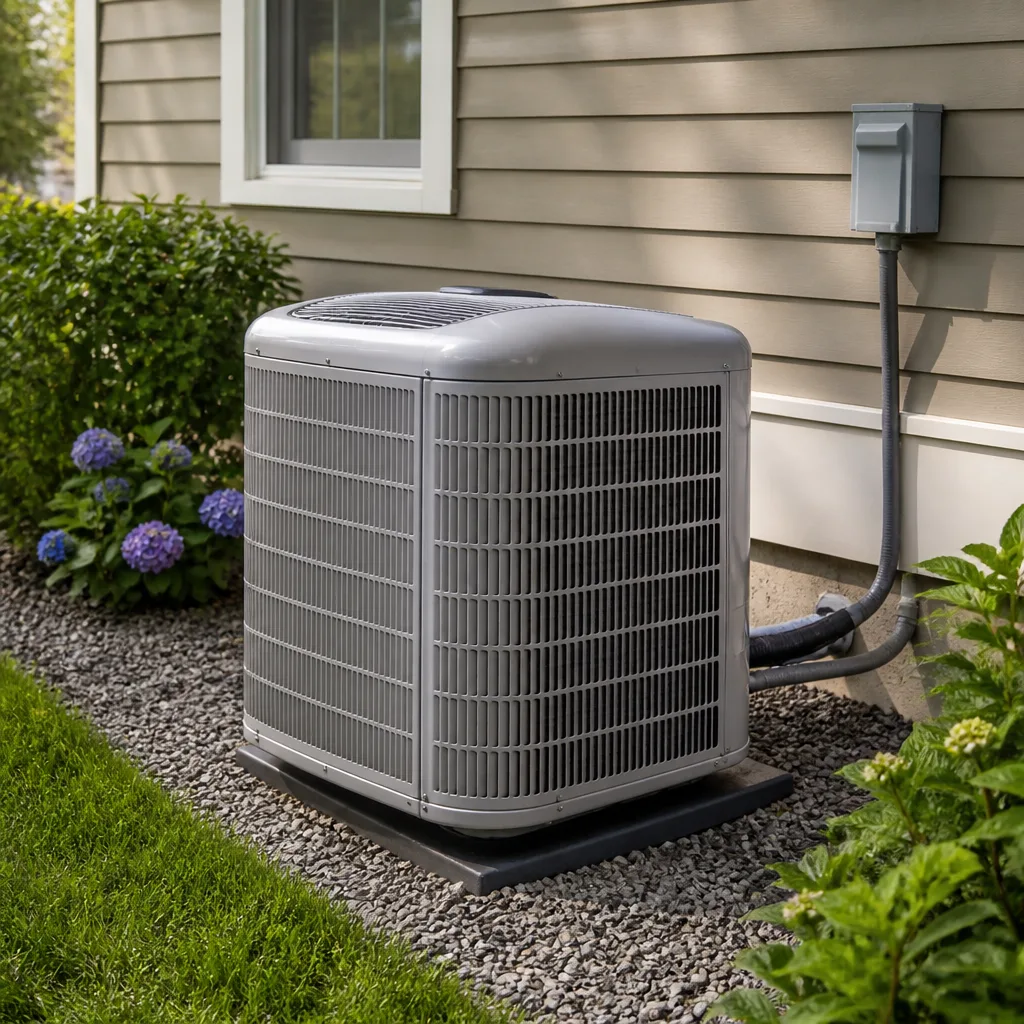 Carrier
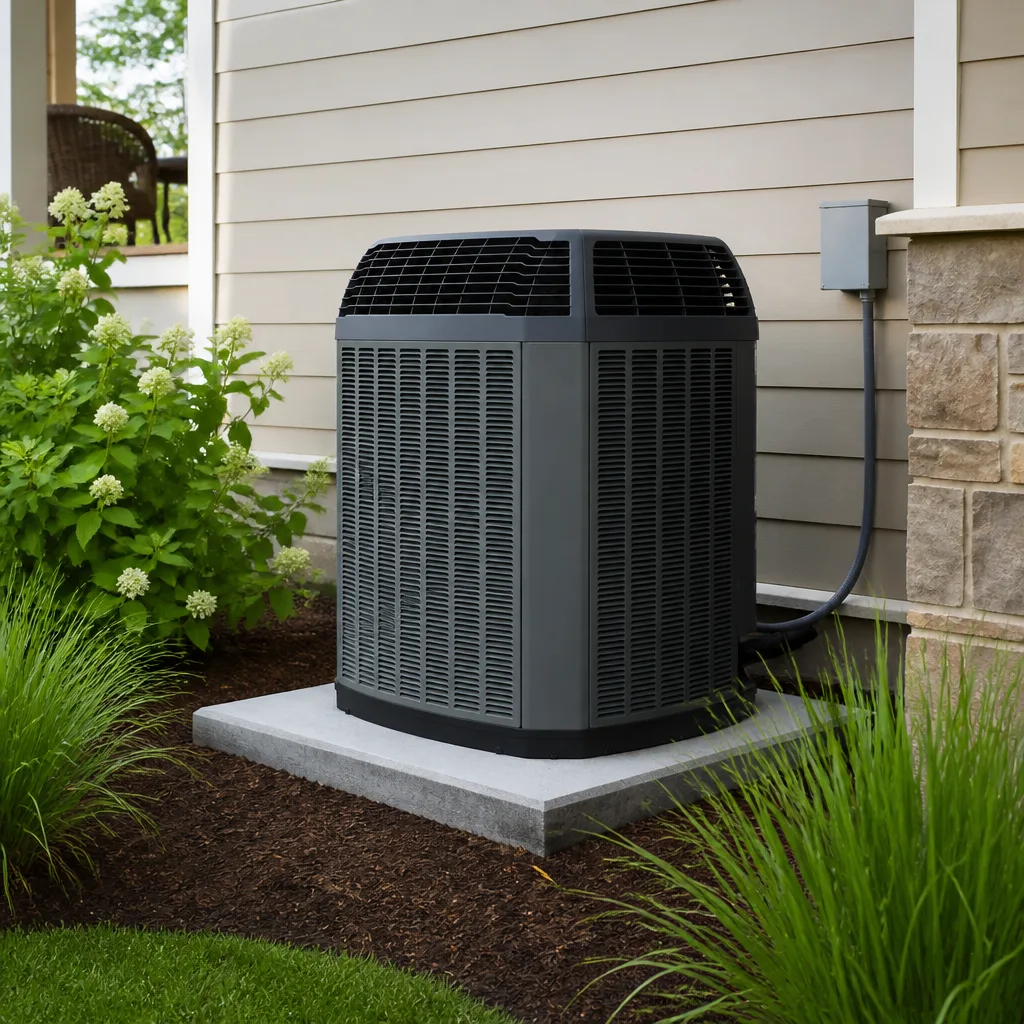 Trane
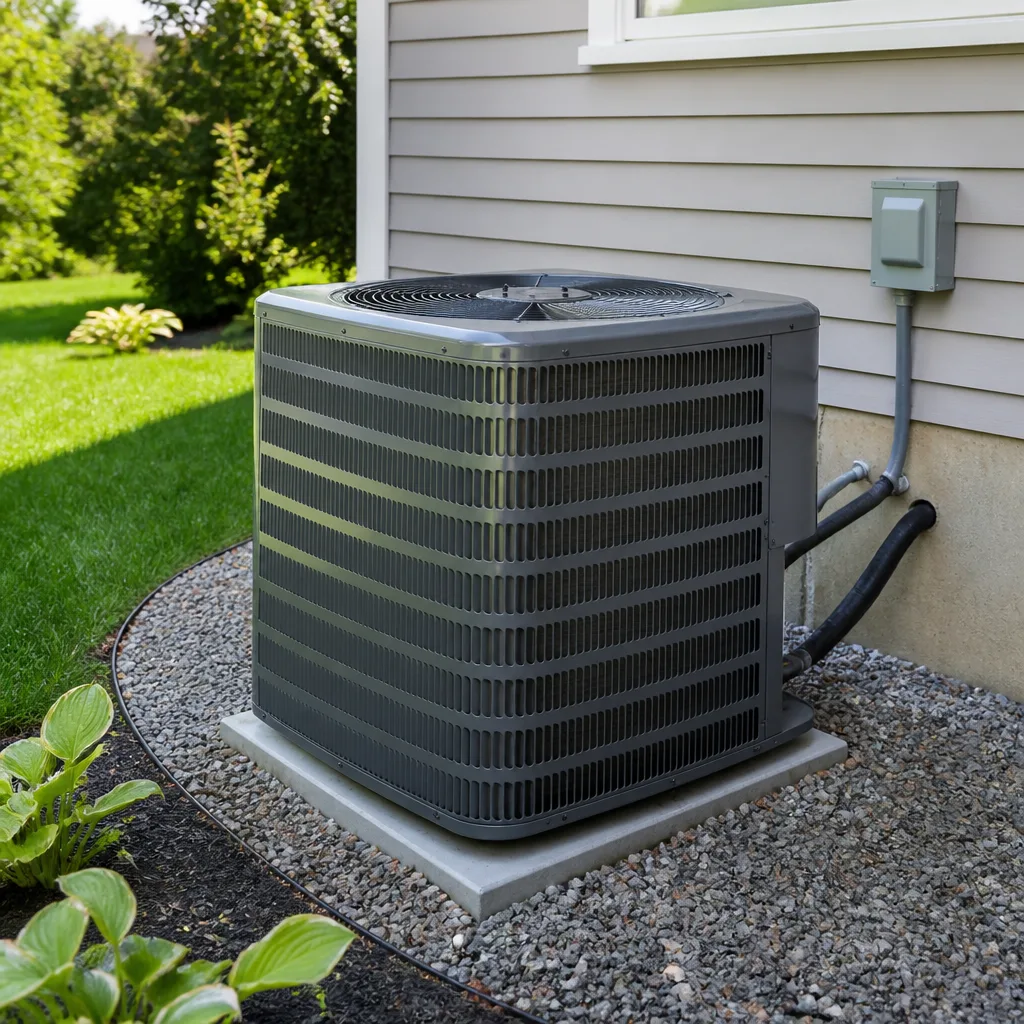 Goodman
Seasonal tune-up and full diagnostic on your Carrier, Trane, or Goodman system - readings shown to you before any repair is proposed
Diagnosis first, numbers second - you approve the repair price before a single part goes in.
Get your free estimateHow Long Does Furnace Repair Take? Timelines and What to Expect
Roughly nine out of ten furnace repair calls wrap up in under two hours. The remaining one in ten can stretch to three days if a part has to be ordered, and most HVAC companies won’t tell you which situation you’re in until a tech is already standing in your hallway. That gap between what you’re told when you book and what you find out at the door is where frustration lives. This guide fixes that. We’ll show you how to sort your furnace problem into one of three time buckets before anyone shows up, what “stocked truck” really means, and how to read a written estimate so a slow repair never turns into a surprise bill. If you’re in Sunrise Manor and your heat just quit, this is the page to read first.
Quick Answer
Most furnace repairs take 1 to 2 hours once the technician diagnoses the problem, and many common fixes (igniter, flame sensor, filter, thermostat, limit switch) are done the same day. Repairs involving a blower motor, control board, or inducer motor usually run 3 to 6 hours because the part may need a same-day supplier pickup. Anything touching the heat exchanger or an uncommon proprietary part can take several days while the part ships, so plan for a temporary heat source in the meantime.
Styles & brands we work with
- AC repair
- Furnace & heating
- Heat pumps
- Ductless mini splits
- Carrier
- Trane
- Goodman
Table of Contents
- The Three Time Buckets of Furnace Repair
- Bucket 1: Repairs That Finish in Under 2 Hours
- Bucket 2: The 3 to 6 Hour Repairs
- Bucket 3: Multi-Day Repairs and Part Waits
- What “Stocked Truck” Actually Means
- Why Diagnosis Takes 20 to 45 Minutes
- How the Written Estimate and Job Clock Work
- Furnace Repair Timelines in Sunrise Manor
The Three Time Buckets of Furnace Repair
Here’s the framing that makes “it depends” answerable. Every furnace repair falls into one of three buckets, and the bucket is set almost entirely by which part failed, not by how big your house is or how old the furnace is. Once you know the part, you know the bucket, and once you know the bucket, you know whether to clear a half-day or a full day at home.
We’ve seen this hold true across thousands of calls in the Sunrise Manor area and beyond. The part drives the timeline. Everything else is noise.
- Bucket 1 (under 2 hours): Igniter, flame sensor, filter, thermostat, limit switch. These parts are cheap, common, and usually on the truck. Same-day is realistic.
- Bucket 2 (3 to 6 hours): Blower motor, control board, inducer motor. The part may be on the truck, or it may need a same-day pickup from a local supplier. You’ll likely still get heat back today.
- Bucket 3 (multi-day): Heat exchanger, uncommon proprietary parts, anything that requires a permit and inspection. Plan for a temporary heat source.
The bucket system isn’t perfect. A tech sometimes opens a panel and finds a second problem hiding behind the first. But for the vast majority of calls, knowing the failed part tells you the timeline within a couple of hours. That’s a real answer, and it’s the one most companies skip because it takes two minutes to explain on the phone. See our full Furnace Repair in Sunrise Manor page for what we cover on a standard visit.
Bucket 1: Repairs That Finish in Under 2 Hours
This is the good news bucket, and it covers most of what we see. A furnace that won’t light, or lights and shuts off within a minute, or blows cold air, usually has one of these common failures. The part is in the truck, the swap is quick, and you’re back to warm air before lunch.
Here’s how the visit typically runs:
- Book and get a live arrival time. You’ll see when your tech is coming and can track them to the door. No four-hour window, no waiting by the window.
- Diagnosis (20 to 45 minutes). The tech checks the thermostat call, ignition sequence, flame sensor reading, and airflow. This is the part that matters most, and we’ll explain why further down.
- Written price before any work starts. You see the part and labor in writing and approve it before a tool touches the furnace.
- The repair. Igniter swap takes 15 to 30 minutes. Flame sensor cleaning takes about 10. Thermostat replacement is 30 to 45. Filter change is minutes.
- Test and confirm. The tech runs a full heat cycle to confirm the fix, then shows you before-and-after photos.
Cost-wise, most Bucket 1 repairs land between $150 and $350 depending on the part. In Sunrise Manor specifically, we see a lot of failed hot-surface igniters and dirty flame sensors because the desert dust gets pulled into the burn chamber over time. If your furnace clicks, tries to light, and gives up, that pair is the first place we look.
Bucket 2: The 3 to 6 Hour Repairs
Mid-tier repairs take longer for two reasons: the part is more expensive and less likely to be carried on every truck, and the install itself takes more time. A blower motor pulls the whole air handler apart. A control board swap means labeling every connector before the old one comes out. An inducer motor (the small fan that pushes exhaust out the flue) sits in a tight spot and takes real hands to get at.
What this looks like from your side of the door:
- Diagnosis first, as always. 20 to 45 minutes.
- Part check. The tech checks the truck. If it’s not there, they call a local supplier for same-day pickup. Most Phoenix-area suppliers in reach of Sunrise Manor keep these motors and boards in stock.
- Pickup run. 45 to 90 minutes round-trip, depending on traffic and supplier stock.
- Install and test. 1 to 2 hours for a blower motor, less for a control board.
For a blower motor, expect $400 to $700 installed depending on the motor type (PSC vs. ECM) and brand. Control boards on a Bryant or American Standard furnace usually land between $350 and $650. The good news: you’re still getting heat back the same day in most cases. The catch is you’ll want to be home for a full afternoon, not just an hour.
While the tech is out, it’s worth asking whether your system is due for a service call. Our AC Repair in Sunrise Manor guide covers the summer-side equivalent, and the same logic about parts and timelines applies.
Bucket 3: Multi-Day Repairs and Part Waits
This is the 10 percent, and it’s the reason a straight answer at booking time matters so much. Multi-day repairs happen for three reasons:
- Heat exchanger failure. A cracked heat exchanger is a safety issue, not just a comfort problem. The part is expensive, sometimes discontinued, and replacement often takes a day or two to source. Critically, we never leave a furnace running with a failed heat exchanger, because it can leak carbon monoxide into your home.
- Uncommon proprietary parts. Some brands use parts that only the manufacturer stocks. If your furnace uses a proprietary control module, it ships from a warehouse, and shipping takes 1 to 3 business days.
- Permits and inspection. Any repair that requires a permit (full heat exchanger replacement in some jurisdictions, combustion air changes, flue modifications) adds inspection scheduling time on top of the repair itself.
If you’re in Bucket 3, here’s what a reputable company should do for you, and here’s what we do:
- Tell you immediately. Not on day two. The moment the tech confirms a multi-day part, you get the news plus the estimated arrival date in writing.
- Offer temporary heat. We’ll bring in space heaters or set you up with a safe, temporary option so your pipes don’t freeze and your family stays warm. In Sunrise Manor, overnight lows in winter can dip into the 30s, so this isn’t a luxury.
- Send updates you can track. You get status updates on the part and the scheduled return visit. No phone-tag, no calling us to ask.
- Lock the price. The written price you approved stands. If the part takes longer to arrive, that’s our problem, not a reason to add line items.
If you’re weighing a heat exchanger repair against a new system altogether, our team is happy to walk through both options in writing. Our AC Installation in Sunrise Manor page has a parallel breakdown for the cooling side.
What “Stocked Truck” Actually Means
When a company says “stocked truck,” they usually mean it in the marketing sense, not the literal one. The question to ask when you book is simple: which parts do you carry on every vehicle, and which do you have to go get? Here’s the honest answer for a well-run HVAC operation.
Carried on every truck (Bucket 1 parts):
- Hot-surface igniters (multiple sizes)
- Flame sensors
- Limit switches and rollout switches
- Standard thermostats
- Filters in common sizes
- Wire, connectors, tape, sealants
Sometimes stocked, sometimes picked up (Bucket 2 parts):
- Blower motors (popular models yes, uncommon yes-only-if-lucky)
- Control boards (brand-dependent)
- Inducer motors
- Gas valves
Almost never stocked (Bucket 3 parts):
- Heat exchangers
- Proprietary manufacturer modules
- Anything for a discontinued model
When a company tells you upfront that they’re sure they have the part on the truck, that’s a good sign. When they promise the same-day fix for any furnace issue over the phone without knowing what’s wrong, that’s a sales tactic. We’d rather tell you the honest range and narrow it once the tech diagnoses. For a whole-house view of what we service, see the Halden Heating & Air Sunrise Manor home page.
Why Diagnosis Takes 20 to 45 Minutes
Homeowners who push to skip the diagnostic step, “just swap the igniter, it’s always the igniter,” often end up paying for the wrong part. A good technician spends 20 to 45 minutes on diagnosis before touching a component, and that time is what stops you from throwing money at guesses.
Here’s what happens during that window:
- Thermostat and power check. Confirm the heat call is reaching the furnace. Roughly 5 minutes, and it catches a surprising number of “dead furnace” calls that are actually dead thermostats or tripped breakers.
- Ignition sequence observation. Watch the furnace run through its light-up cycle and note where it fails. This is where most of the answer lives.
- Component testing with a meter. Flame sensor microamps, igniter resistance, limit switch continuity, inducer pressure. This is the technical part, and it’s why a licensed tech matters.
- Airflow and filter inspection. A clogged filter can look like a blower failure and a limit-switch failure at the same time. It’s cheap to rule out.
- Heat exchanger visual inspection. A safety step we never skip. See the safety note below.
- Written estimate. Diagnosis in, parts and labor out, in writing, before you approve anything.
When a company quotes the repair before diagnosis, they’re guessing. Guessing is fast, and it’s also how homeowners end up with a $300 part swap that doesn’t fix the problem. Pay for the 30-minute diagnosis once and get the right part on the first try.
How the Written Estimate and Job Clock Work
The single best protection against a “this is taking longer than expected” surprise is a locked written price. Here’s how that works, and what to look for in any company’s process.
Before work starts: You get a written price that covers the diagnosis, the part, and the labor as one number. It’s not an estimate. It’s what you’ll pay if the diagnosis holds. You approve it before a tool is lifted.
During the repair: The job clock runs from the moment the tech starts the fix, not from the moment they parked. If the repair takes longer than we expected, that’s on us. The written price doesn’t change because a bolt was rusted on or a panel took ten extra minutes to open.
If we find a second problem: The tech stops, shows you the finding (photos, meter readings, the part), delivers a second written price for the additional work, and you decide. Two written prices, both approved before any work, is a lot better than one estimate that grew at the door.
The guarantee: Every repair comes with a written guarantee. If the repair fails within the coverage window, we come back at no charge, and there’s no arguing about it because the guarantee is in writing. Our 365-Day Done Right Promise covers a full year of accountability on every completed job.
That’s the model. If a company shows up and quotes numbers off the top of their head, that’s the signal to slow down and ask for it in writing. For an example of this in the AC world, read our AC Installation in Sunrise Manor piece on how locked pricing works for install jobs.
Furnace Repair Timelines in Sunrise Manor
Sunrise Manor has a specific profile that shapes furnace repair timelines in ways you won’t read about in a generic guide. We see it on calls in the neighborhood week after week, and if you know it going in, you can ask sharper questions when you book.
Dust and airflow. The desert dust around Sunrise Manor loads furnace filters faster than in most of the country. A filter that would last three months in a humid climate can be done in six to eight weeks here. That filter loads the blower, trips limit switches, and gets misdiagnosed as a blower motor failure. We always check filtration before recommending a motor. It’s the most common false alarm in the area.
Short, mild heating season. Sunrise Manor’s winters are mild enough that many homeowners run the heat for only a handful of weeks. That means a cracked igniter or weak sensor can sit undiscovered from one winter to the next, then fail right when you need heat. Our advice: have the furnace checked before the first cold snap, not during it. The wait for parts is shorter in October than in January.
Older housing stock. Many Sunrise Manor homes have furnaces 15 to 20 years old. Parts for older York and Bryant models are common enough to source quickly, but parts for less common 1990s and early-2000s systems can push you into Bucket 3. Before the tech arrives, check the model serial plate on the furnace door and mention the model number when you book. That single step can save a day of waiting.
Safety note on heat exchangers. Any time a furnace is over 12 years old or has visible rust on the burners, our techs check the heat exchanger for cracks. A cracked heat exchanger can leak carbon monoxide into your living space, and that’s a genuine hazard. We’ll never walk you through a heat exchanger replacement as a DIY project, because the work involves gas lines, combustion testing, and flue integrity. If yours is cracked, a trained professional handles it, period. When we find one, we shut the furnace down, explain exactly what we found (with photos), and give you written options for repair or replacement.
Common Mistakes to Avoid
- Booking without a specific time window. A four-hour window means you’re pinned to your house for half a day. Ask for a live arrival time and tracking. You shouldn’t have to choose between a repair and your afternoon.
- Approving a repair before diagnosis is complete. If the company quotes a part over the phone before the tech has tested anything, you’re paying for a guess. Insist on the 20 to 45 minute diagnostic window.
- Skipping the model number when you book. In Sunrise Manor, the housing stock includes a lot of older systems, and the model number on the furnace door tells the dispatcher whether your likely part is stocked or needs ordering. It takes ten seconds and often saves a day.
- Assuming “stocked truck” means everything is stocked. Every company carries igniters and sensors. Almost no company carries heat exchangers. If you’re told otherwise, that’s a sales line.
- Letting the tech skip the heat exchanger check. This is a safety step, not an upsell. In older Sunrise Manor homes, it’s the most important five minutes of the visit.
- Changing filters by the calendar, not by inspection. Desert dust loads filters faster than the package says. Check the filter monthly in the heating season and replace it when it’s actually dirty, not when the box says to.
- Choosing the cheapest quote without asking about the guarantee. A cheap repair with no written guarantee is no bargain. Ours is included on every job, free second visit and all, and it’s the reason our price is worth comparing rather than just matching.
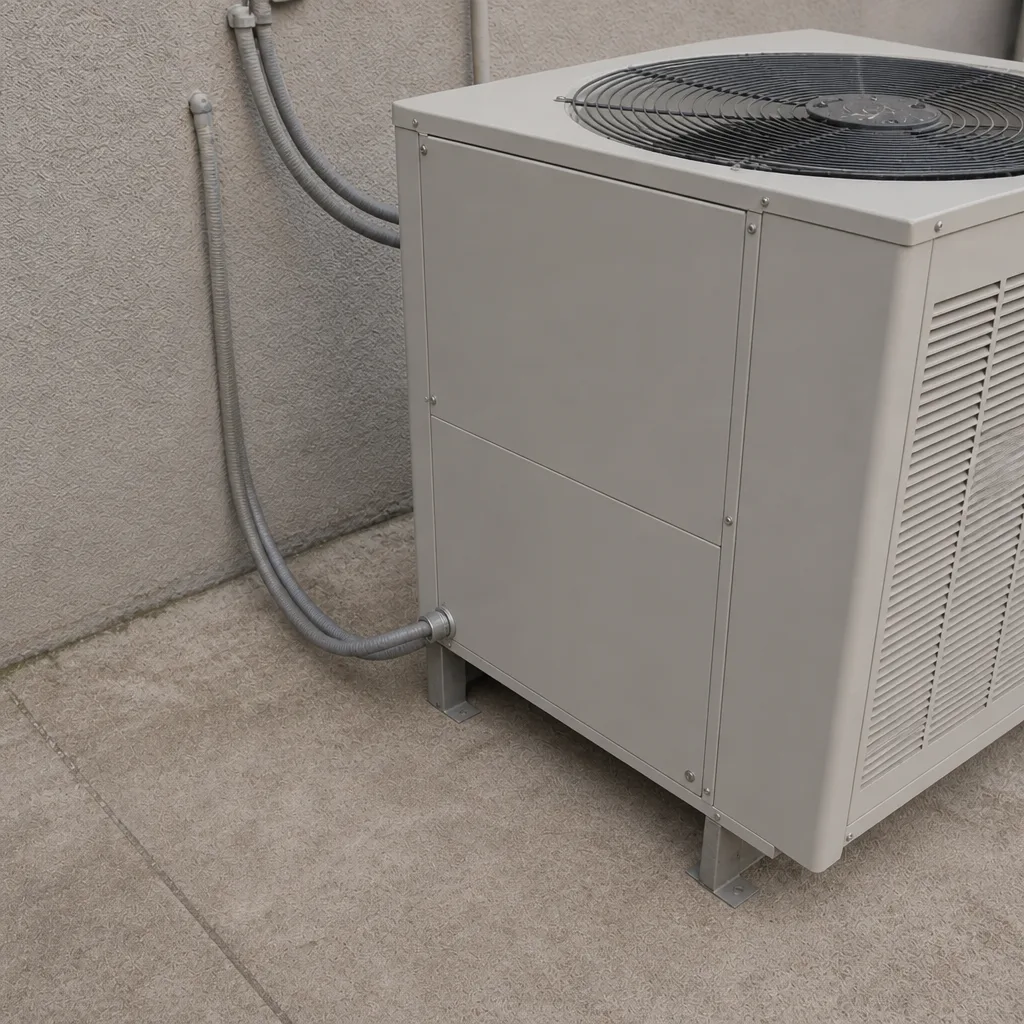
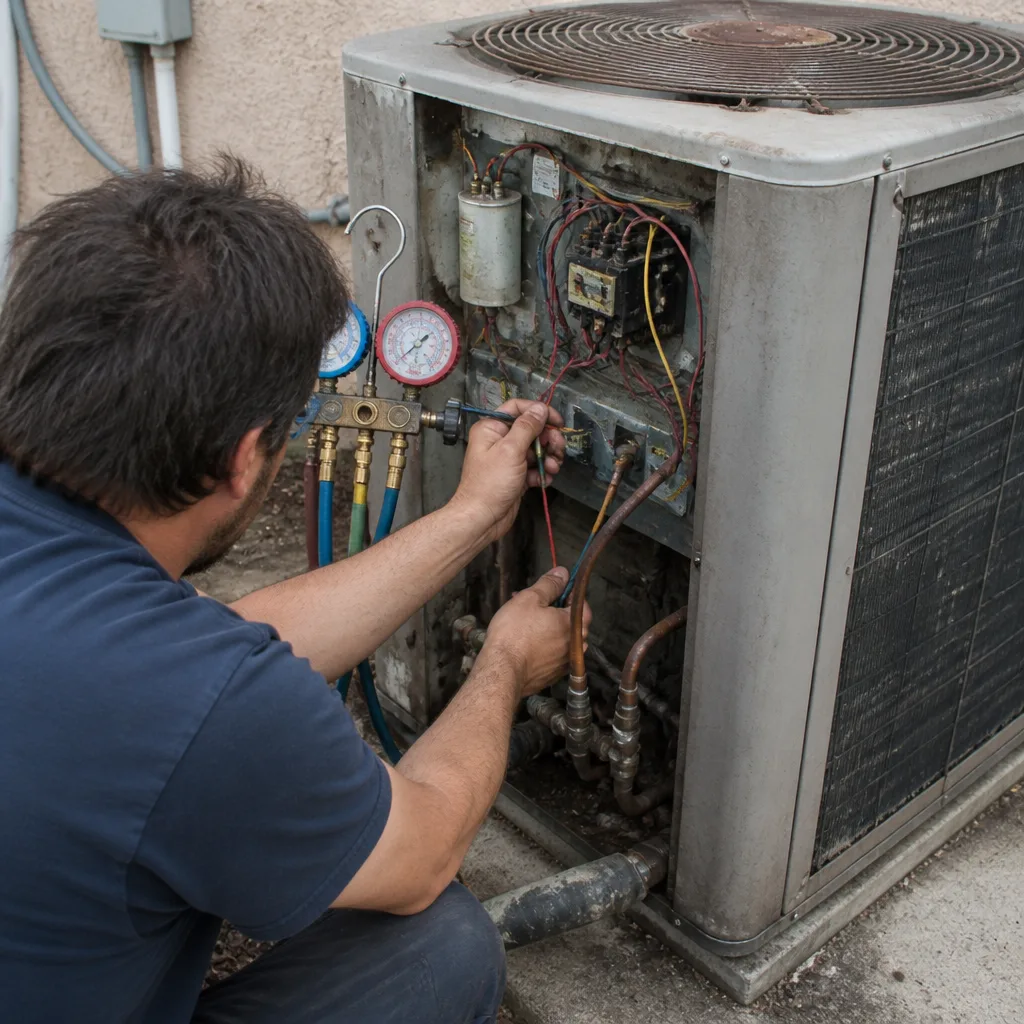
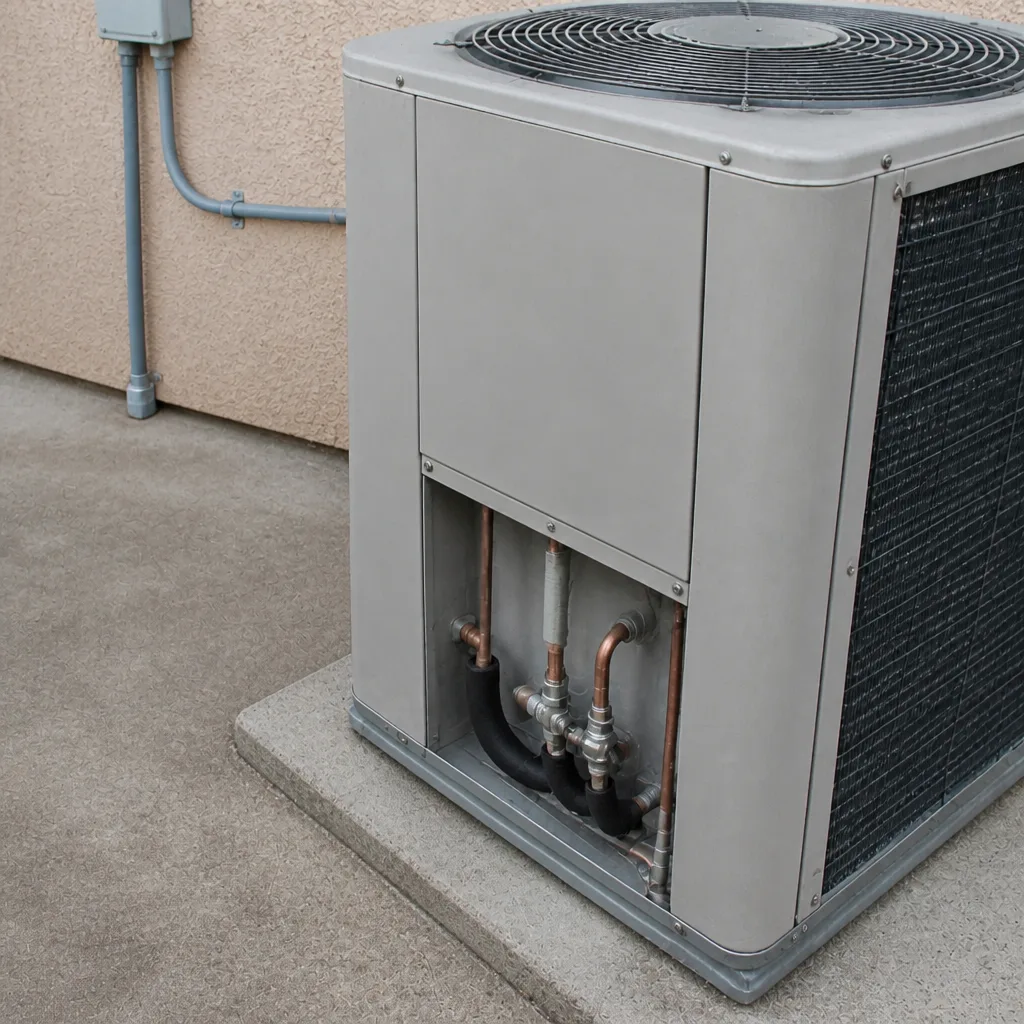
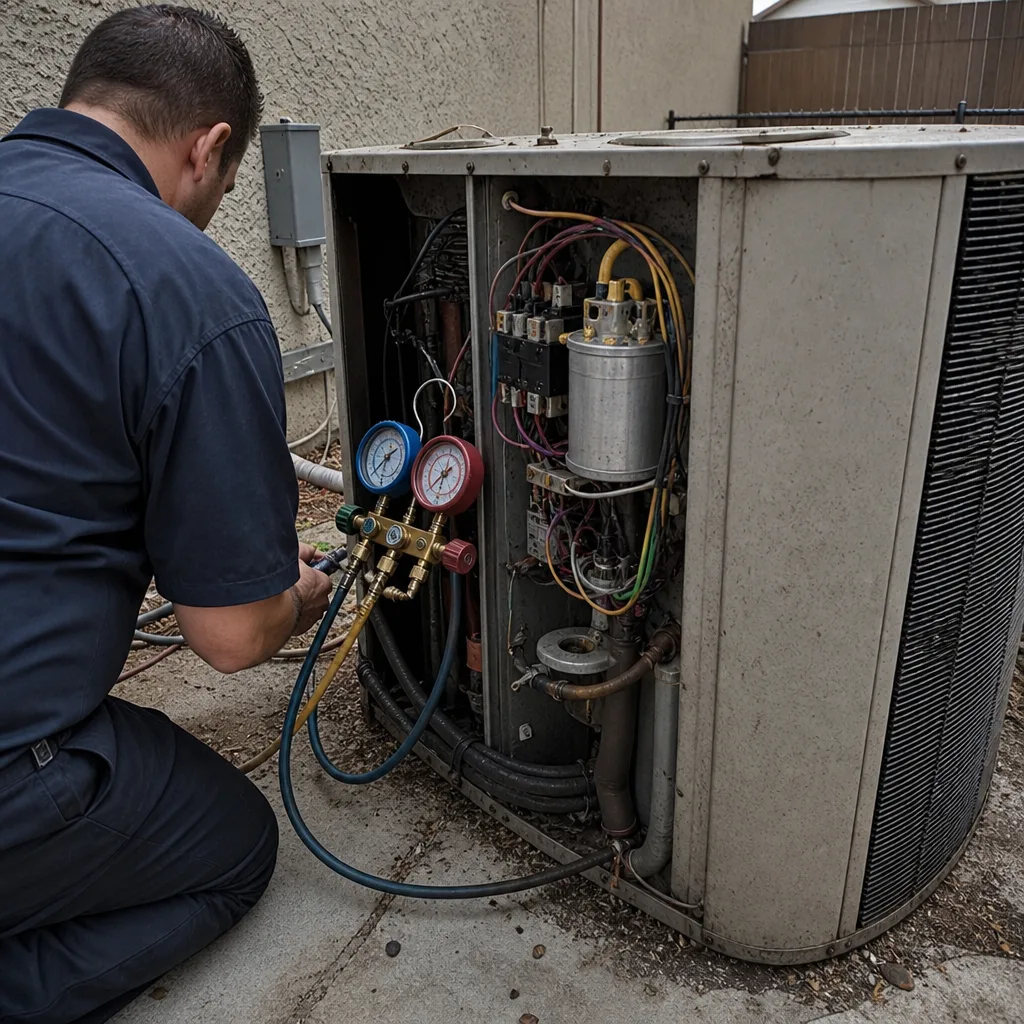
See the difference
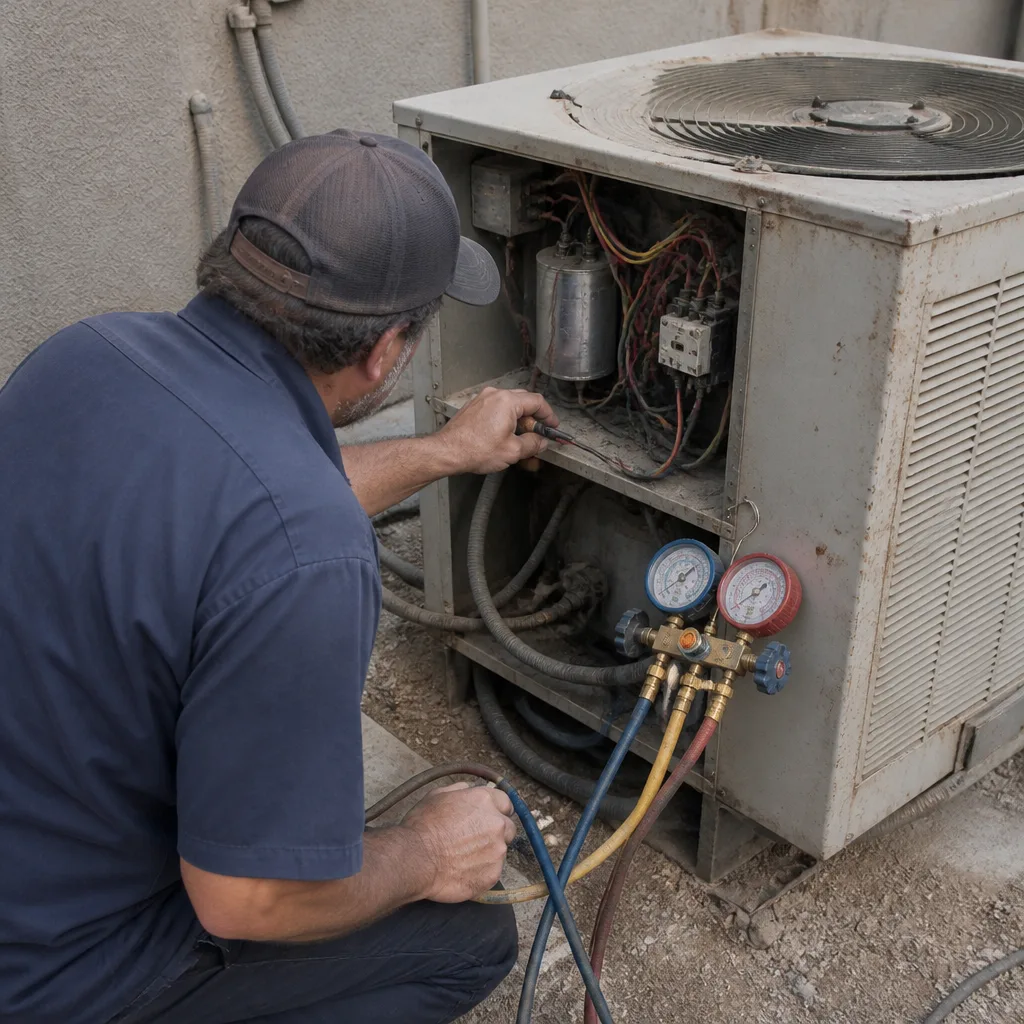 Before
 After
 Before
 After
 Before
 After
When to Call a Professional
Call a professional the moment you smell gas, hear a rhythmic clicking combined with a gas smell, see soot on the furnace cabinet, or find a yellow (rather than blue) burner flame. Those are carbon monoxide and combustion failure signals, and they’re not a “wait and see” situation. Call a professional if your furnace won’t light after two reset attempts, if it runs for one minute and shuts off repeatedly, if the blower runs continuously, or if your heat exchanger is due for inspection and the system is over 12 years old. And call before the first cold snap if you can, not during it, because parts availability and scheduling are both better in the shoulder season. Halden Heating & Air Sunrise Manor offers free estimates in Sunrise Manor. Call (833) 892-8106 and get a written price before any work starts.
Frequently Asked Questions
Most furnace repairs take 1 to 2 hours once the technician diagnoses the issue, and common fixes like igniter, flame sensor, filter, thermostat, or limit switch are usually done the same day. Mid-tier repairs (blower motor, control board, inducer motor) run 3 to 6 hours because the part may need a same-day supplier pickup. If you’re in Sunrise Manor and want an exact window, call (833) 892-8106, and a live person will help you sort it into a bucket before you book.
Yes for most problems. If your furnace issue falls in the under-2-hour or 3-to-6-hour bucket, we can usually get you heat back the same day, and you’ll get a live arrival time you can track. The exception is a heat exchanger failure or an uncommon part that has to ship, which takes multiple days. We’ll tell you which bucket you’re in before the tech arrives, not after. Call (833) 892-8106 for a free estimate.
It means the technician carries common parts on every visit: igniters, flame sensors, limit switches, thermostats, filters, gas valves, and basic supplies. It usually does not mean they carry blower motors, control boards, or heat exchangers, because those are expensive and brand-specific. When you book, ask which parts the company carries vs. which they need to pick up. That one question tells you whether your repair is a same-day job or a multi-day one.
Repair when the part is in the under-2-hour or 3-to-6-hour bucket and the furnace is under about 15 years old with no history of heat exchanger problems. Replace when the heat exchanger is cracked (a safety issue), when the repair costs more than half the price of a new system, or when the furnace is over 20 years old and you’re facing a second major repair. In Sunrise Manor, our team will write up both options in the same visit with clear pricing so you can decide without pressure. Call (833) 892-8106 for a free estimate.
Use space heaters in the rooms you’re occupying, keep cabinet doors open under sinks on exterior walls to protect pipes from freezing, and keep the furnace off until the repair is done. A reputable company will offer temporary heat options during a multi-day part wait. Our techs bring temporary heating equipment on multi-day jobs and send you tracked updates on the part and the return visit. If you booked with a company that left you without a plan, call (833) 892-8106.
Not meaningfully. Common repairs run $150 to $350, mid-tier parts run $350 to $700, and heat exchanger work runs higher because of the part cost and labor. The main local factor is dust: filters load faster here, so tune-ups and filter changes happen more often than the national average. That’s the whole local cost story. Our prices are written and locked before work begins. Call (833) 892-8106 for a free estimate.
The Bottom Line
Furnace repair timelines aren’t a mystery once you know the bucket system. Common fixes (igniter, flame sensor, filter, thermostat, limit switch) finish in under two hours and are usually same-day. Mid-tier repairs (blower motor, control board, inducer motor) take 3 to 6 hours and are still often same-day. Heat exchangers, proprietary parts, and permit-required work take multiple days. The single best thing you can do is ask which parts are stocked before you book, insist on the 20 to 45 minute diagnostic, and get a written price before work starts. That combination gives you a predictable visit and a locked bill. In Sunrise Manor, the dust loads filters fast and the housing stock skews older, so those two facts are worth mentioning when you book.
If your furnace is acting up and you’re in Sunrise Manor, we’re ready when you are. Book online and track your tech to the door, or call (833) 892-8106 for a free estimate. Our live phone line is answered 24 hours a day, 7 days a week, by a real person, and every job comes with a written price before any work starts and a 365-Day Done Right Promise behind it.
Written by the team at Halden Heating & Air Sunrise Manor.