
Last updated November 17, 2026
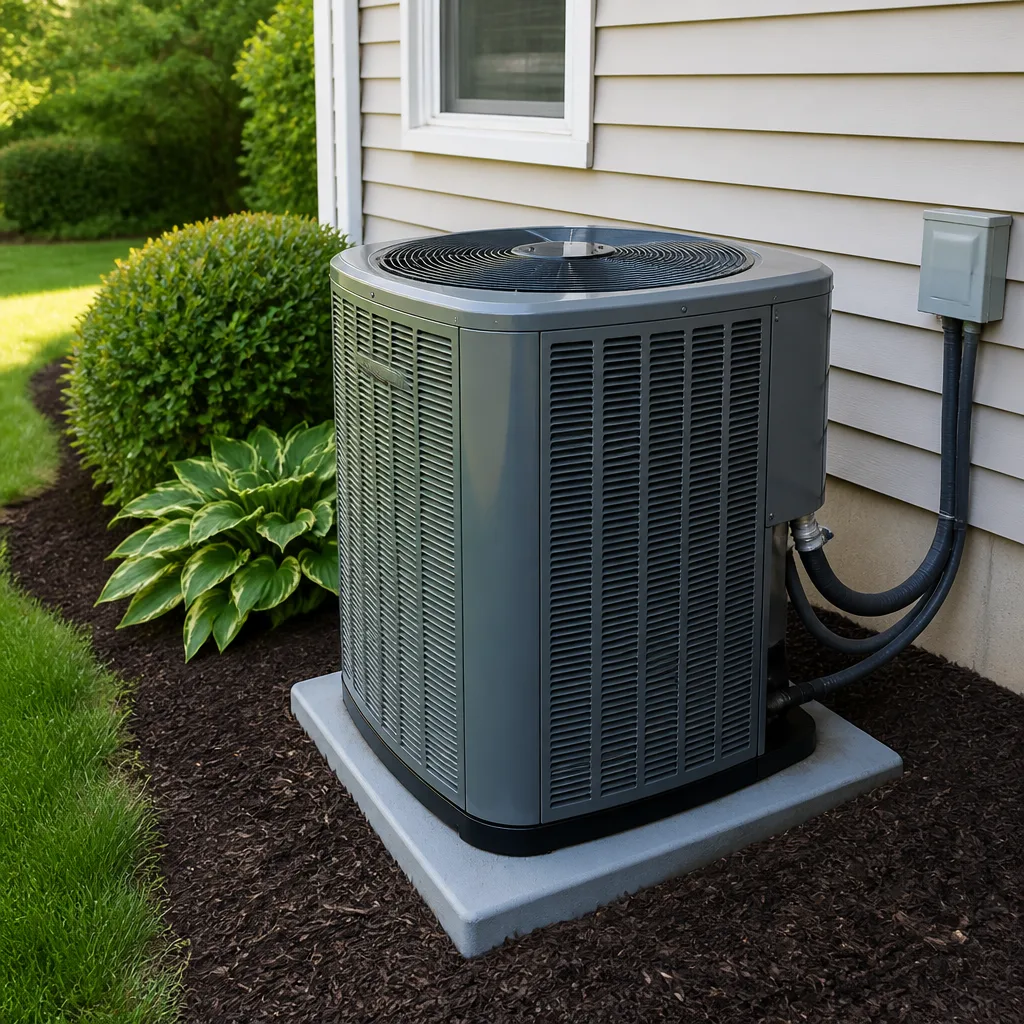 AC repair
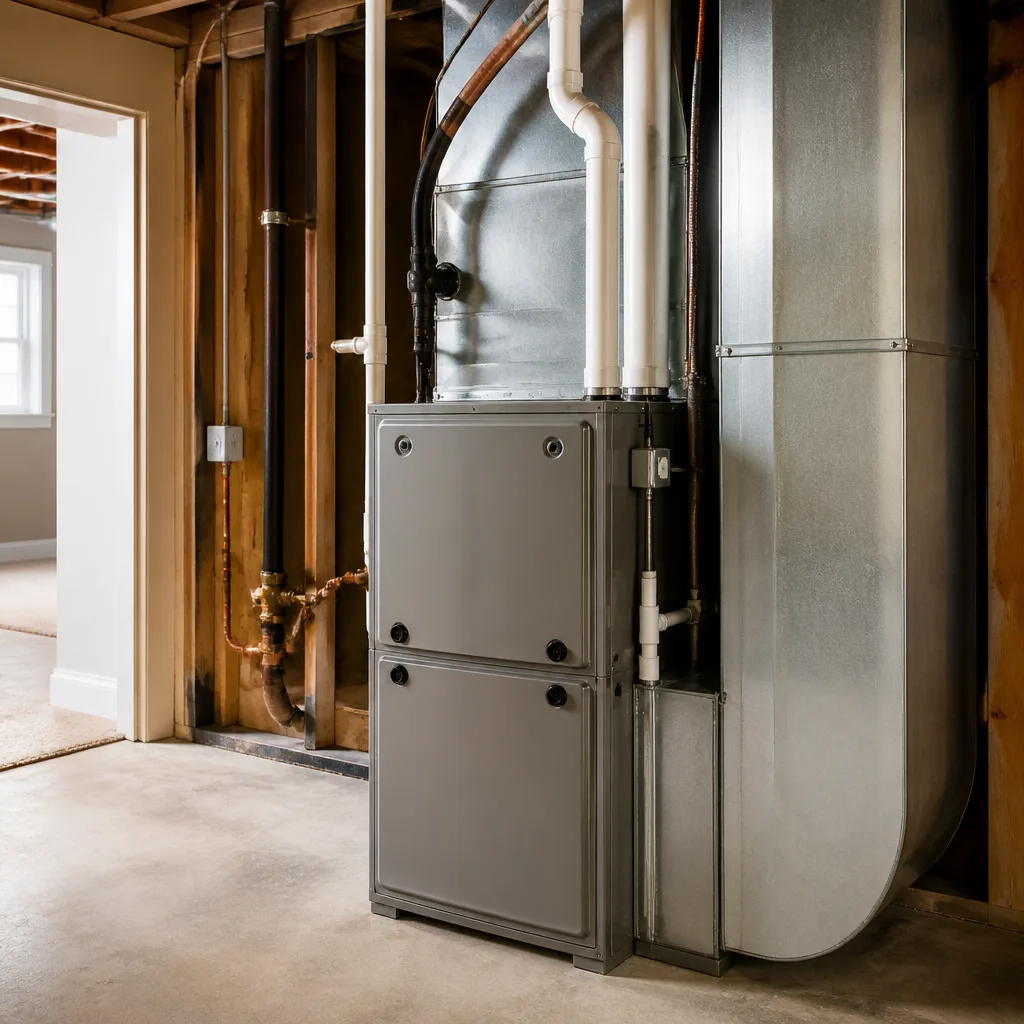 Furnace & heating
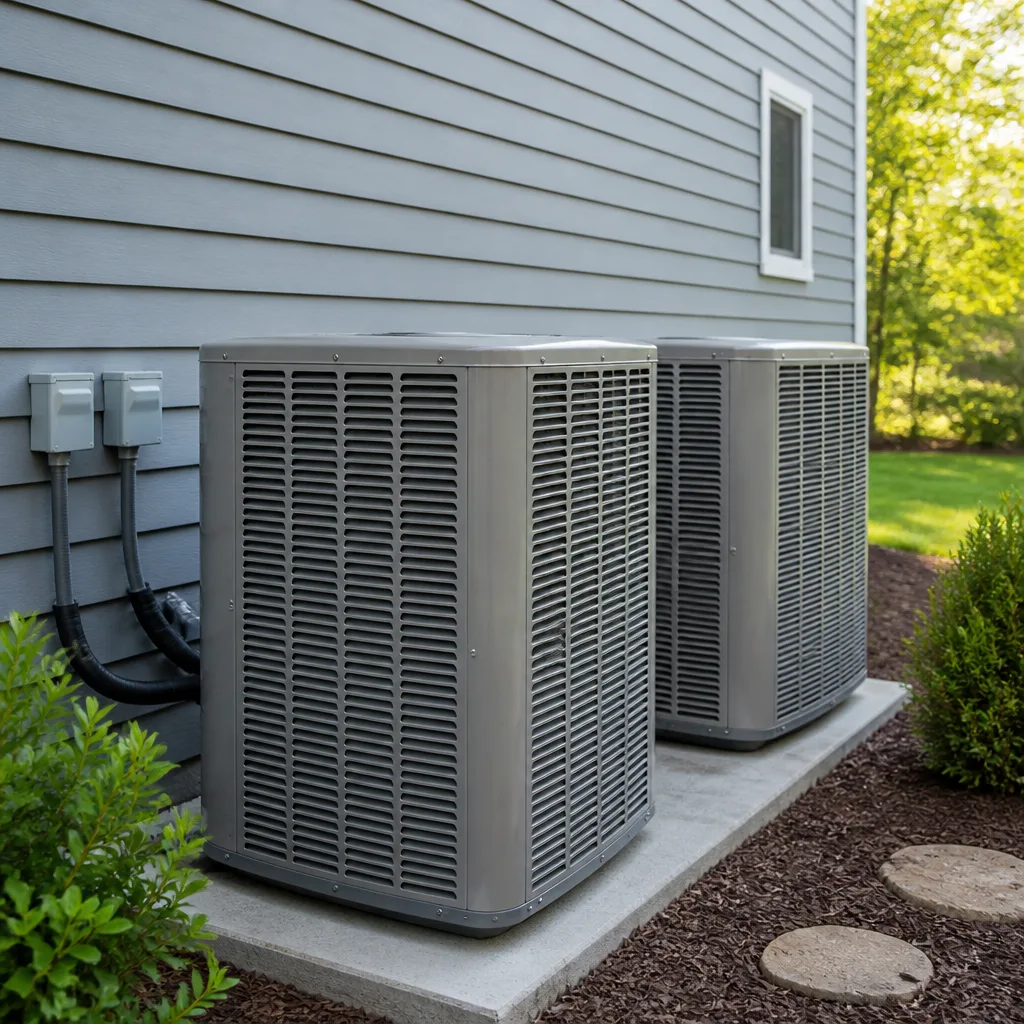 Heat pumps
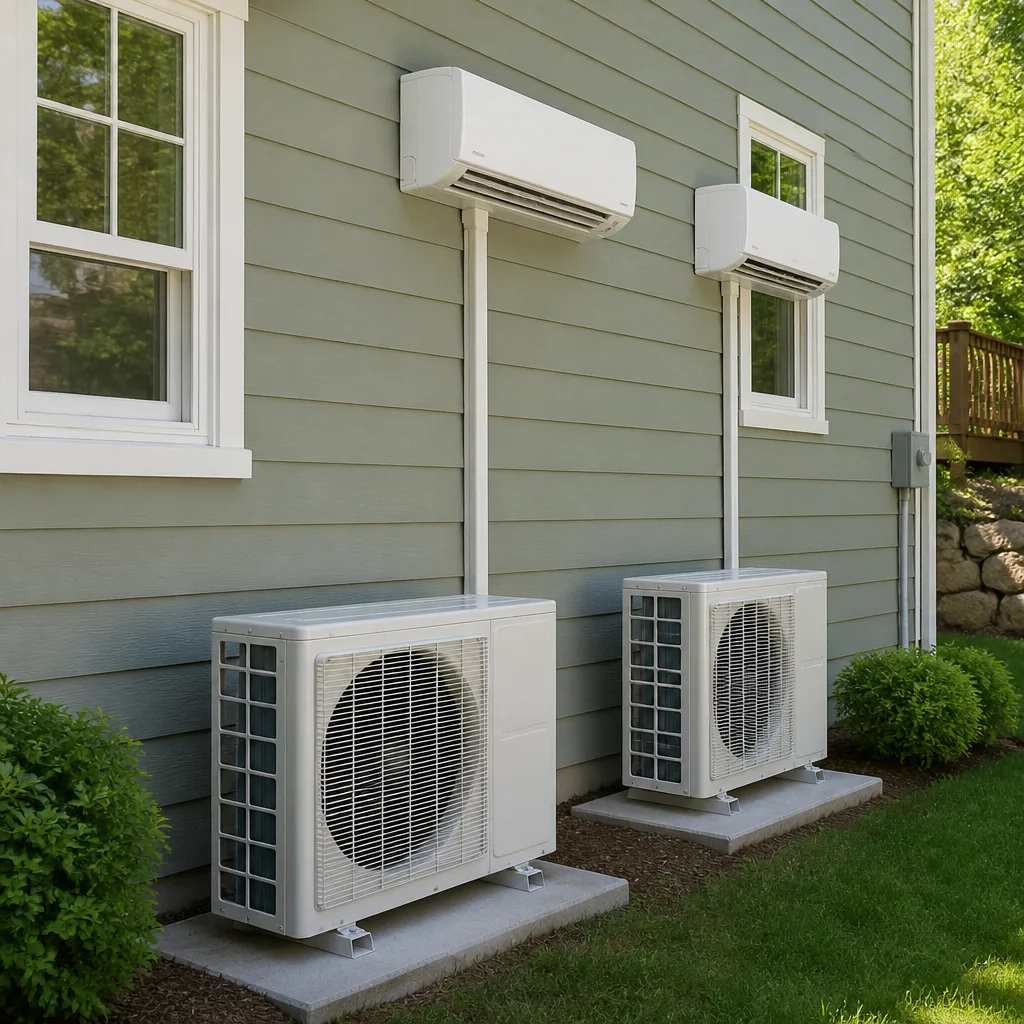 Ductless mini splits
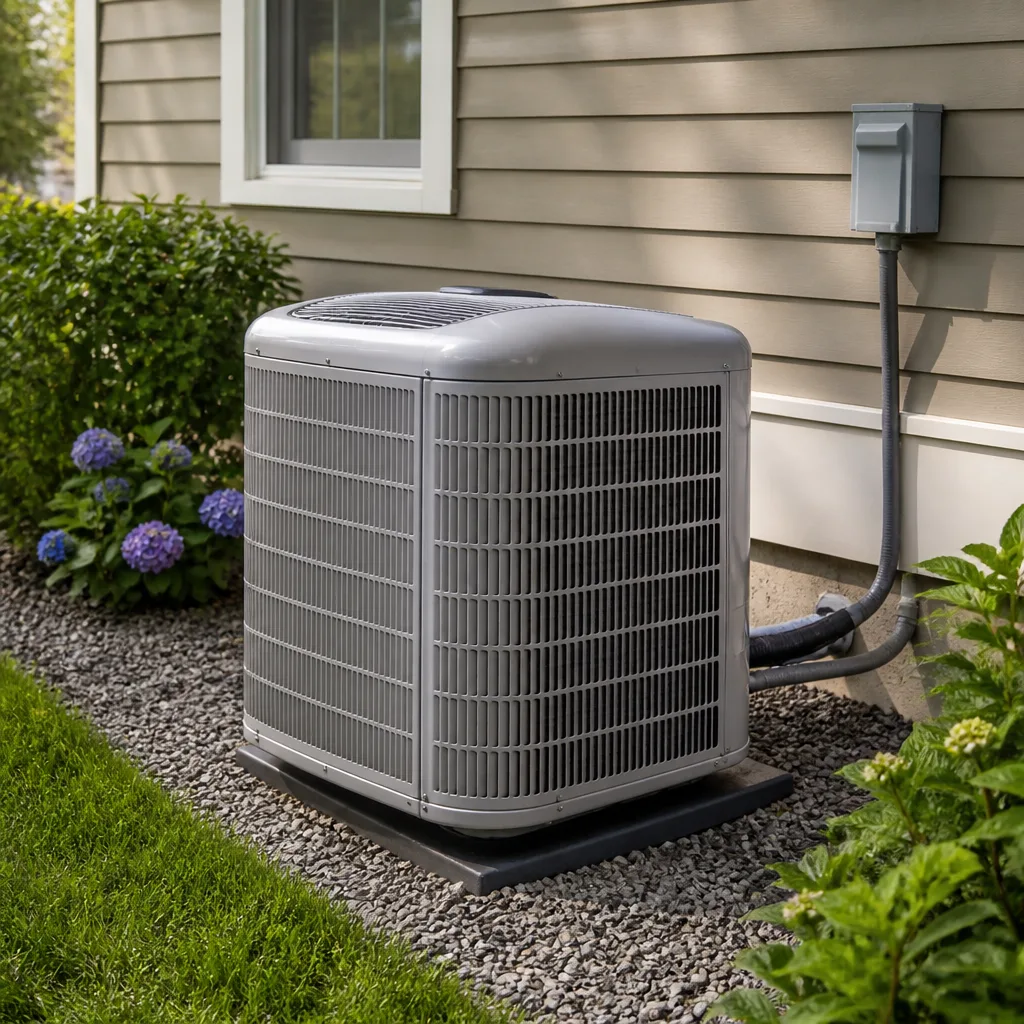 Carrier
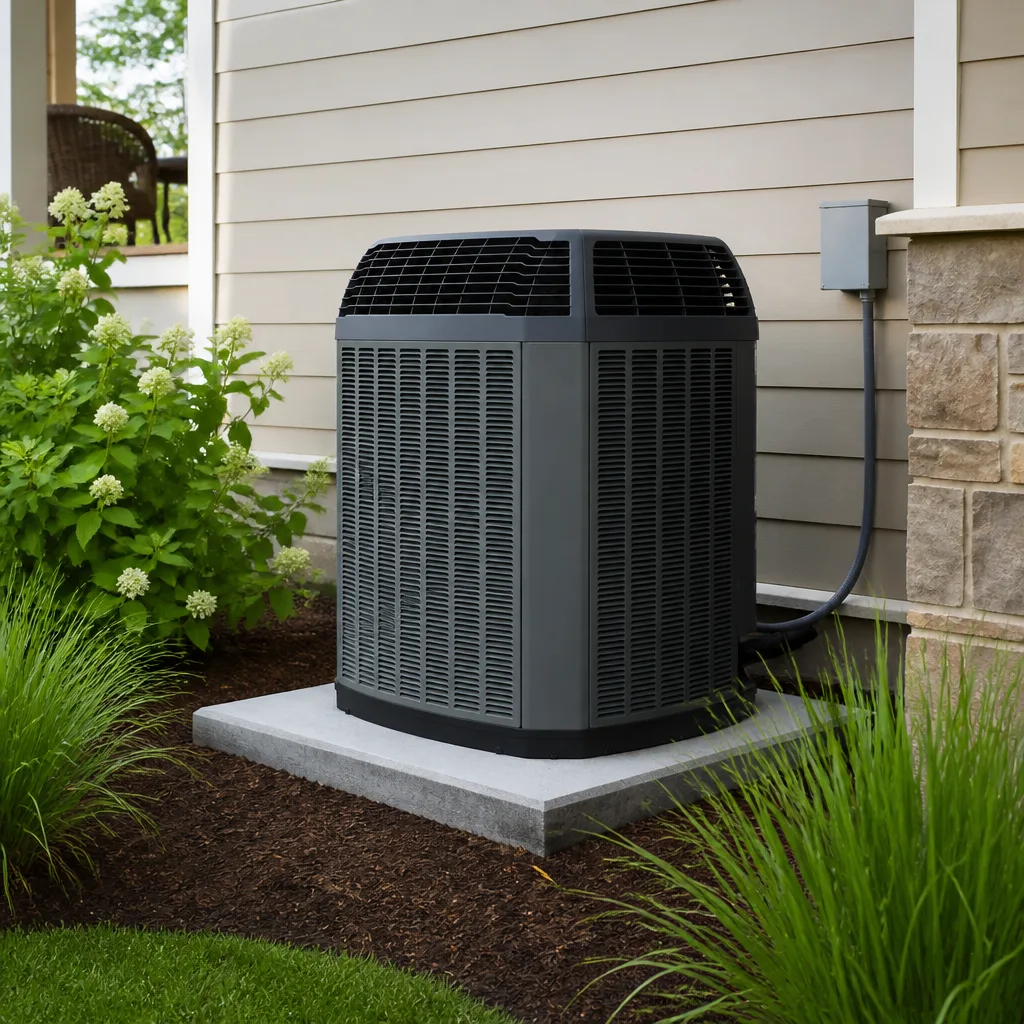 Trane
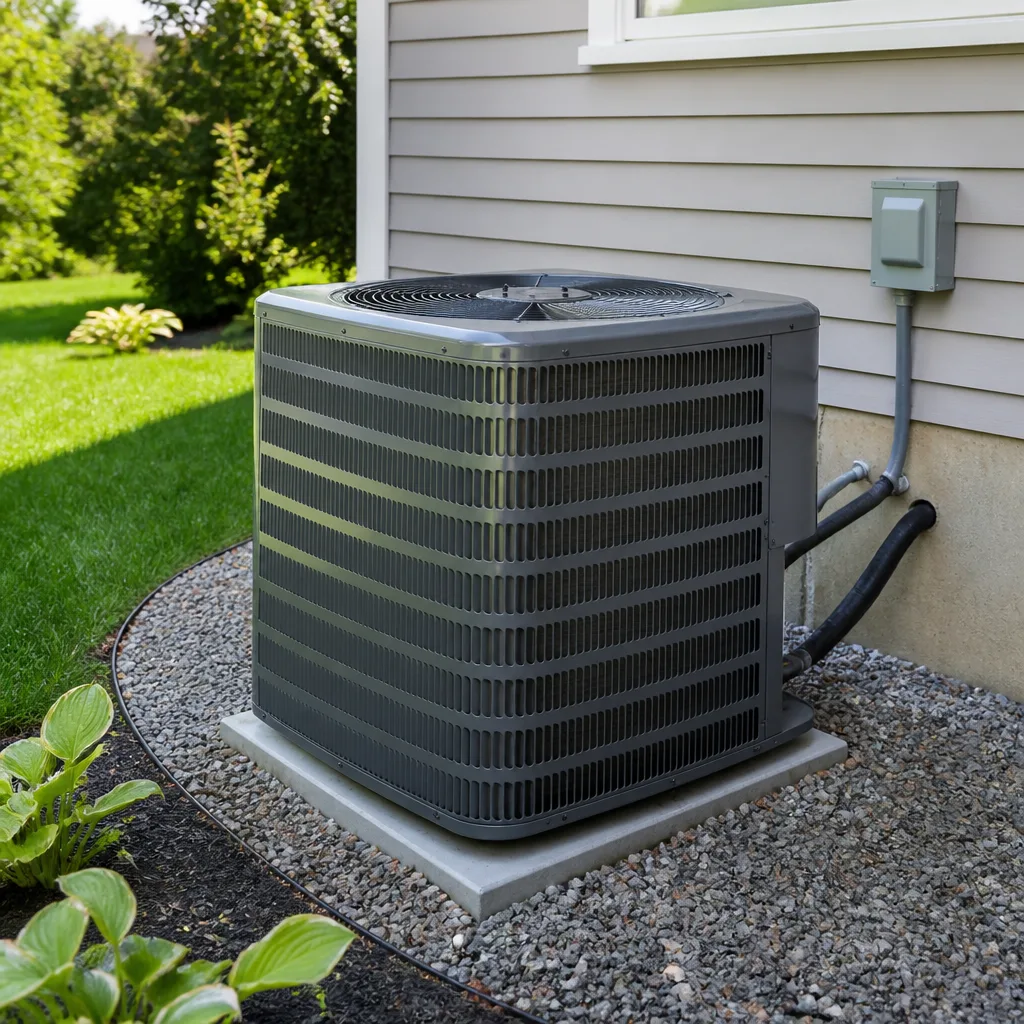 Goodman
Seasonal tune-up and full diagnostic on your Carrier, Trane, or Goodman system - readings shown to you before any repair is proposed
Diagnosis first, numbers second - you approve the repair price before a single part goes in.
Get your free estimateAC Repair Troubleshooting: Common Problems and How to Fix Them
If your AC is blowing warm air in July in Sunrise Manor, there are exactly four likely causes – and only one of them requires a technician. The other three you can confirm in under 10 minutes without touching a single component. That matters in a place where summer highs sit above 105°F for weeks and the difference between a quick filter fix and a wasted day of heat is knowing which variable to check first. Most troubleshooting guides start with the thermostat. In the desert, that’s usually the wrong place to look. This guide gives you a decision tree built for hot, dry climates, so you can rule out the cheap fixes yourself and know exactly when a call saves you money.
Quick Answer
Start with airflow, not the thermostat. In Sunrise Manor’s heat, the top three AC failure symptoms – warm air, short cycling, and ice buildup – most often trace back to a clogged filter or a dirty condenser coil causing thermal overload. Check your filter and the outdoor unit first, then call a technician if the air is still warm after 30 minutes of unrestricted airflow.
Styles & brands we work with
- AC repair
- Furnace & heating
- Heat pumps
- Ductless mini splits
- Carrier
- Trane
- Goodman
Table of Contents
- Why Desert AC Systems Fail Differently
- The Symptom-to-Cause Matrix for Desert Conditions
- How to Check Static Pressure With a Dollar Bill
- Refrigerant Leak vs. Dirty Condenser Coil: Telling Them Apart
- What Before-and-After Photos Should Actually Show
- When to Shut the System Off Right Now
- What a Technician Actually Does During an AC Repair Visit
- What AC Repair Costs in Sunrise Manor
Why Desert AC Systems Fail Differently
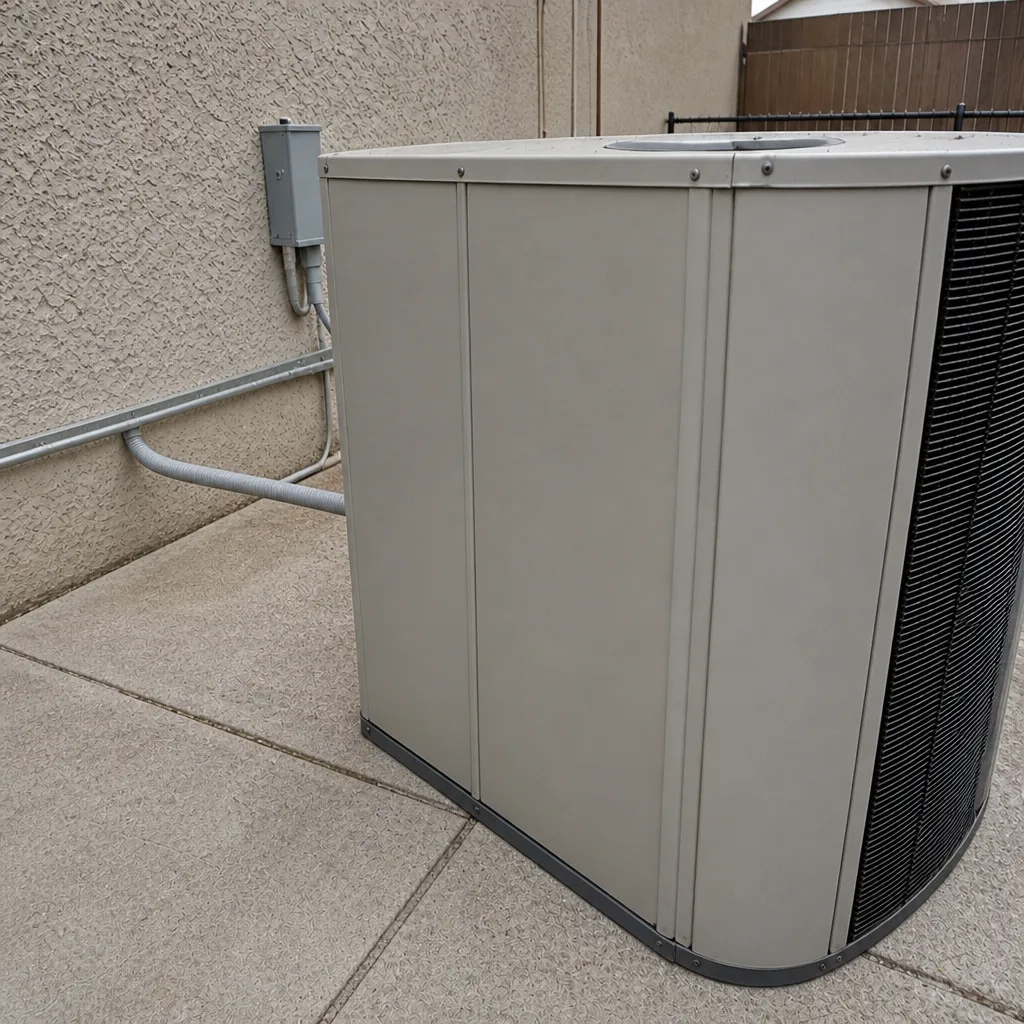
An AC system moves heat, and it does that by moving air across two coils: the evaporator coil inside your air handler (the indoor coil that absorbs heat from your home) and the condenser coil outside (the outdoor coil that releases heat into the air). In a humid climate, that outdoor coil gets help from cooler, denser air. In Sunrise Manor, it works against 110°F ambient temperatures and dust that coats the fins within weeks. Our technicians have up to 22 years of experience working this valley, and the pattern is consistent: desert systems fail from overload long before they fail from mechanical wear.
Thermal overload means the compressor (the pump at the heart of the outdoor unit) is running hotter than it’s designed to. When airflow is restricted or the condenser is clogged with dust, the compressor can’t shed heat, and it starts drawing more current to do the same job. That elevated current is what eventually burns a compressor out – a repair that runs into the thousands instead of the hundreds. Two climate facts drive this in Sunrise Manor:
- Dust load: Spring winds and constant construction dust in the east valley push particulate into filters and coil fins faster than most national guides account for. A filter that lasts three months in a mild climate may load up in four to six weeks here.
- Nighttime recovery loss: Because overnight temps in Sunrise Manor often stay above 85°F, systems never get the cool-night recovery period they rely on elsewhere. The compressor runs near-continuous duty from June through September, which compresses years of wear into a single season.
That’s why a “check the thermostat” approach misses the point. The thermostat isn’t the variable that changes in a desert summer. Airflow and coil cleanliness are. Everything below builds from there.
The Symptom-to-Cause Matrix for Desert Conditions
Match your symptom to the most probable cause before you call anyone. This matrix is built for high-heat, low-humidity environments like Sunrise Manor, where the ranking of causes shifts toward airflow and coil problems.
- Warm air from vents: Most probable cause is a clogged filter or blocked return starving the evaporator coil. Second most probable is low refrigerant from a leak. Third is a failed capacitor or contactor on the outdoor unit (cheap parts that stop the compressor from starting). Only the first is a homeowner fix.
- Short cycling (system turns on and off every few minutes): Most probable in the desert is an oversized system combined with a dirty filter, or a condenser coil caked in dust causing the compressor to trip its internal overload. A failing capacitor produces the same pattern.
- Ice buildup on the indoor coil or refrigerant lines: Almost always reduced airflow (dirty filter, blocked return, failing blower) or low refrigerant. In dry Sunrise Manor air, ice on the outdoor unit itself is rarer and usually means a serious refrigerant restriction.
- Loud operation – banging, grinding, or screeching: Grinding usually points to a failing blower motor or bearing; screeching to a slipping belt on older units; banging to a loose or broken component in the outdoor unit. Loud operation is a stop-and-call symptom in most cases.
Notice what’s missing: thermostat failure. It happens, but in our experience across Sunrise Manor it ranks well below airflow problems. Start there and you’ll solve most warm-air calls yourself or confirm quickly that you need a pro.
How to Check Static Pressure With a Dollar Bill
Static pressure (the resistance to airflow inside your ductwork and filter) is the single most useful number you can estimate without tools. You can’t measure it precisely with a dollar bill, but you can confirm whether airflow is badly restricted – which is the question that matters before you call. Here’s the safe method:
- Turn the system off at the thermostat. Don’t check airflow with the blower running.
- Find your filter. It’s usually at the return grille or at the air handler. Note whether it’s a thin 1-inch filter or a thick 4- to 5-inch media filter.
- Inspect the filter first. Hold it up to a light. If you can’t see light through it, it’s loaded and needs replacing regardless of what the dollar bill test shows.
- Test the return grille with a dollar bill. With the system running, hold a dollar bill flat against the return grille (the large intake vent). If the bill is pulled firmly against the grille and stays, you have decent return airflow. If it flutters or falls away, your return is starved.
- Test each supply vent the same way. Weak pull at supply registers in far rooms (common in two-story Sunrise Manor homes with long duct runs) suggests a duct or damper problem, not a filter problem.
- Replace a loaded filter and recheck. Give the system 20 to 30 minutes to recover, then test the vent temperature with your hand. Cold air returning is your confirmation the fix worked.
If the filter is clean, the return pulls the bill firmly, and the air is still warm, airflow is not your problem. That’s your signal to stop troubleshooting and get a technician out to check refrigerant and electrical components.
Refrigerant Leak vs. Dirty Condenser Coil: Telling Them Apart
These two problems look identical from inside your home – warm air, a system that runs constantly, and a house that won’t cool. They have completely different costs and completely different fixes, which is exactly why diagnosing them wrong wastes a day. Here’s how the symptom patterns diverge.
Refrigerant leak pattern
- Air from vents is cool at first, then warms up over 20 to 30 minutes as the system runs.
- Ice forms on the indoor coil or the copper lines entering the air handler, then melts and drips.
- The outdoor unit runs continuously and never satisfies the thermostat.
- The compressor may hiss or cycle on its internal overload after long run times.
- This is a sealed-system problem: refrigerant doesn’t get “used up,” so a low charge means a leak that has to be found and repaired before recharge.
Dirty condenser coil pattern
- Air from vents stays cool but the system struggles to keep up during the hottest part of the day.
- The outdoor unit feels very hot to the touch and runs long cycles, especially from 2 p.m. to 6 p.m.
- No ice inside; the outdoor coil fins are visibly matted with dust, lint, or cottonwood debris.
- Energy use climbs and the house cools slowly but does eventually reach setpoint overnight.
- This is an airflow problem: cleaning the coil restores performance without touching the sealed refrigerant system.
The cost gap is the reason this matters. A condenser coil cleaning is a maintenance-level service. A refrigerant leak search, repair, and recharge is a larger job because it requires locating the leak, repairing the sealed system, and recharging to the correct weight. If your symptoms match the leak pattern, don’t keep running the system – low refrigerant means the compressor is running without proper cooling and can burn out. When in doubt, the safe call is to shut it down and have it checked.
What Before-and-After Photos Should Actually Show
If you’re paying for a diagnosis, you deserve to see the evidence. Photos aren’t a gimmick – they’re how you verify the technician found a real problem instead of guessing. Here’s what a credible before-and-after set should document on an AC repair in Sunrise Manor:
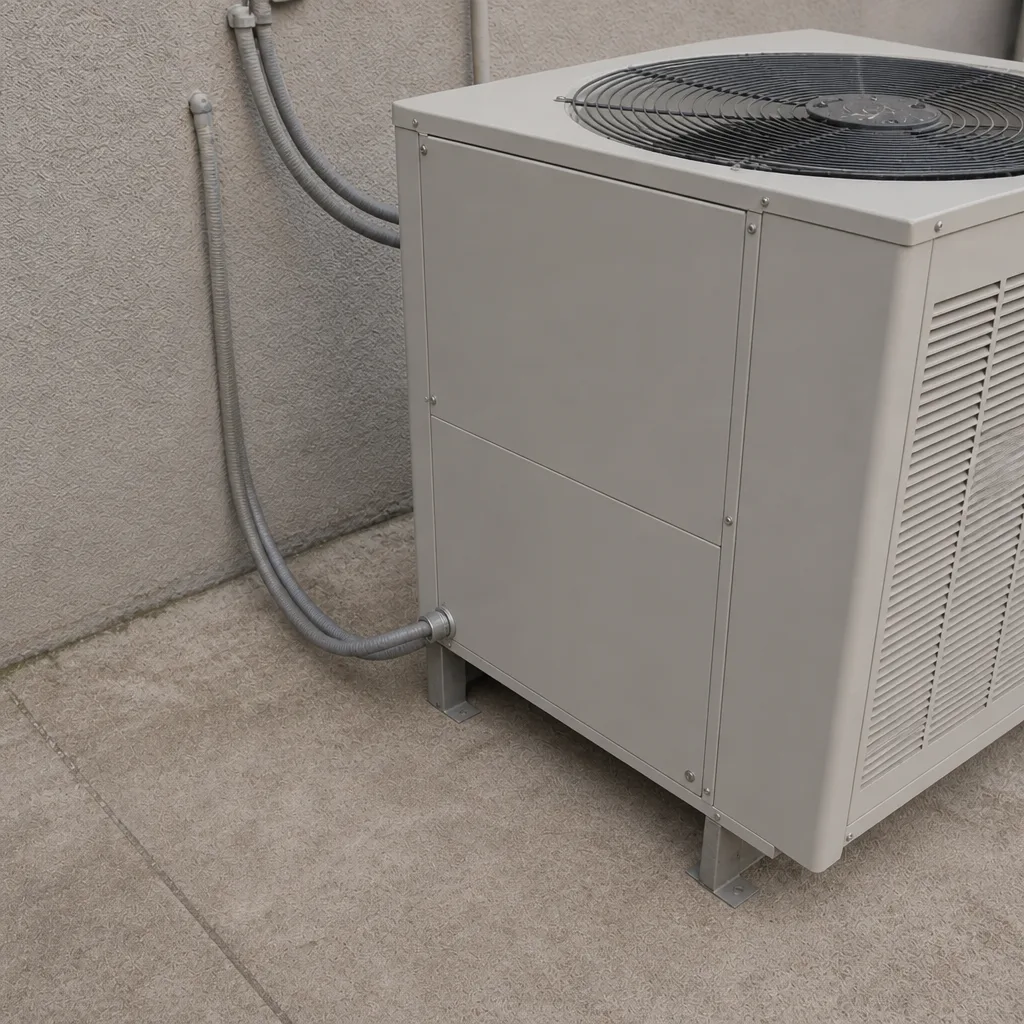
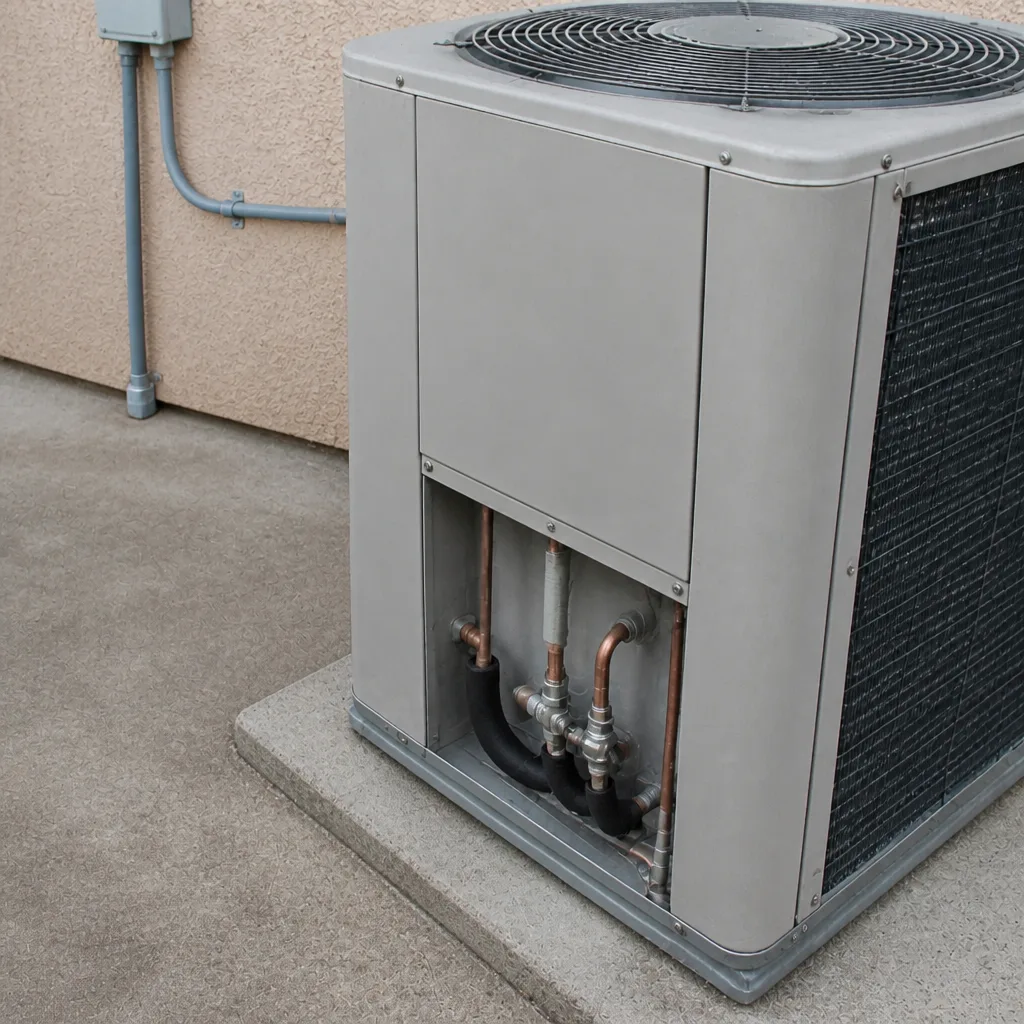
- The dirty component, labeled: A close-up of the clogged filter, the dust-matted condenser fins, or the iced-up coil before any cleaning. The photo should show the condition, not just a part number.
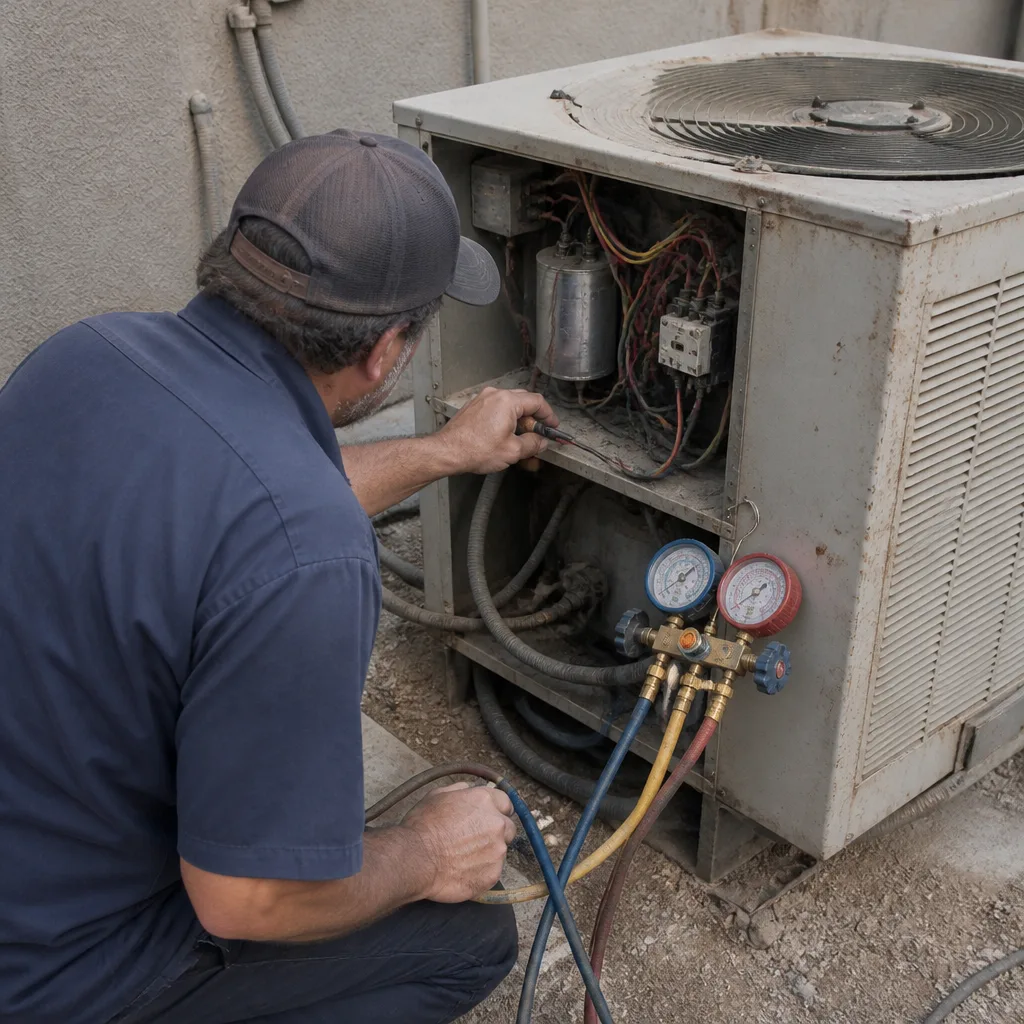
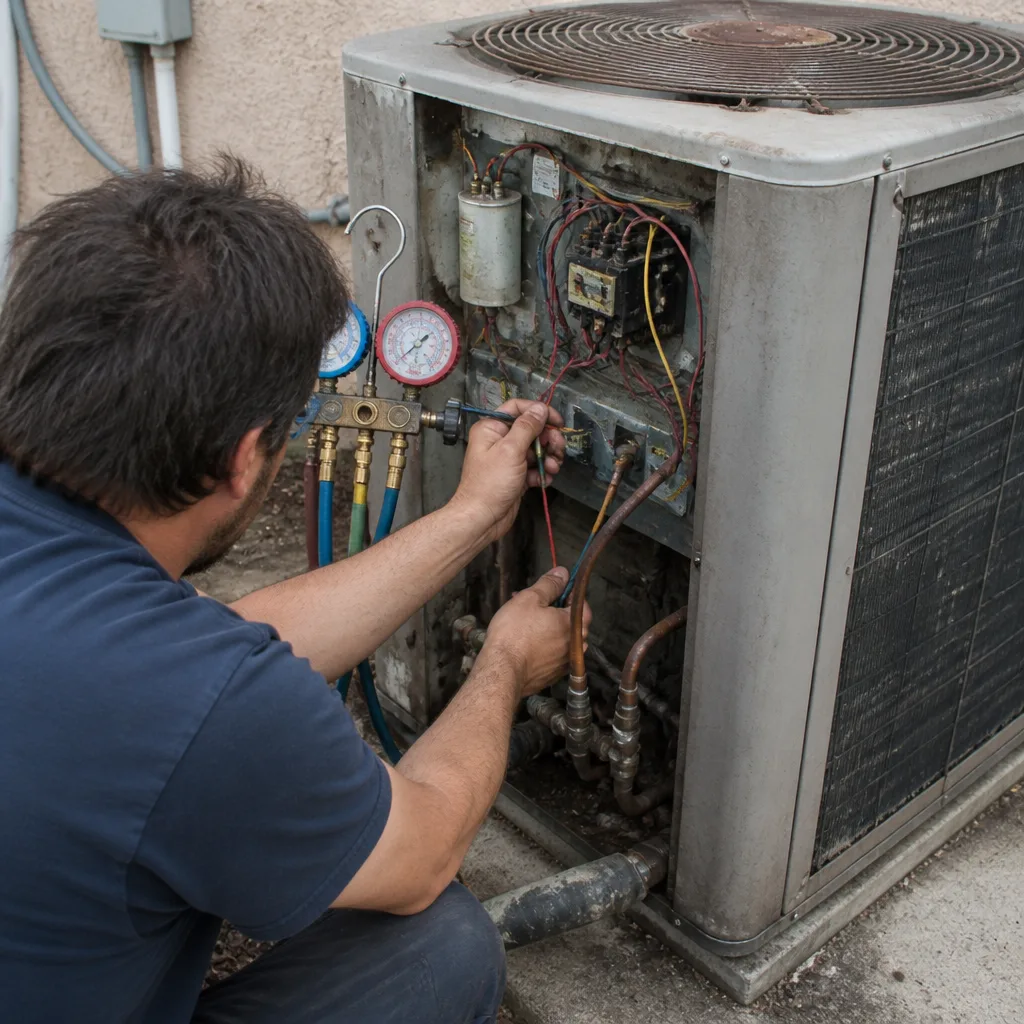
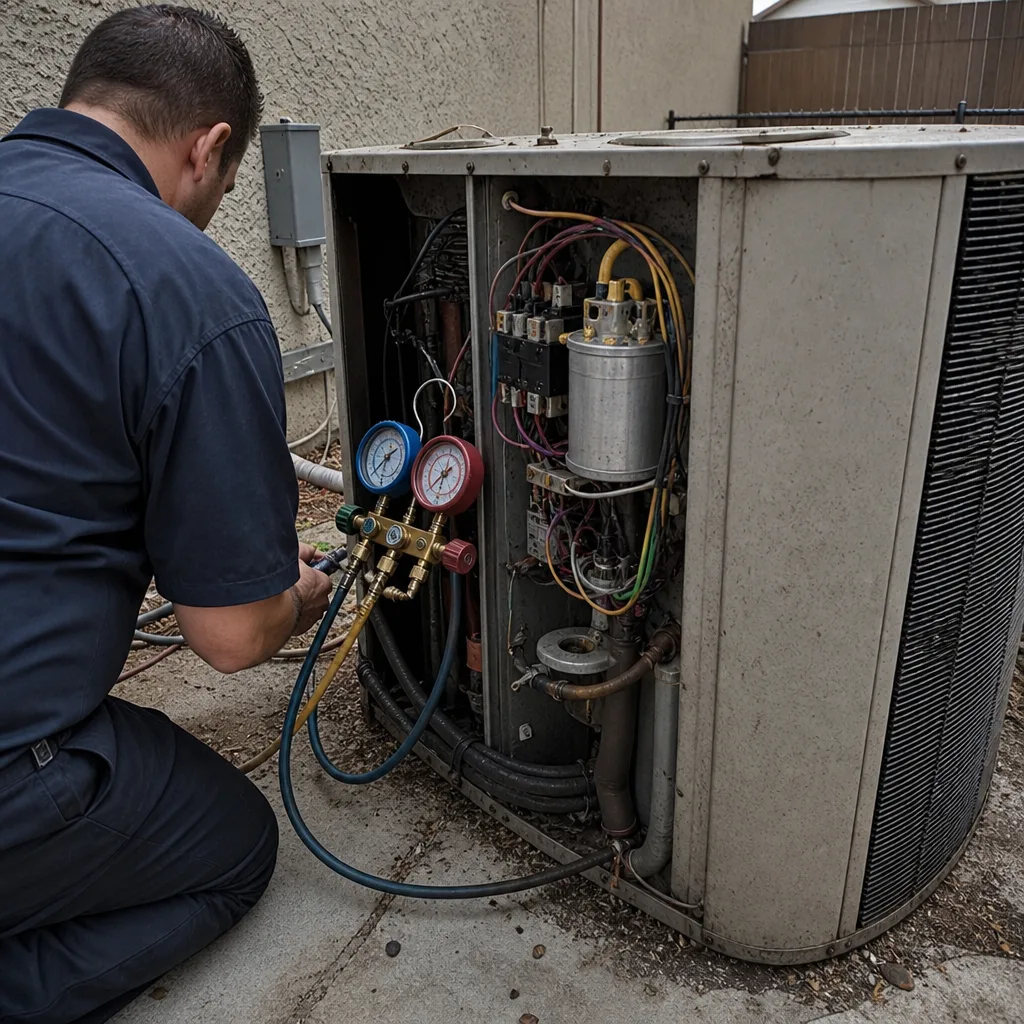
- The measurement, not just the picture: A photo of the manifold gauge readings or the temperature split (the difference between return and supply air) before and after. Numbers prove the fix; a clean coil photo alone doesn’t.
- The part that was replaced: A failed capacitor, contactor, or blower motor photographed in place, with the new part beside it or installed. You should be able to match the old part to the new one.
- The after shot from the same angle: The clean coil or replaced filter shown from the same position as the before shot, so the change is verifiable.
Ask for these before the technician leaves. A company confident in its diagnosis will have them ready. It’s also why we build before-and-after photos into every visit – not as an upsell, but so you can confirm the repair was real. If a technician can’t show you what they found, ask them to. You’re allowed to.
When to Shut the System Off Right Now
Some symptoms are safe to ride out until your appointment. Others will cost you a compressor if you keep running them. In a Sunrise Manor summer, the difference is worth knowing.
Turn it off immediately
- Ice on the indoor coil or refrigerant lines: Running a system with low refrigerant or restricted airflow can burn out the compressor. Turn it off, let the ice melt, and leave it off until a technician checks it.
- Grinding or screeching from the outdoor unit: A failing motor or bearing can seize and take out nearby components. Shut it down.
- Burning smell or tripped breaker: Electrical fault. Turn off at the breaker and call.
- Repeated short cycling with the outdoor unit hot to the touch: The compressor is tripping its internal overload. Every restart adds wear. Shut it off.
Safe to run until your appointment
- Weak but cool airflow with a clean filter: Likely a duct or blower issue that won’t damage the compressor.
- System cooling slowly but reaching setpoint overnight: Dirty coil territory – the system is working, just inefficiently.
- Slight rattle or vibration: Worth noting and scheduling, but not a shutdown.
A compressor burnout runs into four figures to replace. A service call to check a suspected overload runs a fraction of that. When the symptom is on the shutdown list, the cheapest move is always to turn it off and call.
What a Technician Actually Does During an AC Repair Visit
Knowing the process helps you spot a shortcut. A proper AC repair visit follows a sequence, and a good technician will walk you through each step:
- Confirm the symptom with you and check the thermostat settings and filter condition first – the same things you checked, because ruling them out is part of the diagnosis.
- Measure the temperature split (return air vs. supply air) to quantify how much cooling the system is actually producing.
- Check electrical components – capacitor, contactor, and compressor windings – because these are the most common failures in a hot-climate system.
- Check refrigerant charge and pressures using manifold gauges, and inspect for leak indicators if the charge is low.
- Inspect and clean the condenser coil if dust or debris is restricting heat rejection.
- Deliver a written price before any repair begins, so you know the cost before a tool moves.
We work on Carrier, Trane, Lennox, Rheem, York, Daikin, Bryant, and American Standard equipment, so most systems in Sunrise Manor are one we know well. The written price comes before you commit – not after the work is done – and every repair carries a written guarantee with a free return visit if the fix doesn’t hold.
What AC Repair Costs in Sunrise Manor
Most AC repairs in Sunrise Manor run between $150 and $500 depending on the part and the labor involved. That’s the honest range for common failures in the valley. Here’s how it breaks down:
- Capacitor or contactor replacement: usually the low end of the range – small parts, quick labor.
- Blower motor replacement: mid range – the part varies by system and the labor is longer.
- Condenser coil cleaning and tune-up: maintenance-level pricing, often paired with a routine service.
- Refrigerant leak search, repair, and recharge: higher end, because the job involves locating the leak and recharging the sealed system to a precise weight.
- Compressor replacement: well above the typical repair range – the reason catching overload symptoms early matters so much.
Exact pricing depends on your system’s brand, age, and the specific part. We deliver a written price before work starts on every job, so the number you see is the number you pay. If the repair turns out to be bigger than expected, you’ll know that before anyone picks up a tool. For a full walkthrough of repair options, see our AC Repair in Sunrise Manor page.
Common Mistakes to Avoid
- Starting with the thermostat. In Sunrise Manor’s heat, airflow and coil problems outrank thermostat failures as the cause of warm air. You’ll burn time on the wrong variable.
- Running a system with ice on it. Homeowners sometimes turn the system back on to “test” it. Running with low refrigerant or restricted airflow is how compressors die – let the ice melt and leave it off.
- Using the wrong filter. A high-MERV filter in a system not designed for it restricts airflow. Match the filter rating to your equipment, and change it on a desert schedule – four to six weeks in peak summer, not three months.
- Hosing down a hot condenser without turning it off. Cleaning a dusty outdoor coil is fine, but the unit should be off and cool, and you should avoid spraying electrical components. When in doubt, leave it to a technician.
- Treating low refrigerant as a “top-off” problem. Refrigerant doesn’t get used up. If it’s low, there’s a leak, and recharging without finding the leak just delays the next failure.
- Accepting a verbal diagnosis. Ask for the gauge readings, the temperature split, and before-and-after photos. A diagnosis you can’t see is a diagnosis you can’t verify.
See the difference
 Before
 After
 Before
 After
 Before
 After
When to Call a Professional
Call when the pointer is off your list: ice on the coil, grinding or screeching, a tripped breaker, repeated short cycling with a hot outdoor unit, or warm air that stays warm after a filter change and 30 minutes of recovery. Also call if the system is under 10 years old and short cycling – that’s often a sizing or charge issue worth diagnosing early rather than riding out. You can confirm most airflow fixes yourself, but refrigerant work, electrical components, and anything on the shutdown list belongs to a trained technician. High-voltage components inside the outdoor unit hold a lethal charge even after power is cut, so there’s no safe DIY path past the diagnostic stage. Halden Heating & Air Sunrise Manor offers free estimates in Sunrise Manor – call (833) 892-8106, and if the AC fails overnight, a live person answers 24/7. You’ll get a live arrival time you can track and before-and-after photos so you can see what was actually found.
Frequently Asked Questions
The most likely cause is restricted airflow from a clogged filter, followed by low refrigerant. Check and replace your filter first, wait 30 minutes, and feel the vent air. If it’s still warm, the system needs a technician to check charge and electrical components. Call (833) 892-8106 for a tracked arrival time and a written price before any work starts.
You can safely handle the filter, the outdoor coil’s surface dust, and airflow checks with the dollar bill method. Anything involving refrigerant, electrical components, or the compressor needs a trained professional – those systems carry dangerous voltage and require recovery equipment. Free estimates are available in Sunrise Manor; call to find out what your symptom likely needs.
In Sunrise Manor, short cycling most often comes from an oversized system, a dirty filter, or a dust-clogged condenser sending the compressor into overload. A failing capacitor can cause the same pattern. If the outdoor unit is hot to the touch and cycling every few minutes, turn it off and have it checked before the compressor burns out.
Most AC repairs in Sunrise Manor run between $150 and $500 depending on the part, with compressor replacement costing more. We deliver a written price before work begins on every job, so there’s no surprise at the door. Call (833) 892-8106 for an exact quote – estimates are free.
Ice on the indoor coil or refrigerant lines usually means low refrigerant or restricted airflow – both block the coil from absorbing heat properly. It’s also a shutdown symptom, so turn the system off and let the ice melt before anything else. Have a technician check the charge and airflow before you run it again.
Yes, same-day AC repair service is available in Sunrise Manor, and live phone support is answered by a real person 24/7 for overnight failures. You’ll get a live arrival time you can track to your door and a written price before any repair starts. Call (833) 892-8106 to book.
The Bottom Line
In Sunrise Manor’s heat, the top AC failure symptoms trace back to the same root cause: thermal overload from restricted airflow and dust-clogged coils. Start your troubleshooting with the filter and the outdoor coil, use the dollar bill test to confirm airflow, and learn to tell the refrigerant leak pattern from the dirty coil pattern. Know your shutdown symptoms – ice, grinding, tripped breakers, hot short cycling – and turn the system off rather than gamble on a compressor. Do those three things and you’ll either fix the problem yourself or walk into the service call knowing exactly what to ask. When the pointer is off your list, book a visit, get a tracked arrival time, and see the before-and-after photos that prove the diagnosis was real.
Ready to get your AC sorted? Call Halden Heating & Air Sunrise Manor at (833) 892-8106 for a free estimate. Whether you need a quick repair or you’re weighing a replacement, explore Halden Heating & Air Sunrise Manor home, our AC Installation in Sunrise Manor options, and Furnace Repair in Sunrise Manor when the season turns. Book online, track your tech to the door, and see a written price before anyone touches a unit.
Written by the team at Halden Heating & Air Sunrise Manor.