
Last updated November 17, 2026
 AC repair
 Furnace & heating
 Heat pumps
 Ductless mini splits
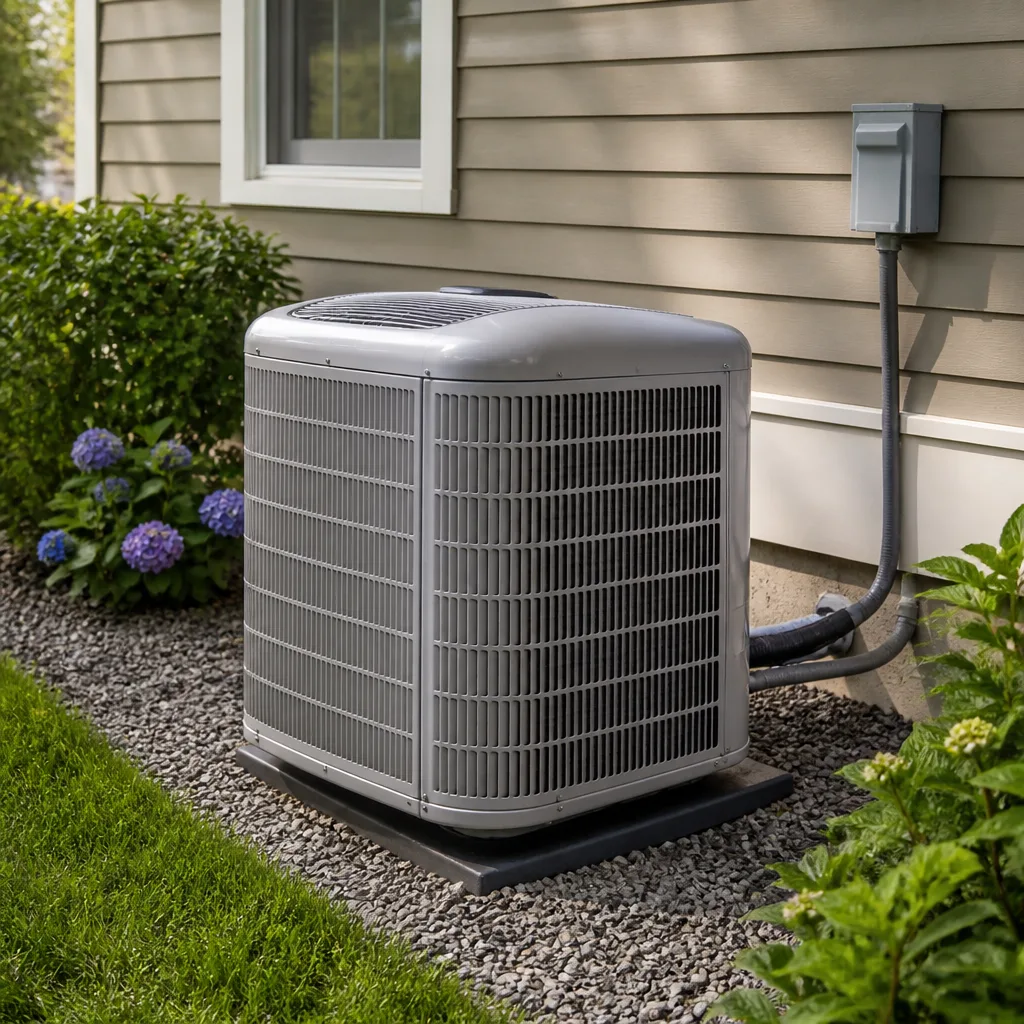 Carrier
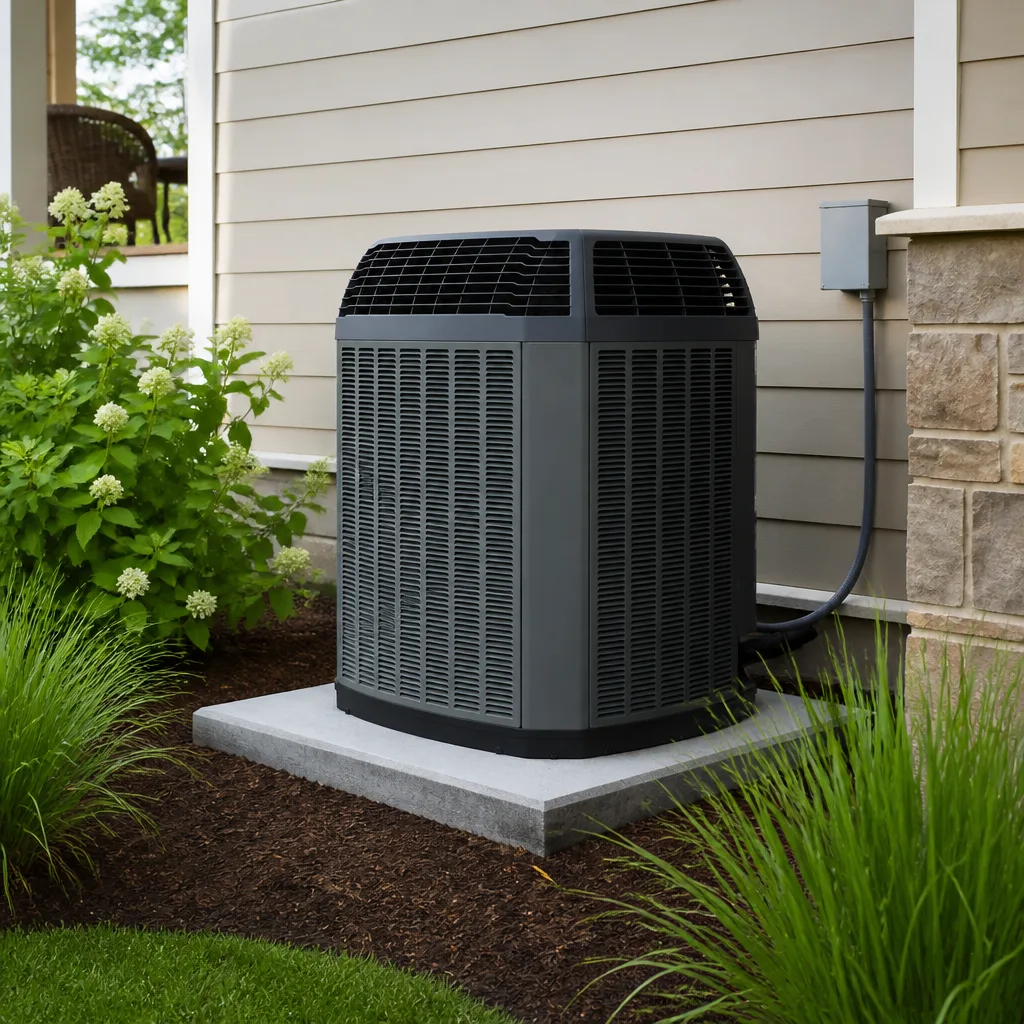 Trane
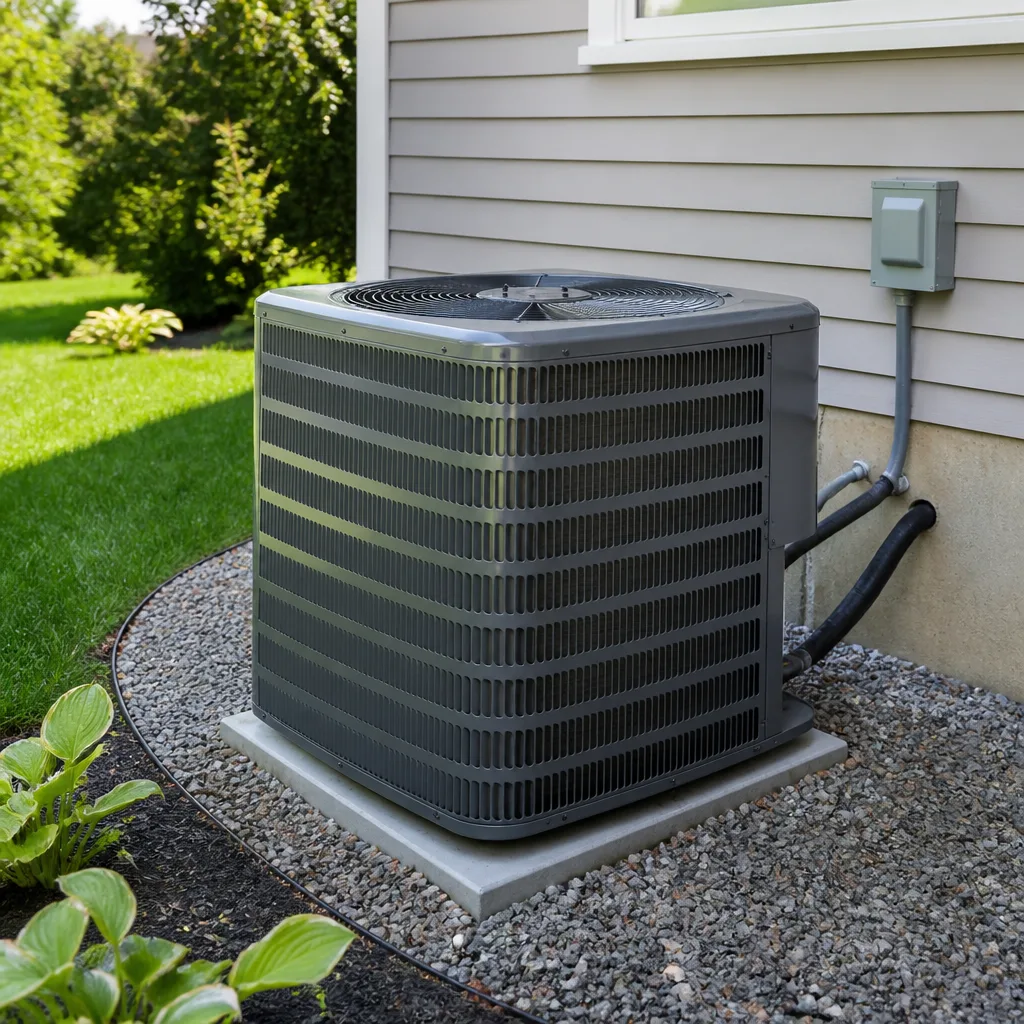 Goodman
Seasonal tune-up and full diagnostic on your Carrier, Trane, or Goodman system - readings shown to you before any repair is proposed
Diagnosis first, numbers second - you approve the repair price before a single part goes in.
Get your free estimateHow Long Does AC Installation Take? Timelines and What to Expect
A standard AC installation gets quoted as “4 to 8 hours,” and that range is so wide it’s nearly useless. Here’s what actually decides it: a 1,200 sq ft Sunrise Manor home with an accessible air handler and an existing disconnect box is a genuine 4-hour job. The same square footage with an attic air handler, an undersized return, and a breaker panel that needs upgrading is an 8-hour job, maybe longer. The installation itself isn’t the variable. The three hours of prep work around it are.
This guide maps the real hour-by-hour timeline, phase by phase, so you know what your crew should be doing at 9 a.m., what they should be doing at 1 p.m., and which skipped step is the one that costs you hundreds later. You’ll also see how a locked arrival window and photo documentation change the experience of a job this size.
Quick Answer
Most residential AC installations take 4 to 8 hours of on-site work, and the full day from arrival to cooling test usually lands between 5 and 10 hours including setup and cleanup. Sunrise Manor homes typically fall on the longer end when the air handler sits in a 140°F attic, when the return duct is undersized, or when the electrical panel needs work before the new condenser can be connected. Split-system replacements move faster than new installs because the line set and disconnect already exist.
Styles & brands we work with
- AC repair
- Furnace & heating
- Heat pumps
- Ductless mini splits
- Carrier
- Trane
- Goodman
Table of Contents
- The Five Phases of an AC Installation, Hour by Hour
- What Pushes a Job From 4 Hours to 8 Hours
- The Step Most Installers Rush: Static Pressure Testing
- What You Should See and Hear at Each Phase
- Why Sunrise Manor Heat Changes the Installation Math
- Permits, Inspections, and Electrical Upgrades
- How a Locked Arrival Window and Photo Documentation Work
- Does a Longer Install Cost More?
The Five Phases of an AC Installation, Hour by Hour
Every legitimate installation follows the same five phases. If you know the sequence, you can tell within the first hour whether your crew is organized or winging it. Here’s the real breakdown, timing included.
- Site assessment and equipment staging (30-60 minutes). The crew walks the attic, closet, or garage where the air handler lives, checks the line set route, confirms the electrical disconnect, and stages the new condenser and coil near the pad. They should also verify the equipment matches the contract: model number, tonnage, and brand. If your written price says a Rheem 3-ton and the box says otherwise, that’s a conversation to have now, not at noon.
- Old unit removal and refrigerant recovery (45-90 minutes). Refrigerant is pumped out with a recovery machine (required by federal law – it can’t be vented). Then the old condenser, coil, and any failing components come out. Attic air handlers add 20-30 minutes because of ladder work and hatch clearance.
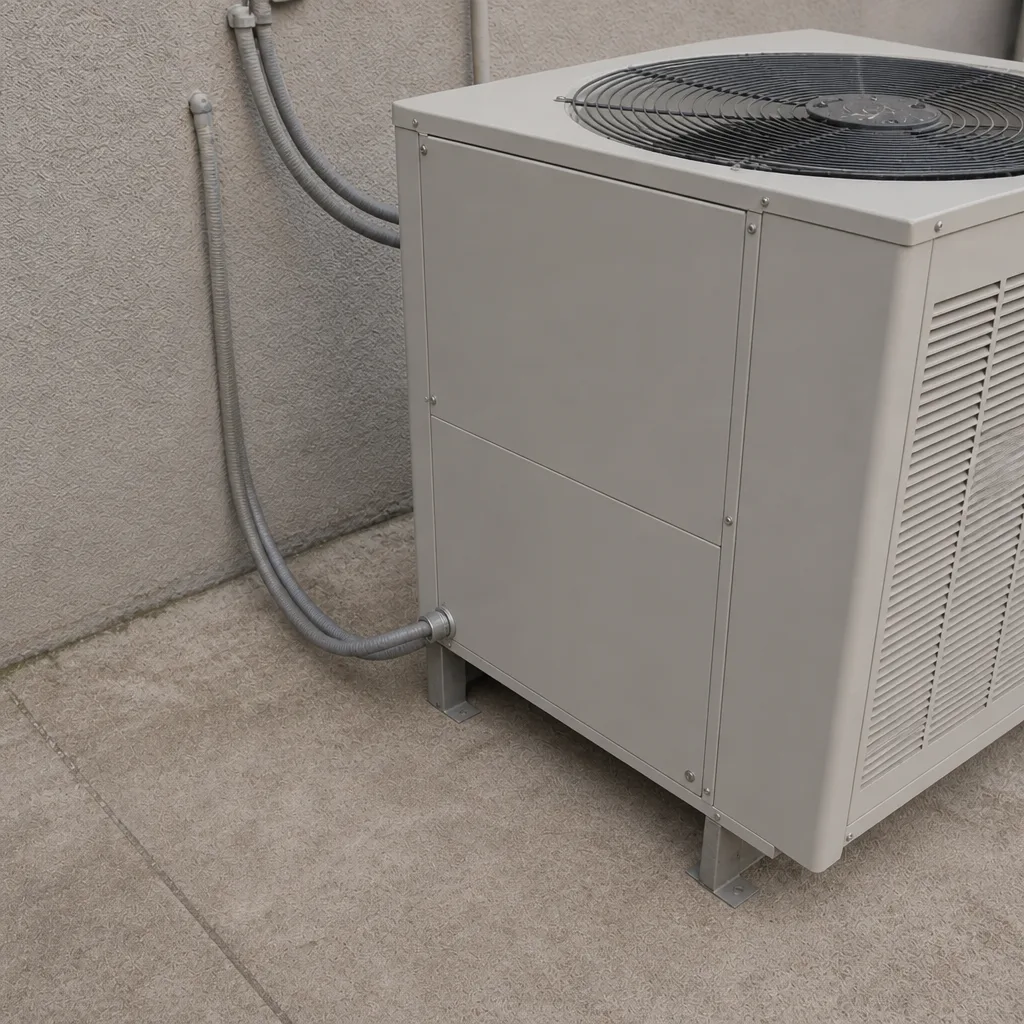
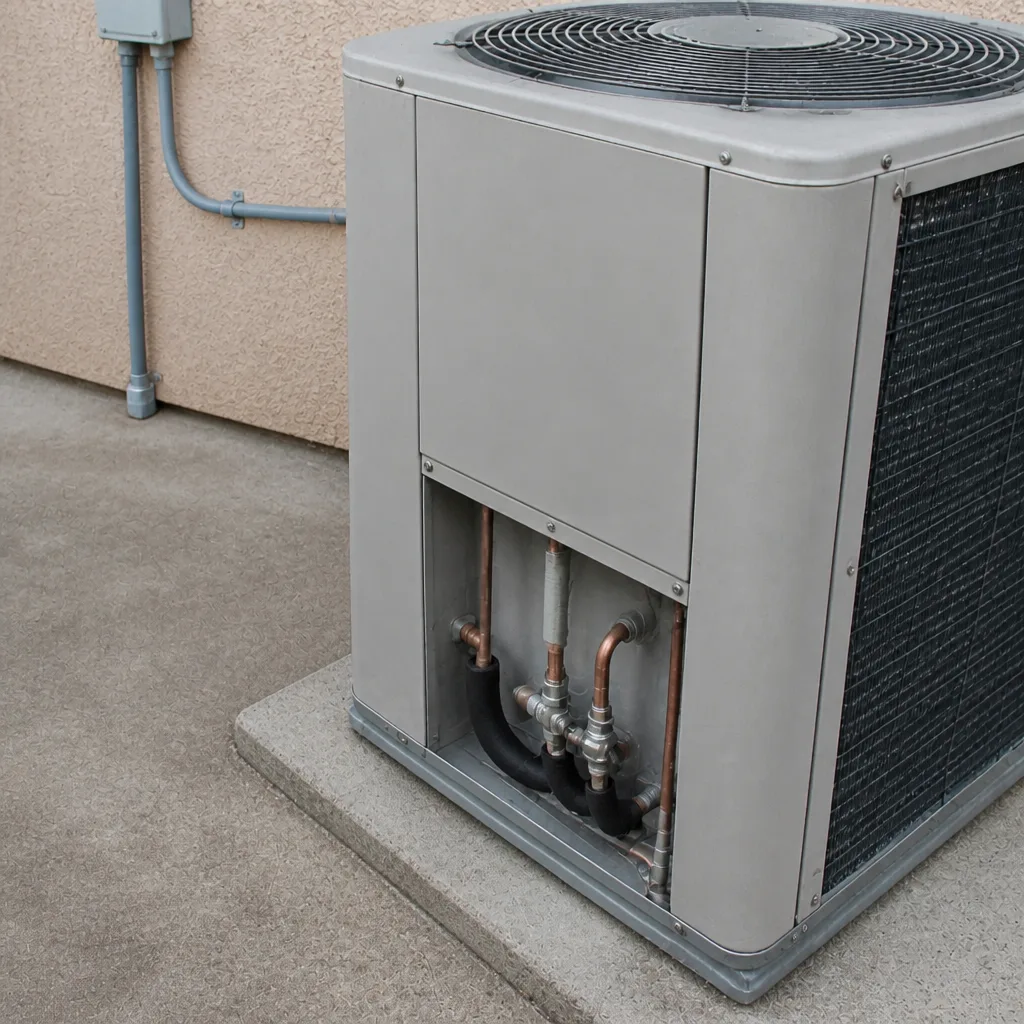
- New equipment placement and line set work (2-3 hours). The condenser goes on a level pad with clearance for airflow. The coil and air handler get set, the line set is either reused (if it passes inspection) or replaced, and brazing or flaring happens here. New line sets add 45-60 minutes.
- Electrical connections and permit inspection (30-60 minutes). The disconnect gets wired, the breaker is verified, and low-voltage thermostat wiring is connected. If your panel is at capacity, this phase expands dramatically – more on that below.
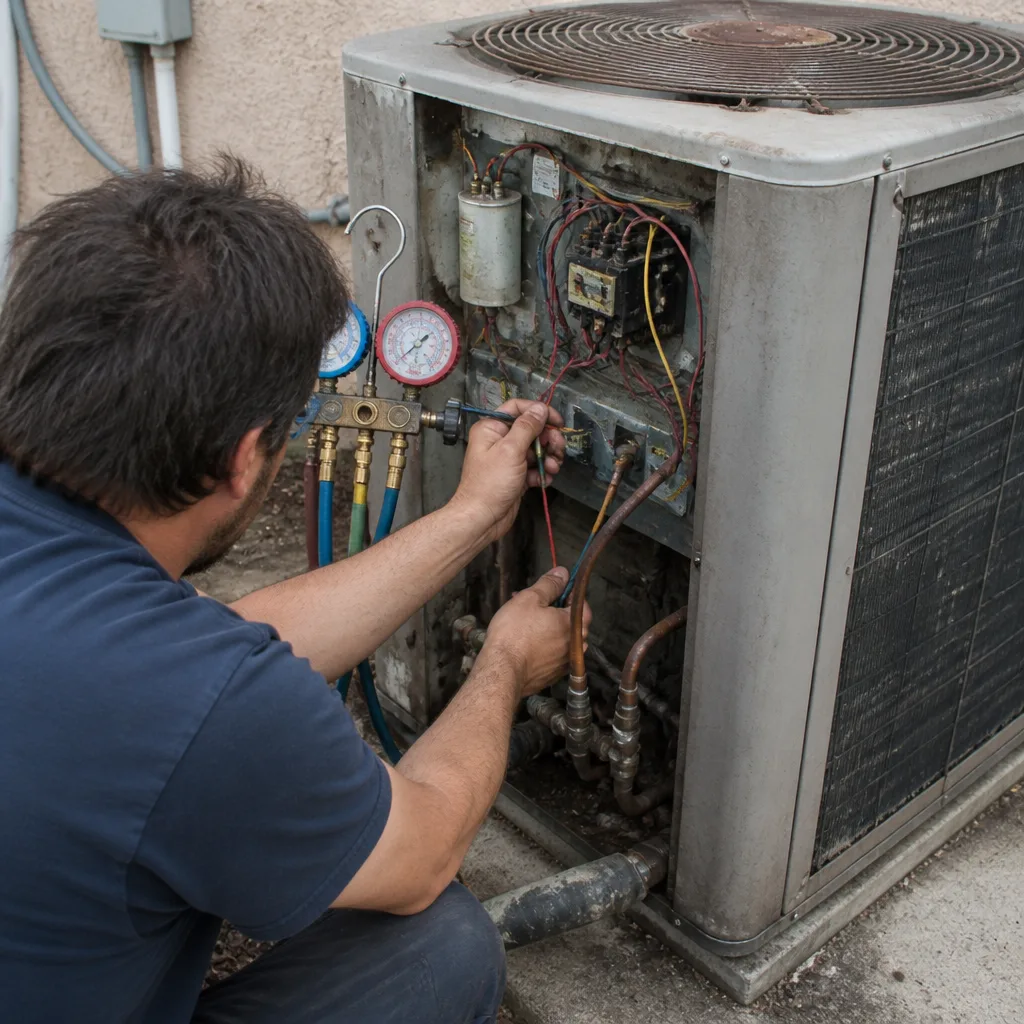
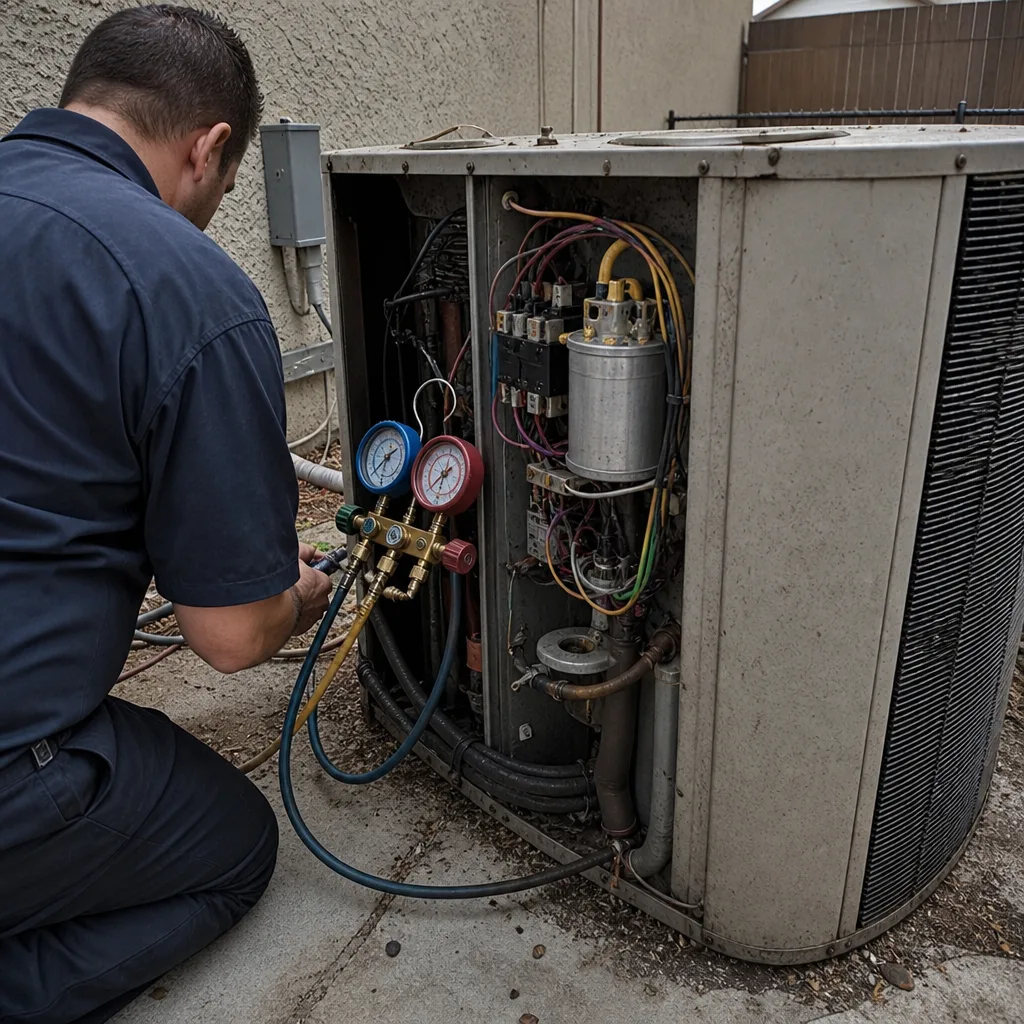
- Startup and airflow calibration (45-60 minutes). Vacuum pulled, refrigerant charged to the manufacturer’s specified weight or subcooling target, thermostat configured, and the system run through a full cooling cycle. This is where static pressure testing should happen.
Add 15-30 minutes for cleanup and a walkthrough with you. Total on-site time in Sunrise Manor averages 5 to 9 hours for a standard split-system swap.
What Pushes a Job From 4 Hours to 8 Hours
The equipment brands don’t change the timeline much – a Goodman 3-ton and a Daikin 3-ton take roughly the same labor. What changes everything is your house. Here are the factors that decide which end of the range you land on, in order of impact.
- Attic vs. closet air handler. A closet or garage handler with a clear path is the fastest scenario. An attic handler in a Sunrise Manor summer means the crew is working in 130-150°F heat with limited ladder access. Add 60-90 minutes, and understand the crew will need breaks for safety.
- Copper line set reuse. Reusing an existing line set that passes a pressure test saves 45 minutes. Replacing it – necessary when the old set is undersized or contaminated – means routing new copper through walls or along the exterior, which can add 1-2 hours depending on the run.
- Panel capacity. If your electrical panel doesn’t have a spare double-pole breaker for the condenser, a panel upgrade or subpanel install is required before the AC can be connected. That’s usually a separate licensed electrician visit and can push your install to a second day.
- Ductwork condition. Old, leaky, or undersized duct runs mean the new system can’t perform to spec. Sometimes the fix is minor sealing and a new return. Sometimes it’s a duct replacement. Either way, it lives inside the same visit and adds hours.
- Return air sizing. A 3-ton system needs roughly 1,200 CFM of return air. If your existing return can only move 800, the new unit will run hot and loud. Undersized returns are one of the most common issues we find in older Sunrise Manor homes.
- Pad and clearance. Condensers need 12-24 inches of clearance on all sides. Tight side-yard installs in Sunrise Manor subdivisions sometimes require relocating the pad, which adds 30-45 minutes.
Ask at booking which of these apply to your home. A company that can’t answer that question on the phone before quoting you a window is guessing.
The Step Most Installers Rush: Static Pressure Testing
This is the quiet step that separates a good install from a callback generator. After startup, the technician should connect a manometer (a pressure gauge) to the supply and return plenums and measure static pressure – the resistance to airflow in your ductwork. Manufacturer specs list a maximum static pressure, typically around 0.5 inches of water column for residential equipment. If the reading comes in above that, the system is being strangled by its own ducts.
What happens when air can’t move properly: the evaporator coil ices up, the compressor works harder and fails sooner, the blower motor wears out, and your electric bill climbs while the house stays warm. Homeowners call this “the AC isn’t keeping up,” and they’re right. The fix would have been 15 minutes at install.
A proper install reads the static pressure, then makes an adjustment – trimming the blower speed, adding a return, or recommending duct sealing – before calling the job done. Skipping the test because “everything feels cold” is the single most common shortcut we see in Sunrise Manor service calls where we’re diagnosing someone else’s recent install. The test itself takes about 15 minutes. The problems it prevents show up months later, often at a $300-$700 diagnosis-and-repair visit.
If you’re getting a new system installed, ask: “Will you give me the static pressure reading in writing at the end?” Any honest installer can say yes.
What You Should See and Hear at Each Phase
You don’t need to hover. But for a job this size, a homeowner who knows the sequence can tell within a few minutes whether the day is on track. Here’s what each phase looks like from your side of the yard.
- Hour 1 (assessment): You should see the crew walking your duct routes and equipment location, not immediately unboxing or cutting. They should be writing things down. If they discover a surprise – a rusted-out air handler pan, a missing disconnect – you should hear about it before work proceeds and pricing changes.
- Hours 1-2 (removal): You’ll hear the recovery machine (a low hum), then actual wrenching and cutting as the old unit comes out. A condenser should be disconnected and moved within 45 minutes.
- Hours 2-5 (placement): The new pad gets set, the condenser positions, and you’ll hear brazing (a torch hiss, sometimes a brief pop) if a line set is being modified. If your air handler is in the attic, expect to see the crew make multiple trips up and down.
- Hours 5-6 (electrical): The disconnect gets wired and the breaker is verified. You should see a multimeter at the panel. This is a good moment to ask about the photo documentation for the electrical side.
- Hours 6-7 (startup): You should hear the condenser kick on and the supply vents start pushing air. Your technician should be at the thermostat, then at the air handler with a gauge checking pressures.
- Final 15 minutes: A walkthrough. They show you the final settings, hand you the static pressure reading, give you the filter spec, and confirm the before-and-after photos.
If you’ve hit hour 7 and the system hasn’t been run yet, ask for a status update. Real installs run long sometimes, but honest crews tell you why.
Why Sunrise Manor Heat Changes the Installation Math
Sunrise Manor summers sit well over 100°F for stretches, and attic temperatures regularly pass 140°F. That reality changes three things about your install.
First, the attic work is genuinely harder on the crew. Crews working a Summerlin install in a ventilated attic still sweat. Crews working a Sunrise Manor attic in July need rotation and hydration, and the install timeline should account for that. A company promising a “4-hour install, guaranteed” on an attic air handler in August is either cutting corners or planning overtime.
Second, the equipment spec matters. A system that would run comfortably in coastal California needs every bit of its rated capacity here. That’s why residential replacements in Sunrise Manor typically get sized with a proper Manual J load calculation (a room-by-room heat load measurement) rather than matched to the old unit’s sticker. Replacing “like for like” without that calculation is how homes end up with a 2-ton system that can’t touch a 108°F afternoon.
Third, ductwork in this climate takes a beating. Attic duct runs absorb radiant heat, and old, leaky ducts mean you’re paying to cool the attic. A proper install includes a duct condition check, and we frequently find that adding a return or sealing joints in a Sunrise Manor home outperforms more refrigerant charge or a bigger condenser. It’s also the cheaper fix.
Permits, Inspections, and Electrical Upgrades
Clark County requires a permit for a residential HVAC changeout, and the permit is typically pulled by the contractor before the install date. That’s not a technicality – it means the job has been reviewed, and a county inspector may verify the install afterwards. The good news: it rarely adds time on install day, because the inspection is scheduled separately.
Where timelines actually stretch is electrical. A new AC condenser draws more current than some older panels can safely supply. If your panel is full, a subpanel or panel upgrade has to happen before the AC can be connected. That involves a licensed electrician and possibly a second permit, and it can push your install date by a week or more depending on scheduling. This is exactly the kind of thing a pre-install site visit catches – which is why we don’t finalize an install window until we’ve laid eyes on the panel and disconnect box.
In practical terms: a permit-ready install stays inside the 4-8 hour range. An install requiring an electrical upgrade becomes a two-visit project, with the actual HVAC work still landing in that range on visit two.
How a Locked Arrival Window and Photo Documentation Work
The part most homeowners underestimate is how much of a job this large is ruined by uncertainty before the crew even knocks. A four-hour window with no visibility is a day you can’t plan. That’s why we send a live arrival time you can track to your door, and why every technician is background-checked and arrives in uniform with that time confirmed in advance.
Once the install is underway, we document it. Before photos of the old equipment and duct conditions; progress photos as each phase completes; after photos of the finished install, the static pressure reading, and the electrical connections. You get the full set. If a question comes up six months later about what was or wasn’t done, the photos answer it.
Before any work begins, you get a written price – every component, labor, and permit listed – locked in writing. Not a door-step estimate that changes once the crew is on site. And when the job is done, it’s covered: a written guarantee on the work, a 365-Day Done Right Promise, and a free second visit if something fails. On a system this critical to a Sunrise Manor summer, that matters.
If you have questions ahead of your install about which equipment brands we service (Carrier, Trane, Lennox, Goodman, Rheem, York, Daikin, Bryant, and American Standard), or want to see the full lineup of what we handle in Halden Heating & Air Sunrise Manor home, that’s all on the site. And if your system is already failing before a scheduled install, AC Repair in Sunrise Manor can keep you cool until install day.
Does a Longer Install Cost More?
Your written price should not move with install time. A Sunrise Manor install quoted at a fair rate stays at that rate whether the crew is finished at 1 p.m. or 5 p.m. – the labor estimate is built around your home’s specific factors, which is why we scope the job before locking the price. Where installs genuinely cost more is when a pre-existing issue surfaces that wasn’t visible during scoping: a panel that needs upgrading, a return duct that’s undersized, or ductwork that fails pressure testing.
Those should be identified during your pre-install assessment, in writing, before the install day. If a crew tells you on the morning of the install that the price is now higher because of “unforeseen” issues, ask for a written explanation of what changed and why it wasn’t caught earlier. A properly scoped install rarely has surprises.
For a full picture of what replacement runs in this market, see our AC Installation in Sunrise Manor page, and if your current system is aging and you’re weighing options, Furnace Repair in Sunrise Manor covers the heating side of the equation if that conversation is coming next.
Common Mistakes to Avoid
- Accepting a 4-hour window with no visibility. A four-hour block on a 6-hour job means someone is cutting corners. Insist on a live arrival window you can track, not a vague morning-or-afternoon slot.
- Skipping the load calculation. Matching the new system to the old sticker’s tonnage is guessing. Sunrise Manor’s 140°F attic conditions demand a Manual J load calculation to size correctly. A too-large system short-cycles and dies young; a too-small one can’t keep up.
- Not asking for the static pressure reading. It’s one number that tells you whether the new system will actually perform. If the crew can’t produce it in writing, the install isn’t finished.
- Ignoring the return duct. An undersized return makes a new system noisy and inefficient. This is the most common issue we find in Sunrise Manor homes built before 1995.
- Assuming the electrical panel is fine. Confirm panel capacity during the pre-install assessment, not on install day. Panel upgrades are separate and schedule-shifting.
- Forgetting to get the before-and-after photos. If the crew doesn’t document, you have no way to verify what was done. Request the photos as part of the job close.
- Paying without the written guarantee in hand. The guarantee is part of the job, not an add-on. Make sure it’s delivered with the walkthrough.
See the difference
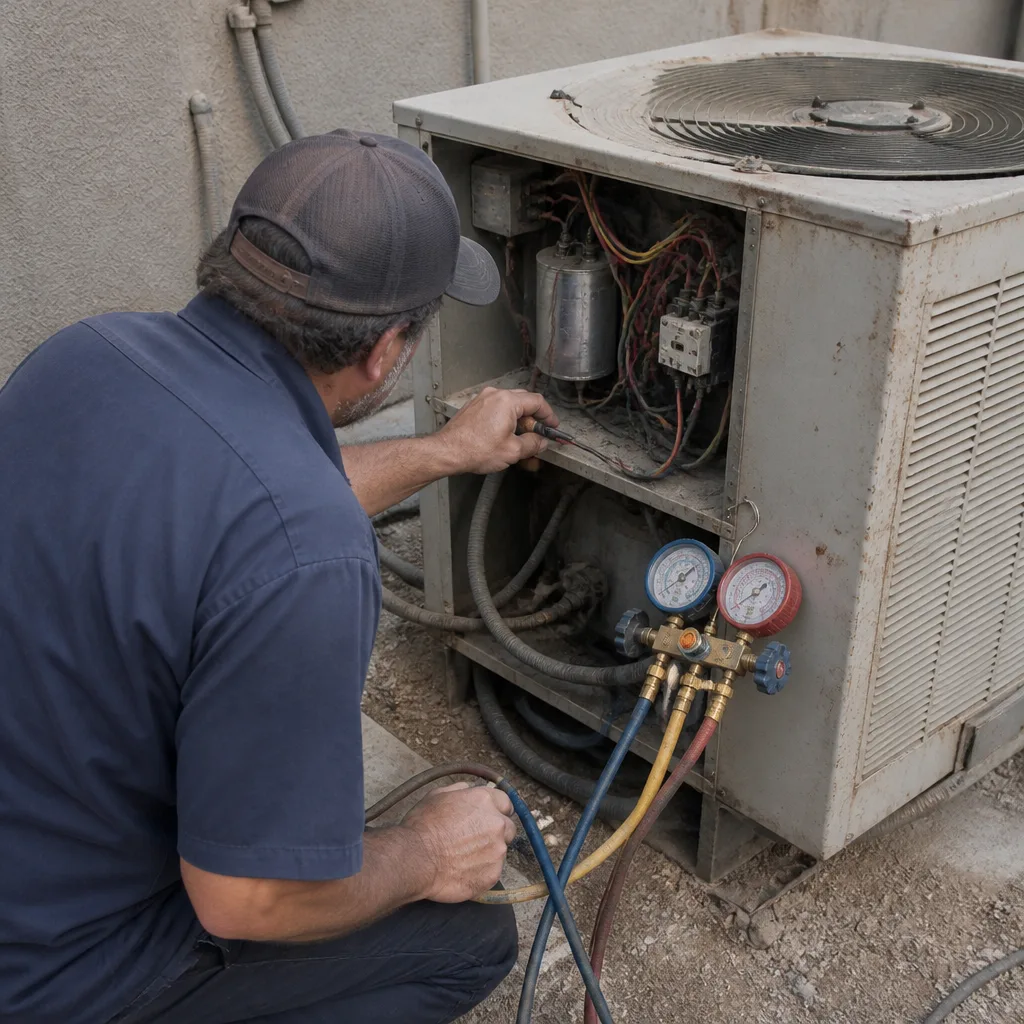 Before
 After
 Before
 After
 Before
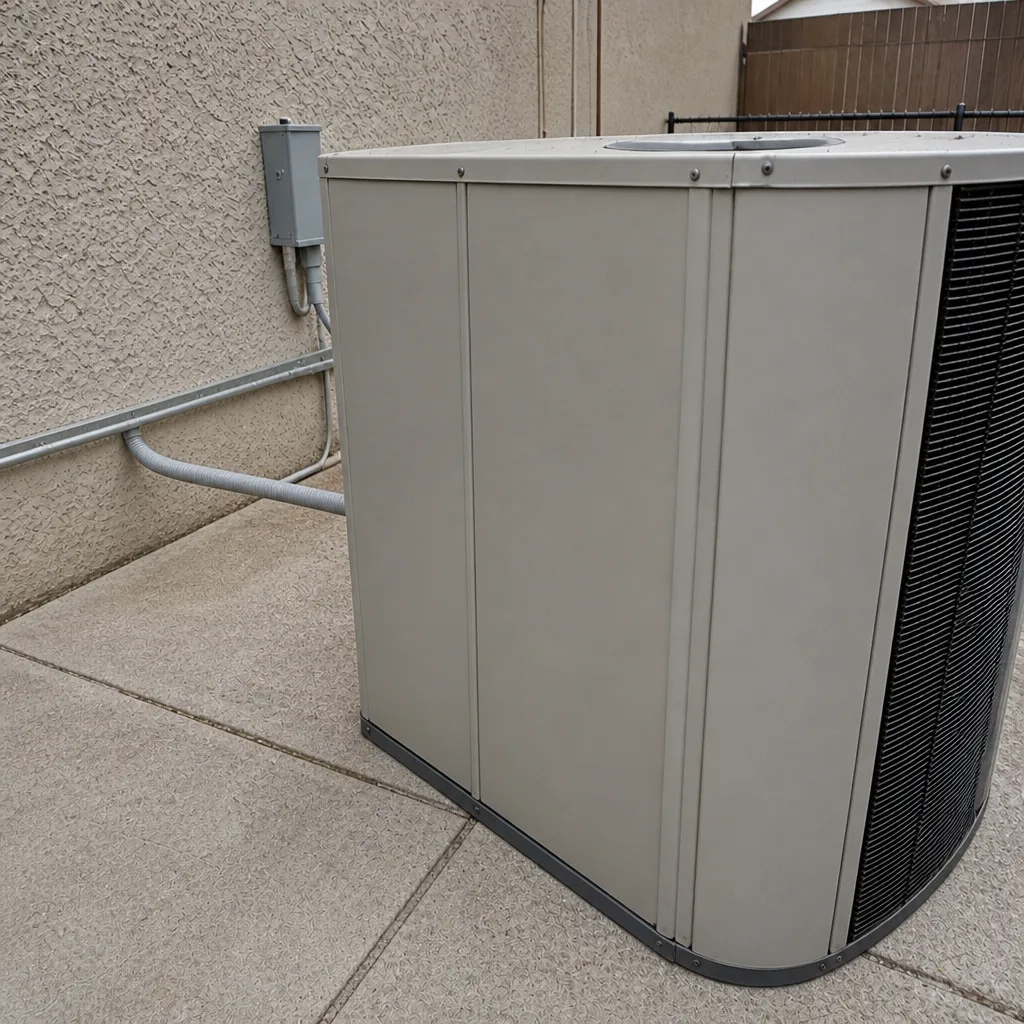 After
When to Call a Professional
If you’re pricing a replacement, comparing equipment brands, or trying to figure out whether your existing system is even worth keeping, the right first move is a no-cost assessment that maps your specific install against the factors in this guide. If you’re seeing unexpected warm spots, refrigerant leaks, or a system that’s running constantly in May, a pre-install diagnostic can tell you whether you’re looking at a repair or a full install. Halden Heating & Air Sunrise Manor offers free estimates in Sunrise Manor – call (833) 892-8106. Calls are answered by a live person, 24 hours a day, 7 days a week, and every job comes with a written price before any work begins and a free second visit if the repair fails.
Frequently Asked Questions
Yes, most residential split-system replacements are completed in a single day – usually 5 to 9 hours on site. The exceptions are installs requiring a panel upgrade or major ductwork changes, which sometimes split into two visits. A properly scoped install gives you an honest single-day or split-day answer before you commit.
You don’t need to hover, but someone should be present for the pre-work walkthrough and the final walkthrough. The tracking link and photo documentation mean you can go about your day without parking in the driveway. Call (833) 892-8106 if you have a specific scheduling constraint – the written arrival window can be worked around.
A manometer measures the resistance your ductwork puts on the blower, and manufacturer specs typically cap residential systems around 0.5 inches of water column. High static pressure means the system is being strangled by its own ducts – coil icing, premature compressor failure, and climbing electric bills follow. The test takes 15 minutes and belongs in the job close.
Most residential replacements run $5,000 to $12,000 depending on tonnage, equipment brand, ductwork condition, and electrical requirements – with an attic air handler and any duct or panel work pushing toward the higher end. Get a written price before any work begins. Call (833) 892-8106 for an exact quote – estimates are free.
If your system is over 12 years old, needs a compressor or evaporator coil, or has had three or more repairs in the past two years, replacement usually wins on cost. A repair-or-replace assessment gives you the actual math on both paths – not a sales pitch. Free estimate in Sunrise Manor: (833) 892-8106.
Yes, Clark County requires a permit for a residential HVAC changeout, and the contractor typically pulls it before install day. The permit inspection is scheduled separately and rarely adds time to install day itself. Ask to see the permit in your written price – it should be itemized.
The Bottom Line
The 4-to-8 hour range isn’t the install’s fault. It’s the range created by everything around the install – your attic or closet, your line set, your panel, your ducts. Map those four things before you book, ask for a pre-install assessment, and you’ll know which end of the range you’re on. Insist on a locked arrival window you can track, a written price before work starts, static pressure in the closeout, and before-and-after photos. If a crew can’t deliver those four commitments, the timeline isn’t the problem. Call (833) 892-8106 for a free estimate, and we’ll tell you exactly what day looks like for your home before anything is scheduled.
Written by the team at Halden Heating & Air Sunrise Manor.