
Last updated November 17, 2026
 AC repair
 Furnace & heating
 Heat pumps
 Ductless mini splits
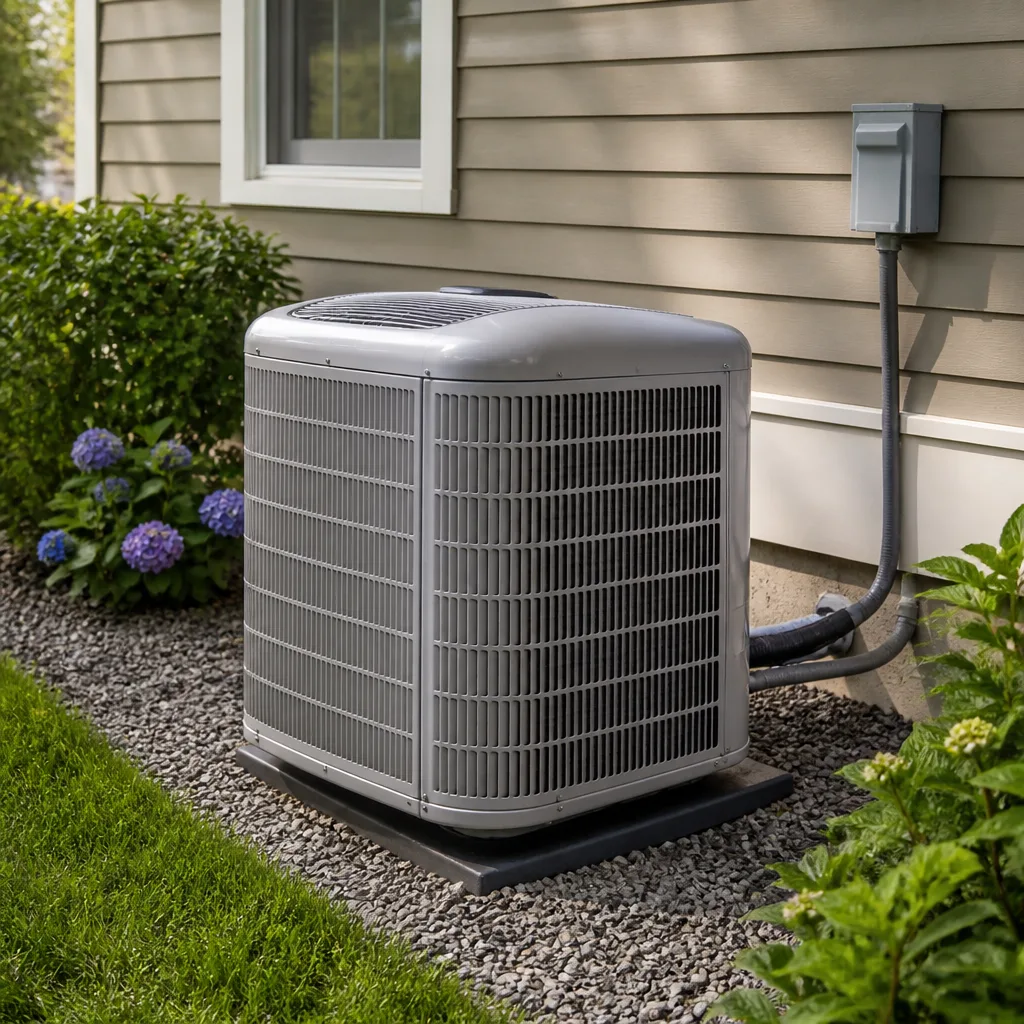 Carrier
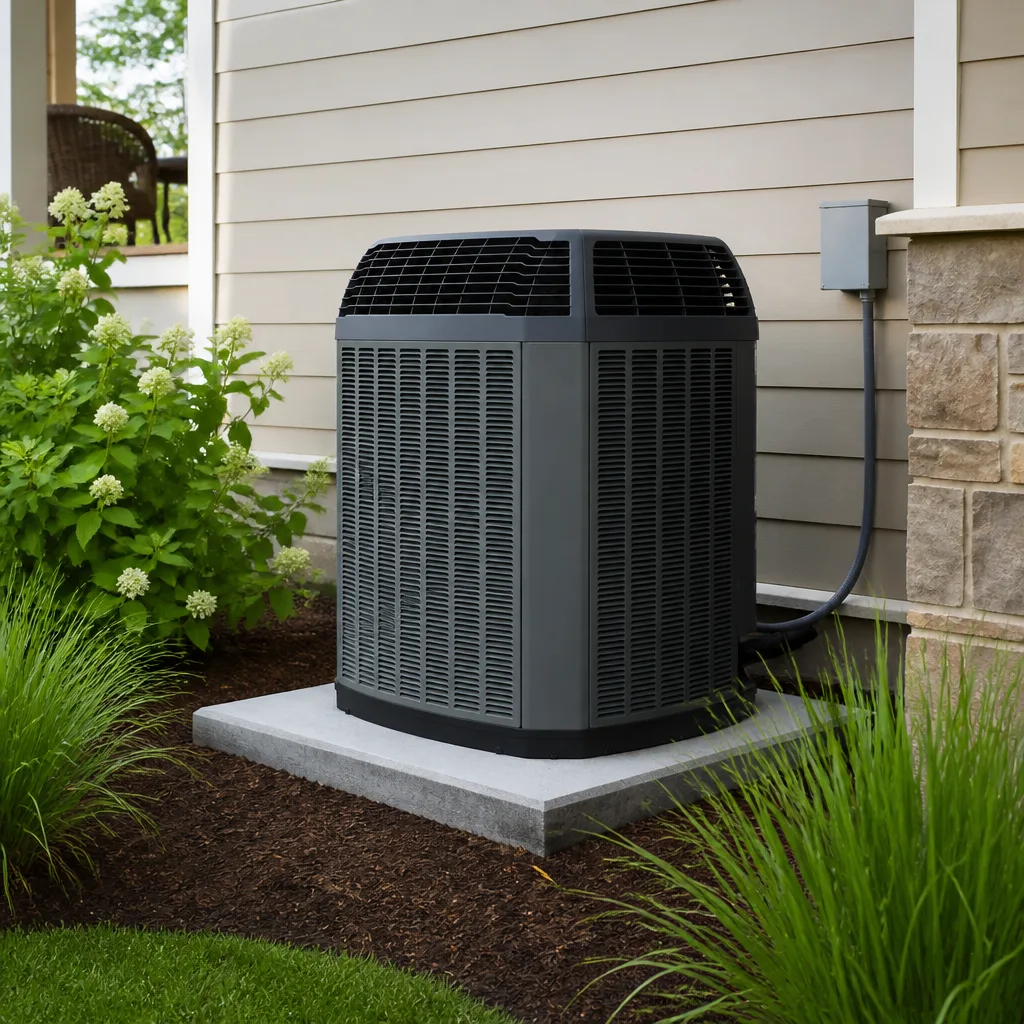 Trane
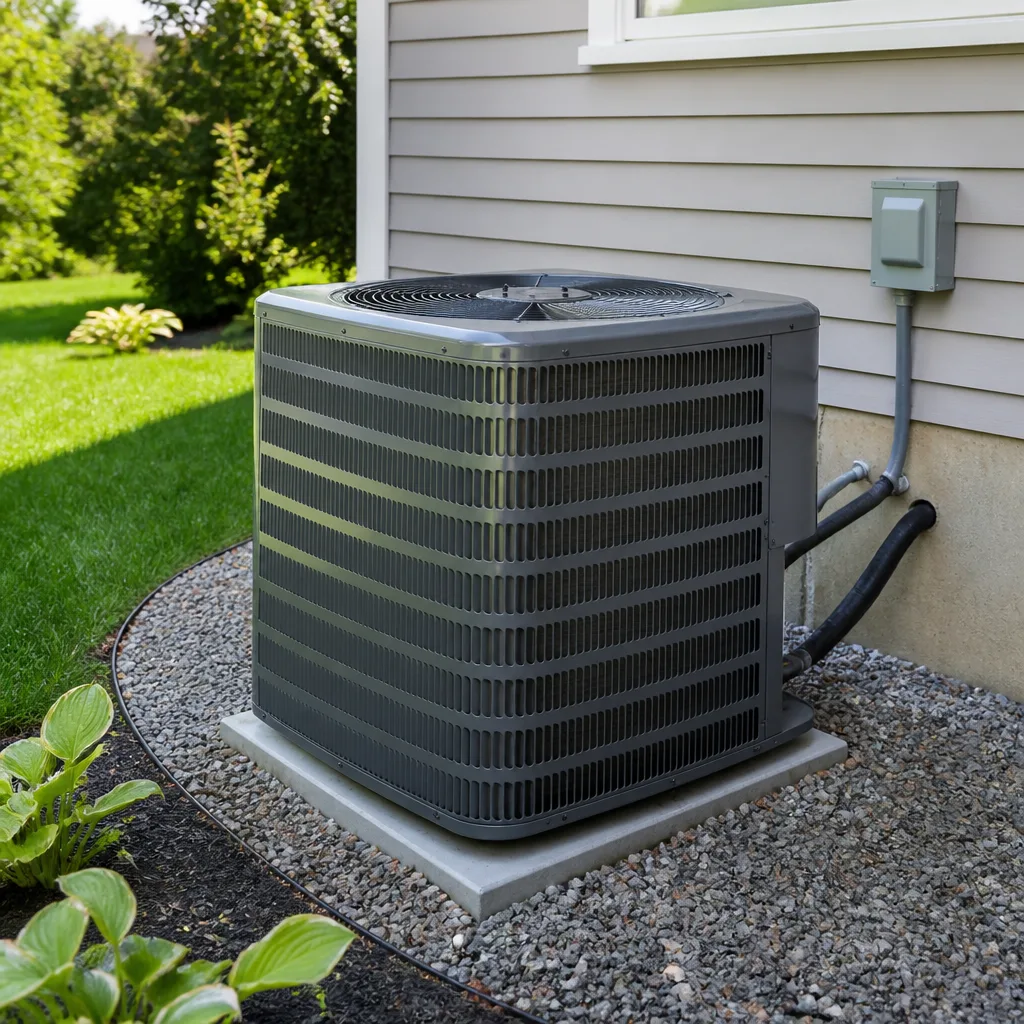 Goodman
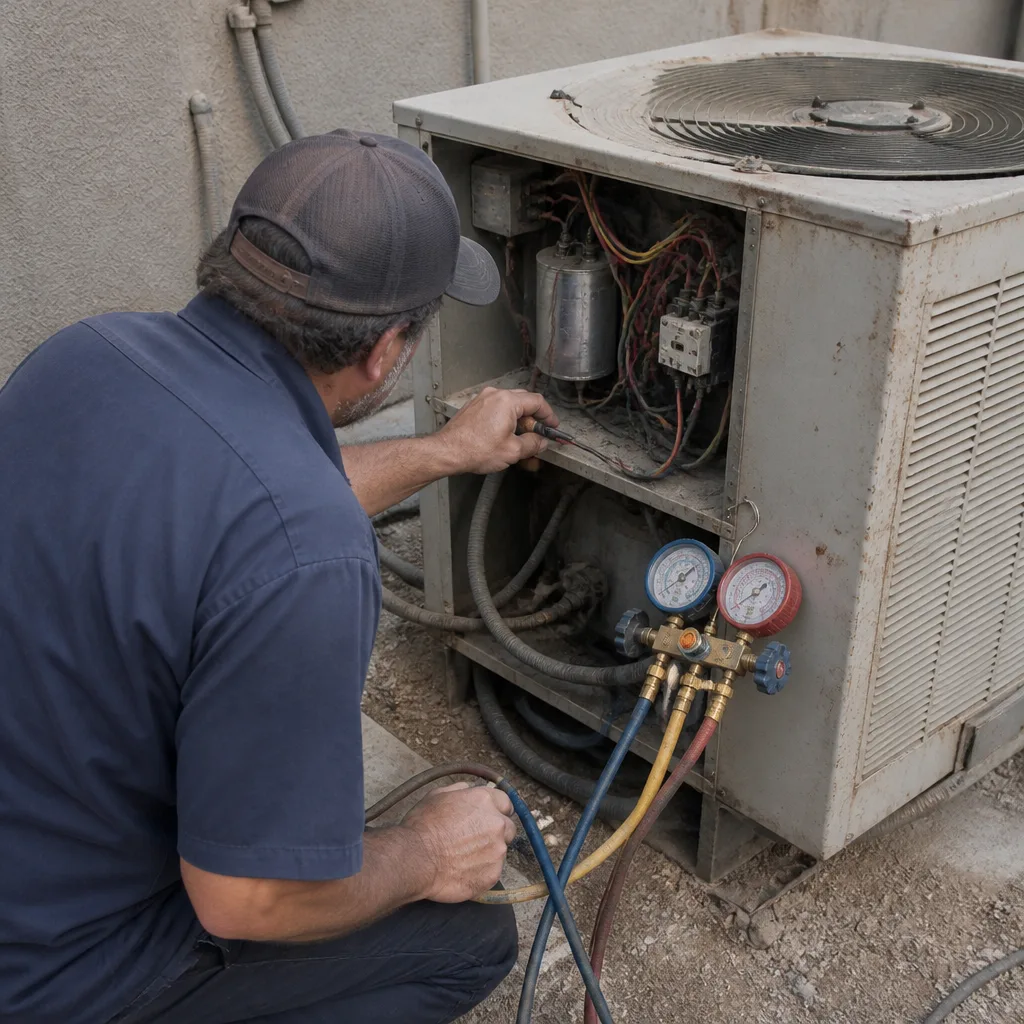
Seasonal tune-up and full diagnostic on your Carrier, Trane, or Goodman system - readings shown to you before any repair is proposed
Diagnosis first, numbers second - you approve the repair price before a single part goes in.
Get your free estimateAC Repair Maintenance Schedule: What to Do and When
Sunrise Manor averages 72 days per year above 100°F. The standard “change your filter every 90 days” advice accounts for exactly none of them. Run that mild-climate schedule here and your system spends late June through September pulling air through a filter that’s been loaded with desert dust since spring – clogged for 60 of the most punishing days of the year, right when your unit is working hardest and your bill is highest.
This guide rebuilds the calendar for the Las Vegas Valley: actual dust load, monsoon timing, NV Energy billing cycles, and the dates that matter in Sunrise Manor. You’ll get a month-by-month task list, cleaning methods that change with your landscaping, and a simple way to document every task so it counts when you need it to.
Quick Answer
In Sunrise Manor, AC maintenance should run on a 30-day filter schedule from June through September and every 60 days the rest of the year, with a pre-summer tune-up in March, coil cleaning before monsoon season in June, and a post-summer inspection in October. Most local homes need three professional visits a year plus monthly filter changes, and the total cost typically lands between $250 and $450 annually – far less than the $1,200 to $3,000 a neglected system usually costs to repair.
Styles & brands we work with
- AC repair
- Furnace & heating
- Heat pumps
- Ductless mini splits
- Carrier
- Trane
- Goodman
Table of Contents
- Why the Standard Maintenance Schedule Breaks in Sunrise Manor
- The Month-by-Month Schedule for Sunrise Manor
- Filter Replacement: Why 30 Days Beats 90 Here
- Condenser Coil Cleaning: Desert Landscape vs. Grass
- How to Log Maintenance for Warranty and Guarantee Claims
- Timing Visits Around NV Energy Time-of-Use Rates
- What You Can Check Yourself and What Needs a Technician
Why the Standard Maintenance Schedule Breaks in Sunrise Manor
Most AC maintenance calendars are written for a climate with four mild seasons and moderate humidity. Sunrise Manor has two: hot and less hot. Your system runs more hours by May than a Midwestern unit runs all summer, and it does it while ingesting fine particulate dust that desert wind events lift off the open ground east of town.
Three local conditions drive the whole schedule:
- Dust load. Wind events push fine silt through every gap in a return duct. In Sunrise Manor homes near open desert, we regularly see filters reach full loading in under 30 days during the windy spring.
- Peak heat duration. A system that runs continuously from June through September never gets a cool-off period to recover. Parts wear faster, and refrigerant pressures stay elevated for months.
- Monsoon season, roughly July through September. Humidity spikes for short windows, then disappears. That cycle stresses coils and drain lines in ways steady humidity never does.
A 90-day filter interval here means a clogged filter through the entire high-stress period. Clogged filters choke airflow, which raises supply temperatures, which makes the compressor work longer on every cycle. That’s how a $30 filter turns into a $600 repair. The rest of this guide builds the schedule around what actually happens in Sunrise Manor – visit Halden Heating & Air’s Sunrise Manor home page for the services behind each task below.
The Month-by-Month Schedule for Sunrise Manor
Here’s the calendar we recommend for Sunrise Manor homes, built around the local heat curve rather than the calendar on a hardware store filter package.
March: Pre-Summer Prep
- Professional tune-up. A full inspection now catches weak capacitors, worn contactors, and low refrigerant before the first 100°F week. Doing it in March means you’re not competing for appointments in June.
- Replace the filter and note the date. Baseline everything before the season starts.
- Clear the condenser. Remove winter debris, leaf litter, and anything stacked against the outdoor unit. It needs two feet of clear space on all sides.
- Test the thermostat in both heat and cool modes before you need either.
June: Monsoon Prep and Coil Cleaning
Clean the condenser coil before the humidity arrives. Monsoon moisture combines with accumulated dust to form a mud-like layer on coil fins that insulates the coil and forces the system to run hotter. That’s a coil cleaning on the schedule, not a repair.
July through September: Monthly Filter Changes
Every 30 days, no exceptions. This is the stretch where a clogged filter does the most damage. If you’ve ever wondered why your July power bill jumps even when the thermostat hasn’t moved, a loaded filter is one of the first things to check.
October: Post-Peak Inspection
Have a technician look the system over after the worst of the season. The goal is catching what four months of continuous running wore down – a tired capacitor, a drain line that’s partially clogged with algae, a contactor showing pitting. October fixes are cheaper than August failures.
November through February: The Quiet Stretch
Switch the system to heat mode and confirm it runs. Change the filter every 60 days. If your furnace shares ductwork with the AC, this is also when to schedule furnace repair in Sunrise Manor – heating problems are far easier to handle in December than during a cold snap when everyone else is calling.
Filter Replacement: Why 30 Days Beats 90 Here
Filter intervals are the single biggest maintenance difference between Sunrise Manor and the rest of the country. The 90-day standard assumes a moderate climate with moderate dust. Neither applies here.
During June through September, plan on 30-day changes. The rest of the year, 60 days works for most homes – but check monthly anyway. Homes near open desert, homes with pets, and homes with anyone in the household who has allergies or respiratory conditions should stay at 30 days year-round.
- What actually loads a filter here: fine desert silt from wind events, plus normal household dust. The silt is the sneaky part – it looks like a light gray film but packs densely into the pleats.
- How to check: hold the filter up to light. If you can’t see light through it, it’s done, regardless of how many days it’s been.
- Filter choice: a MERV 8 to MERV 11 pleated filter is the sweet spot for most Sunrise Manor homes. Higher-rated filters (MERV 13 and up) can restrict airflow in older duct systems and make the system work harder – the opposite of what you want in a place this hot.
One more local note: if the filter looks wet or the housing feels damp, call a technician. That points to a duct or drain problem, not a filter problem.
Condenser Coil Cleaning: Desert Landscape vs. Grass
The condenser coil is the finned outdoor coil that releases heat from your home. Dust on those fins acts like a blanket – the system sheds heat less efficiently and runs longer to compensate. But the debris type changes the cleaning method, and Sunrise Manor has both kinds of yards side by side.
Homes With Desert Landscaping
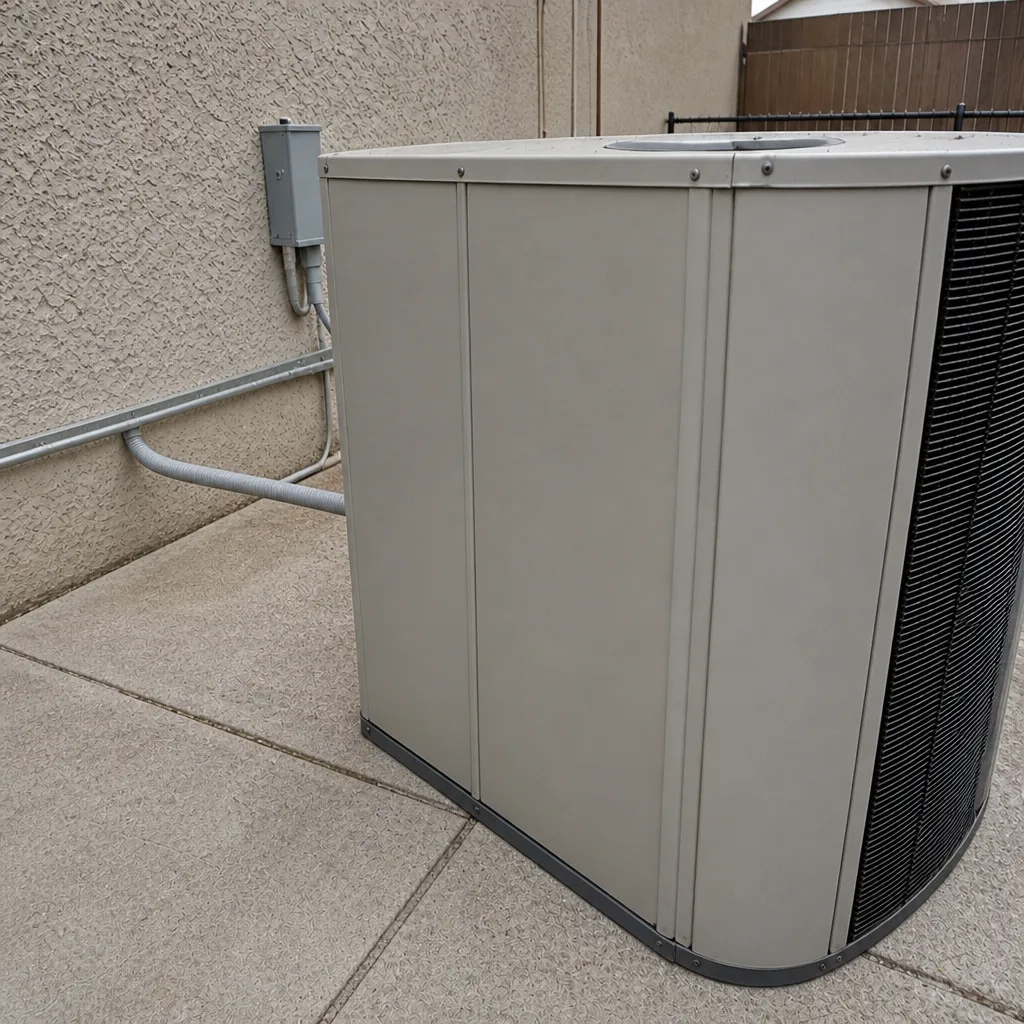
Rock mulch, gravel, decomposed granite, and bare dirt yards send fine grit and dust onto the coil. That grit binds to the fins and can pack into the lower rows where air pulls through. Cleaning method: a soft-bristle brush or a coil-safe brush to loosen packed dust, then a gentle rinse from the inside out. Never use a pressure washer – it flattens the fins and permanently reduces efficiency.
Homes With Grass or Landscaping Near the Unit
Lawn clippings, seed heads, and cottonwood fluff mat onto the coil surface. Cottonwood in particular coats the coil in a fibrous layer that a rinse won’t remove. Cleaning method: vacuum or brush the fibers off first, then rinse. If you’ve got a cottonwood or similar seed-bearing tree within 30 feet of the condenser, check the coil monthly during its shedding season.
Steps for Either Yard Type
- Kill power at the thermostat and the outdoor disconnect.
- Remove the top grille or side panel per the manufacturer’s instructions (check your Carrier, Trane, Lennox, or Goodman manual – panel design varies).
- Clear debris from the coil surface with a soft brush, working with the fin direction, not against it.
- Rinse gently from the inside out so debris exits the way it came in.
- Straighten any bent fins with a fin comb.
- Reassemble, restore power, and confirm the system runs.
If the coil is heavily matted or the fins are damaged, that’s a technician job. We handle coil cleaning as part of AC repair in Sunrise Manor.
How to Log Maintenance for Warranty and Guarantee Claims
Every task on this calendar matters twice – once when you do it, and once when you need proof you did it. Manufacturers increasingly ask for maintenance records before honoring a warranty claim on a failed compressor or a leaking coil. A log you can produce in five minutes is the difference between a covered repair and a bill.
Here’s a system that works:
- Photograph the filter before you change it. A quick dated phone photo of the loaded filter, next to the new one, is proof of condition and interval.
- Photograph the thermostat after service. A picture of the set temperature and the unit running confirms the job happened.
- Save every invoice and the technician’s notes in one folder or album. Most companies email them; keep them together.
- Note the date, the technician’s name badge, and what was found. Two lines in a notes app is enough.
- Keep before-and-after photos of any repair.
This is also where our guarantee terms matter. Every repair we do comes with a written guarantee, and if it fails within the coverage window we come back at no charge – the free second visit is automatic, no arguing required. Documenting the original repair makes that simple. Halden Heating & Air is part of the Relay Home Co. network and operates under The Relay Visibility Guarantee, so you get before-and-after photos on every job, which slots directly into this log. The 365-Day Done Right Promise adds a full year of accountability on completed work.
Timing Visits Around NV Energy Time-of-Use Rates
When you schedule maintenance affects your bill, and the difference is meaningfully bigger than most homeowners realize. NV Energy’s time-of-use rate plans charge more per kilowatt-hour during peak windows – typically weekday afternoons and early evenings – and much less during off-peak hours, nights, and weekends on some plans.
The wrinkle: a professional service visit isn’t just the fee you’re quoted. During the pre-summer tune-up in March, a technician will cycle the system to test it, and that testing draws power. On a time-of-use plan, running that test at 4 p.m. on a Tuesday costs more in electricity than running it at 9 a.m. And in summer, weekend rates on some time-of-use plans are actually lower than weekday peak – the opposite of the usual assumption.
- Best windows for service visits: weekday mid-mornings, typically Tuesday or Wednesday, before afternoon peaks begin.
- Check your exact plan: rate windows vary by plan, and plans have shifted in recent years – log into your NV Energy account and note the peak hours before you book.
- Weekend visits are fine for repairs if your plan prices weekends low, but weekday mornings are usually the calmest – and you’re more likely to get the earliest arrival window.
- Don’t wait for peak-season pricing. March and October visits cost the same as any other time, but the March visit prevents June breakdowns.
If your AC is already struggling, stop reading and call – a failing system pulls peak-rate power the entire time it’s limping. That’s a case for same-day AC repair.
What You Can Check Yourself and What Needs a Technician
Some maintenance is genuinely yours to do. Some of it isn’t safe or legal to attempt, and we’ll say so plainly.
Safe for You to Handle
- Filter changes. Monthly, or per the schedule above. This is the single highest-value task you can do.
- Clearing the outdoor unit. Removing leaves, clipping back plants, and keeping two feet of clearance around the condenser.
- Thermostat checks. Test heat and cool modes, replace batteries, and verify the schedule.
- Drain line inspection. Look at the condensate drain and the pan; if you see standing water or algae, call.
- Basic coil rinse with the power off, as described above – light surface dust only.
Needs a Trained Professional
Refrigerant handling is regulated, and refrigerant systems run at high pressure. Refrigerant lines and the compressor are not a do-it-yourself project, and adding refrigerant without finding the leak is a waste of money. Electrical components inside the unit – capacitors, contactors, the compressor circuit – hold a charge even after power is off, and they can shock or kill. Gas-fired heating components and any work involving fuel lines or venting require a trained professional. If your system uses a heat pump or has a gas furnace, a technician should handle every part of it beyond the filter.
How to Tell the Difference
Two questions. Is it the filter or the outdoor clearance? Do it yourself. Does it involve refrigerant, electricity past the disconnect, or gas? Call a technician. Our techs have up to 22 years of experience, and they’re background-checked and arrive with a live arrival time you can track to your door – no four-hour window.
For a full system that’s more than 15 years old with repeated repairs, replacement may cost less over time. See AC installation in Sunrise Manor for what that involves.
Common Mistakes to Avoid
- Running a 90-day filter schedule June through September. It’s the most common local mistake and costs homeowners hundreds in extra energy and early failures. During peak heat, you need 30-day changes.
- Pressure-washing the condenser coil. It feels efficient and it’s wrong – flattened fins permanently reduce efficiency and can’t be repaired, only replaced.
- Stacking things against the outdoor unit. Storage, garden pots, and fencing within two feet of the condenser choke airflow. In a yard with desert landscaping, keep that zone clear.
- Skipping the March tune-up because “it’s working fine.” March is when we catch weak capacitors and low refrigerant before they become mid-July failures. A tune-up is far cheaper than an emergency repair.
- Waiting until monsoon season to clean the coil. Once humidity combines with dust, the mud layer is harder to remove. Clean in June, before the rains start.
- Not keeping maintenance records. Missing documentation kills warranty claims. Photograph every filter change and save every invoice.
- Ignoring a wet filter or drain pan. It’s usually a clogged drain line or a duct problem, not normal. Damp conditions in Sunrise Manor’s low-humidity climate mean something is wrong.
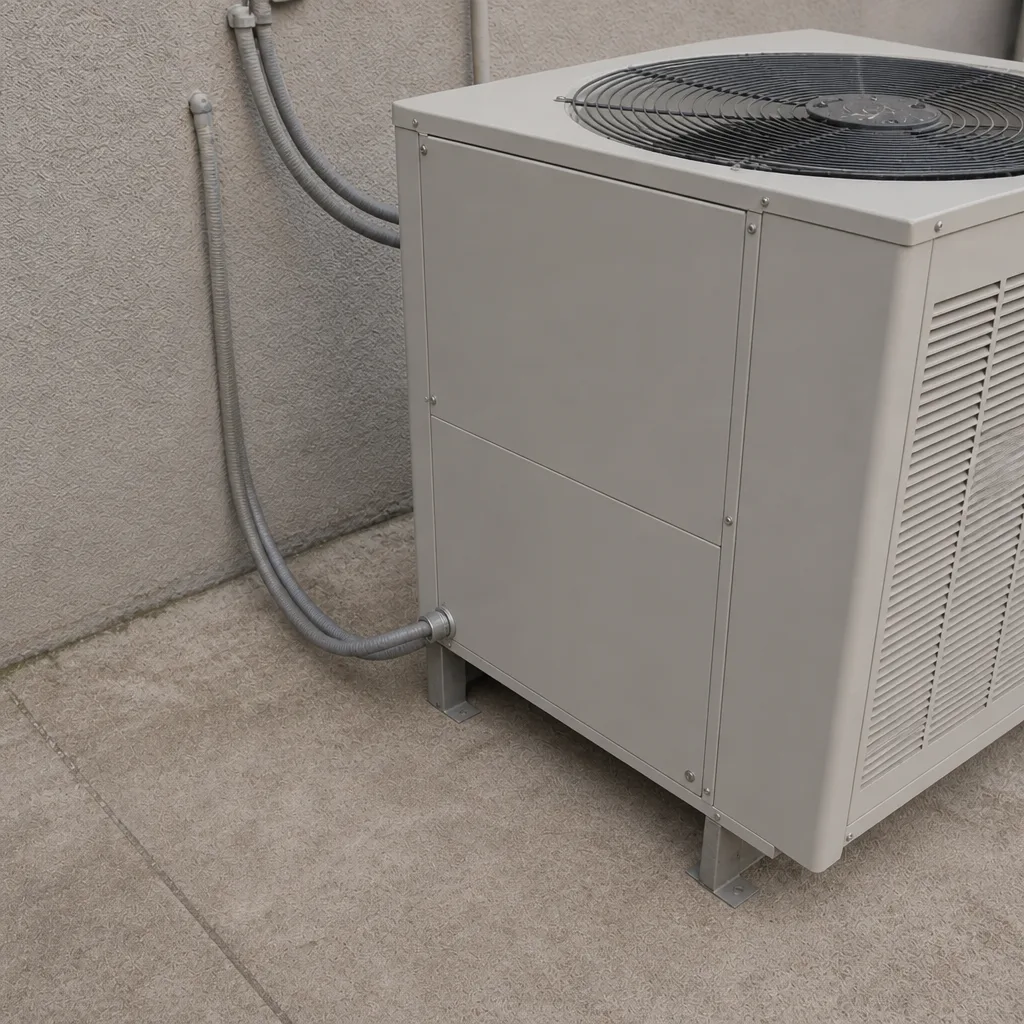
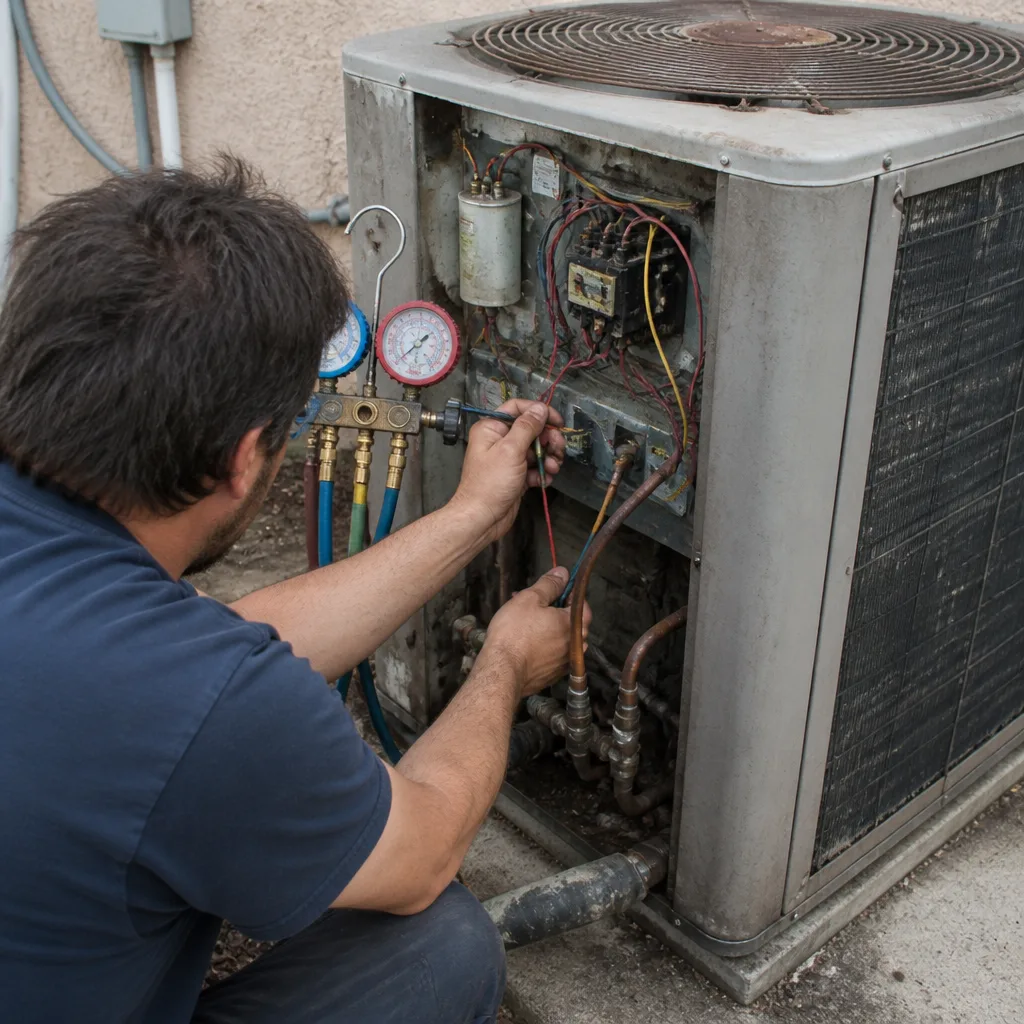
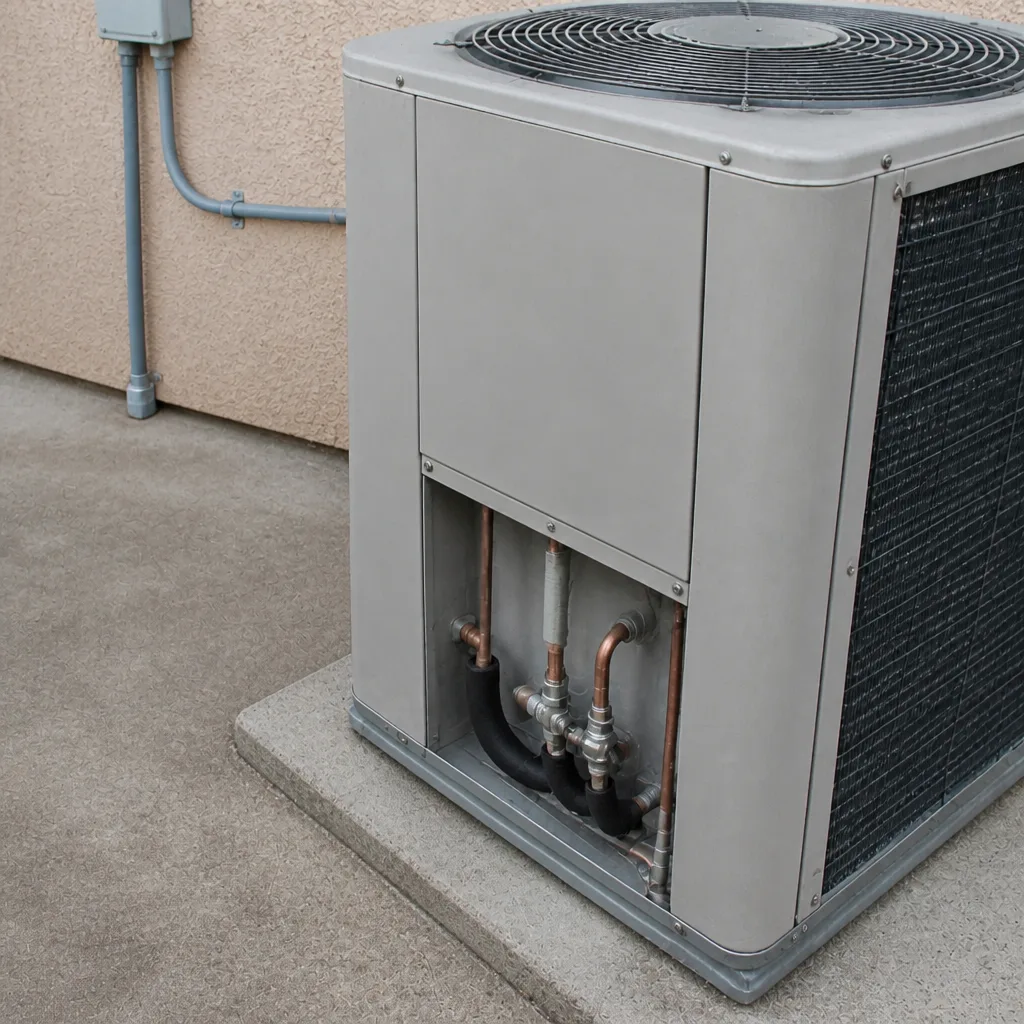
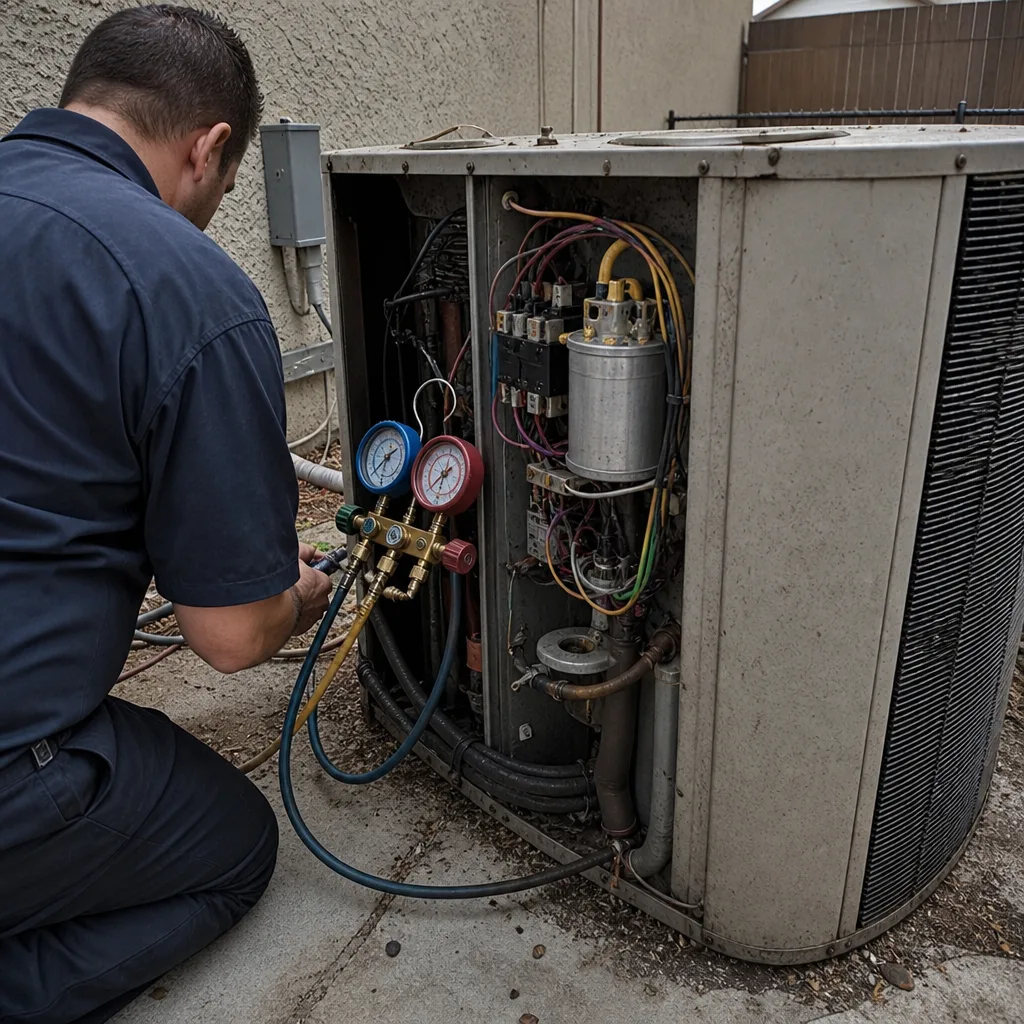
See the difference
 Before
 After
 Before
 After
 Before
 After
When to Call a Professional
Call for help if your AC isn’t cooling within a few hours of the thermostat going down, if you hear grinding, clicking, or hissing from the outdoor unit, or if you see ice on the refrigerant lines or the coil. Ice means a refrigerant or airflow problem – never a sign the system is running well. Standing water near the indoor air handler, a burning smell, repeated breaker trips, or a system that runs constantly without reaching the set temperature all warrant a call. If your power bill jumped with no thermostat change, that’s worth a look too.
Halden Heating & Air Sunrise Manor offers free estimates in Sunrise Manor. Call (833) 892-8106, or book online and track your tech to the door. Every job includes a written price before work starts. Calls are answered by a live person, 24/7 – no voicemail trees, no next-business-day callbacks.
Frequently Asked Questions
Every 30 days from June through September and every 60 days the rest of the year in most Sunrise Manor homes. Desert dust from wind events loads filters faster here than in other climates, so the national 90-day standard doesn’t apply. Homes with pets or allergies should stay at 30 days year-round.
A tune-up typically runs $89 to $179, and a full season of maintenance (spring tune-up, pre-monsoon coil cleaning, and fall inspection) usually lands between $250 and $450. Individual repairs, if a visit turns up a problem, typically run $150 to $500 depending on the part. You get a written price before any work starts, every time. Call (833) 892-8106 for a free estimate.
March. In Sunrise Manor, the first 100°F days often arrive in May, and a March visit catches weak parts before the peak rush. Waiting until June means competing for appointments and discovering problems when you need the system most. Call (833) 892-8106 to book a March slot before the calendar fills.
Yes – Halden Heating & Air handles same-day repairs, and calls are answered by a live person 24/7. You get a live arrival time you can track to your door instead of a four-hour window. Call (833) 892-8106 and we’ll confirm availability and a written price.
As a rule, repair if the unit is under 12 to 15 years old and the repair costs less than half of a new system; replace if it’s older than 15 years and needing repeated repairs, or if your energy bills have climbed sharply with no rate change. We’ll give you a written price for both options so you can decide. Call (833) 892-8106 for a free estimate.
Rebate programs change and depend on the equipment and your utility. We’ll go over what’s currently available when we write your quote. Our focus is a written fixed price and a set install date, with rebate paperwork handled. Call (833) 892-8106 to find out what applies to your home.
The Bottom Line
The right AC maintenance schedule in Sunrise Manor is built on local conditions, not a generic 90-day filter rule. Change filters monthly June through September, schedule a pre-summer tune-up in March, clean the condenser coil before monsoon season in June, and get a post-peak inspection in October. Do the simple tasks yourself and hand the refrigerant, electrical, and gas work to a technician. Log every task with a photo and save the invoices, so your warranty and any guarantee are easy to claim. Book mid-morning weekday visits when you can, check your NV Energy plan’s peak hours first, and call for anything that involves ice, water, noise, or a system that won’t cool. The calendar is the boring part – it’s also the cheapest repair you’ll ever do. Call (833) 892-8106 for a free estimate.
Written by the team at Halden Heating & Air Sunrise Manor.