
Last updated November 17, 2026
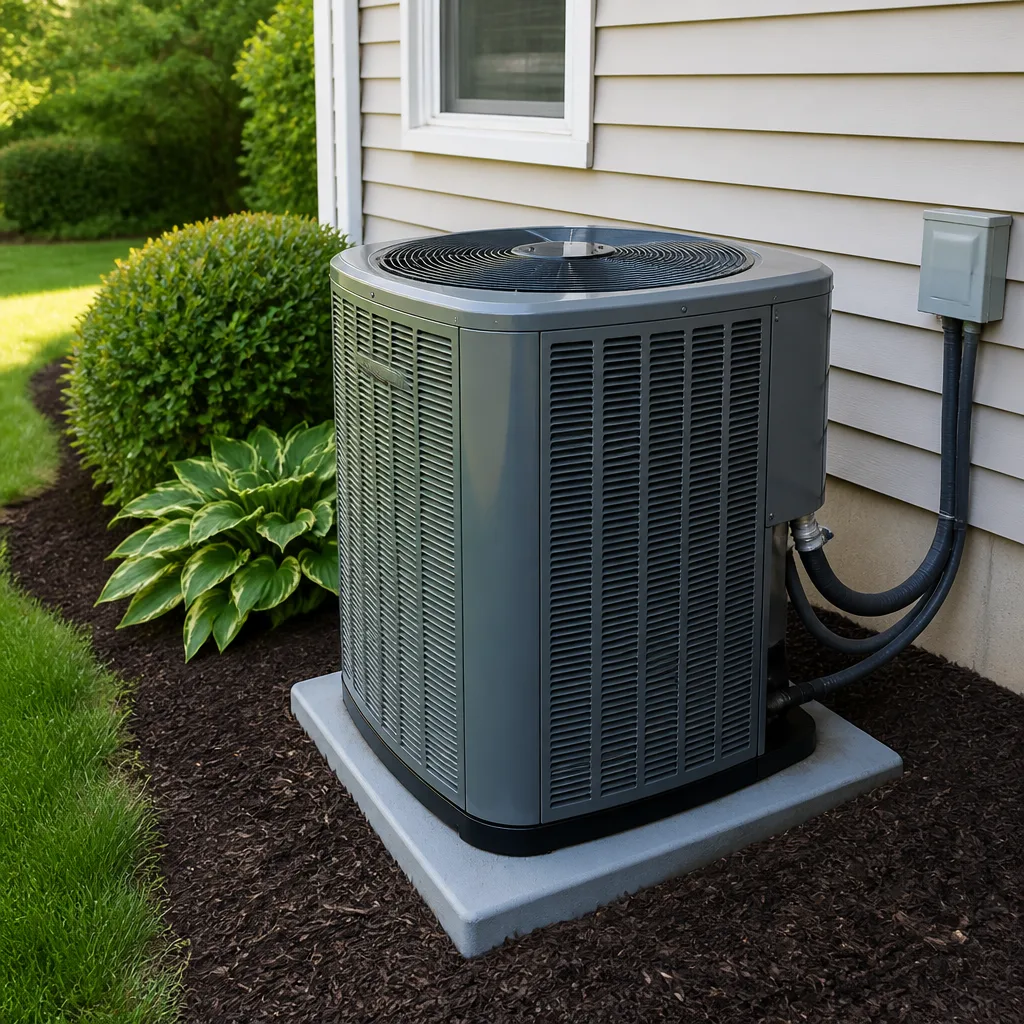 AC repair
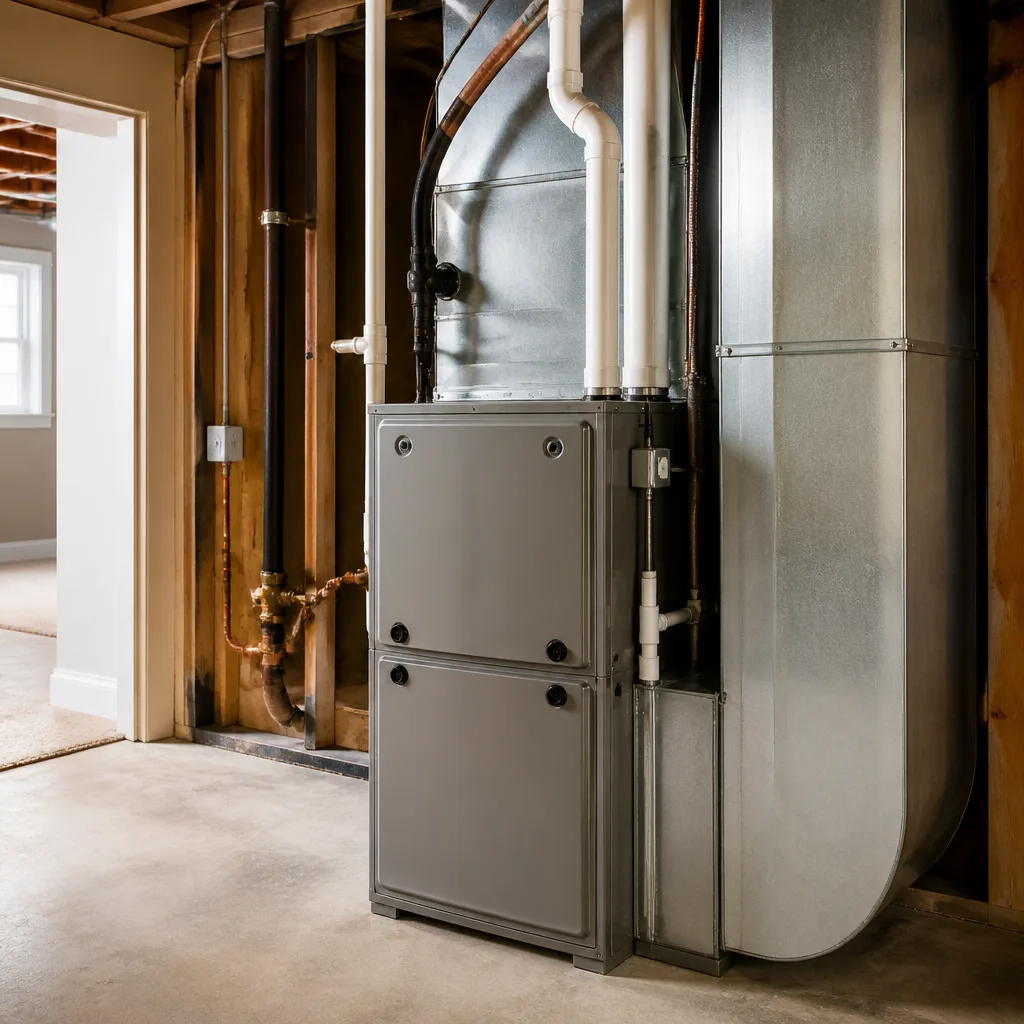 Furnace & heating
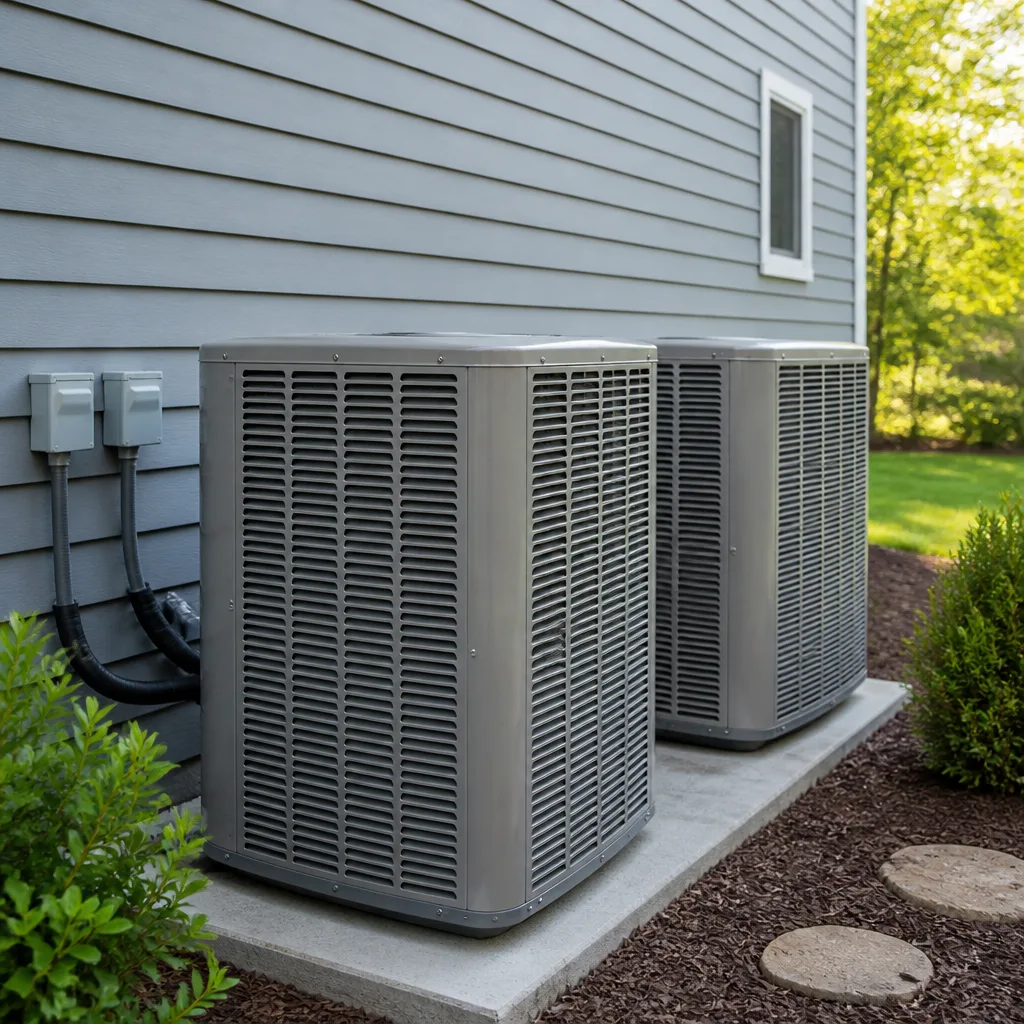 Heat pumps
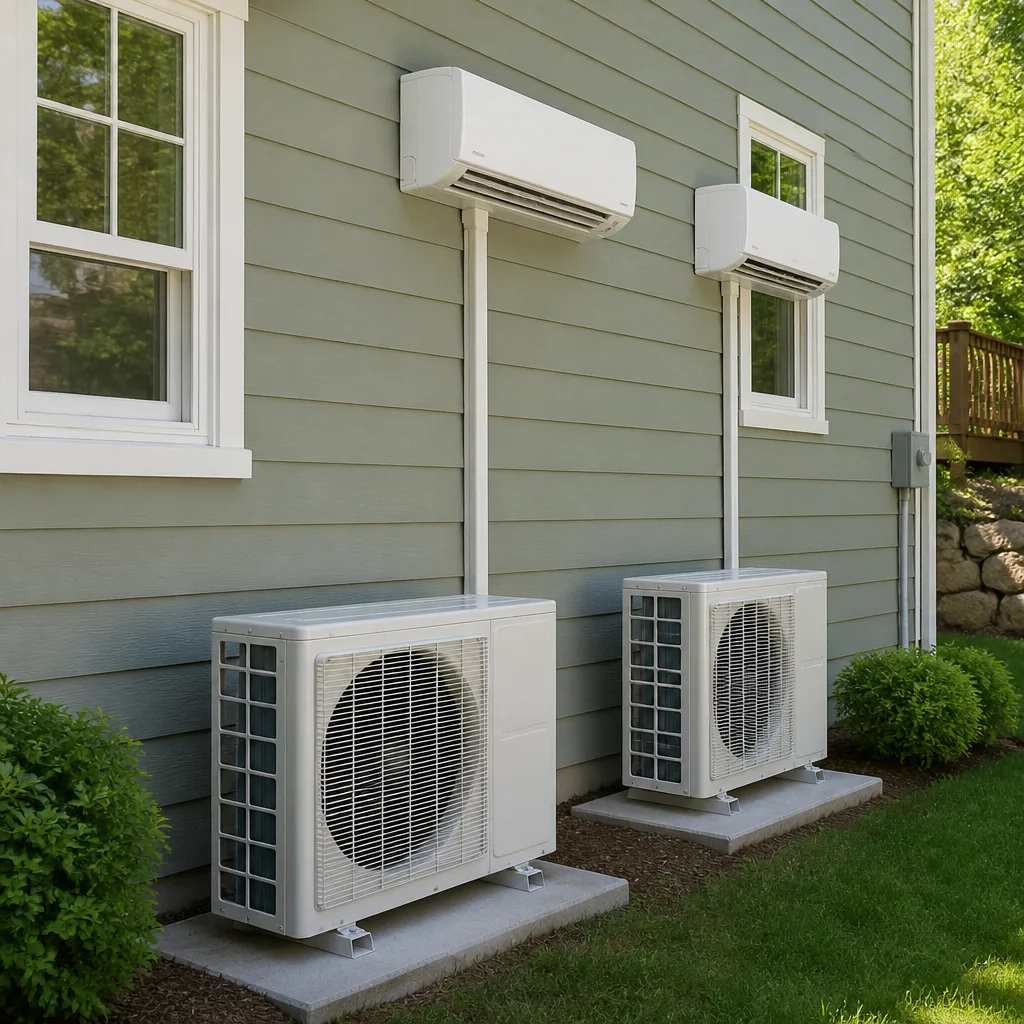 Ductless mini splits
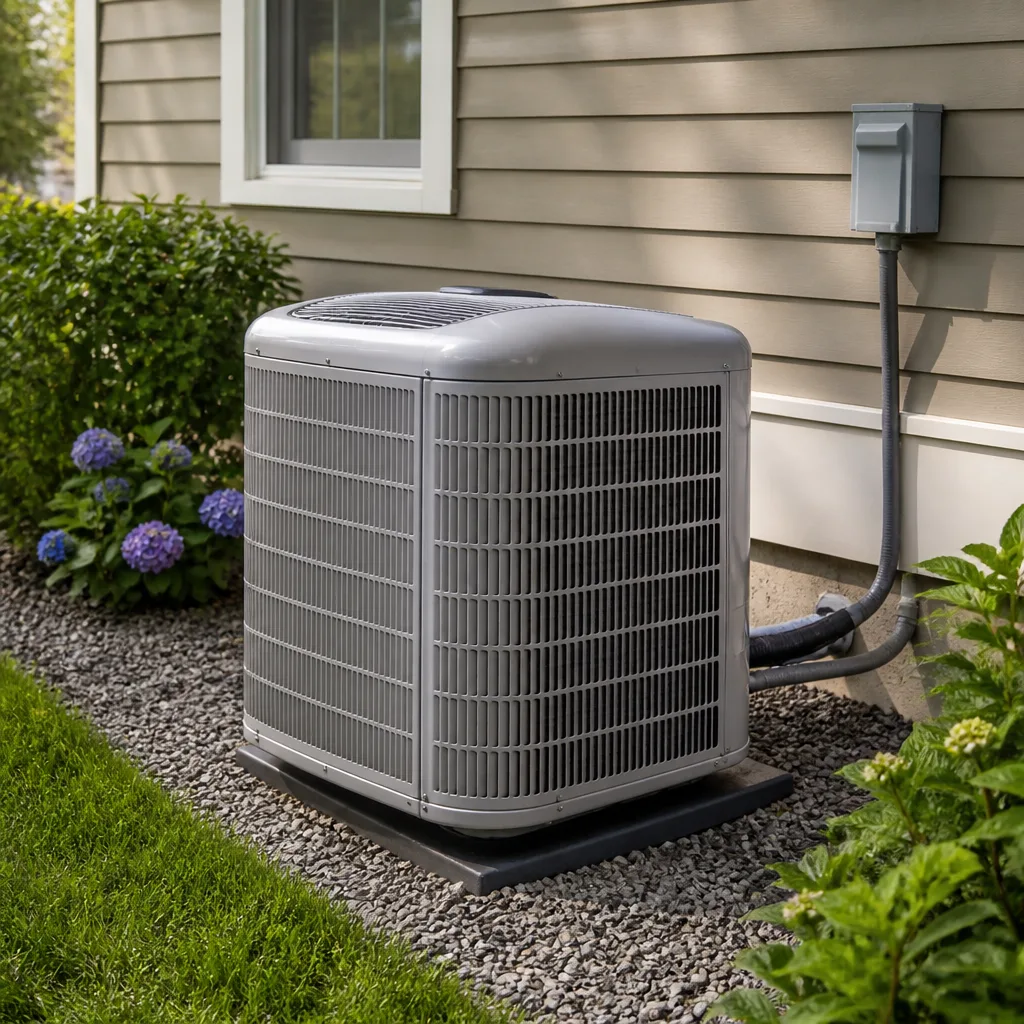 Carrier
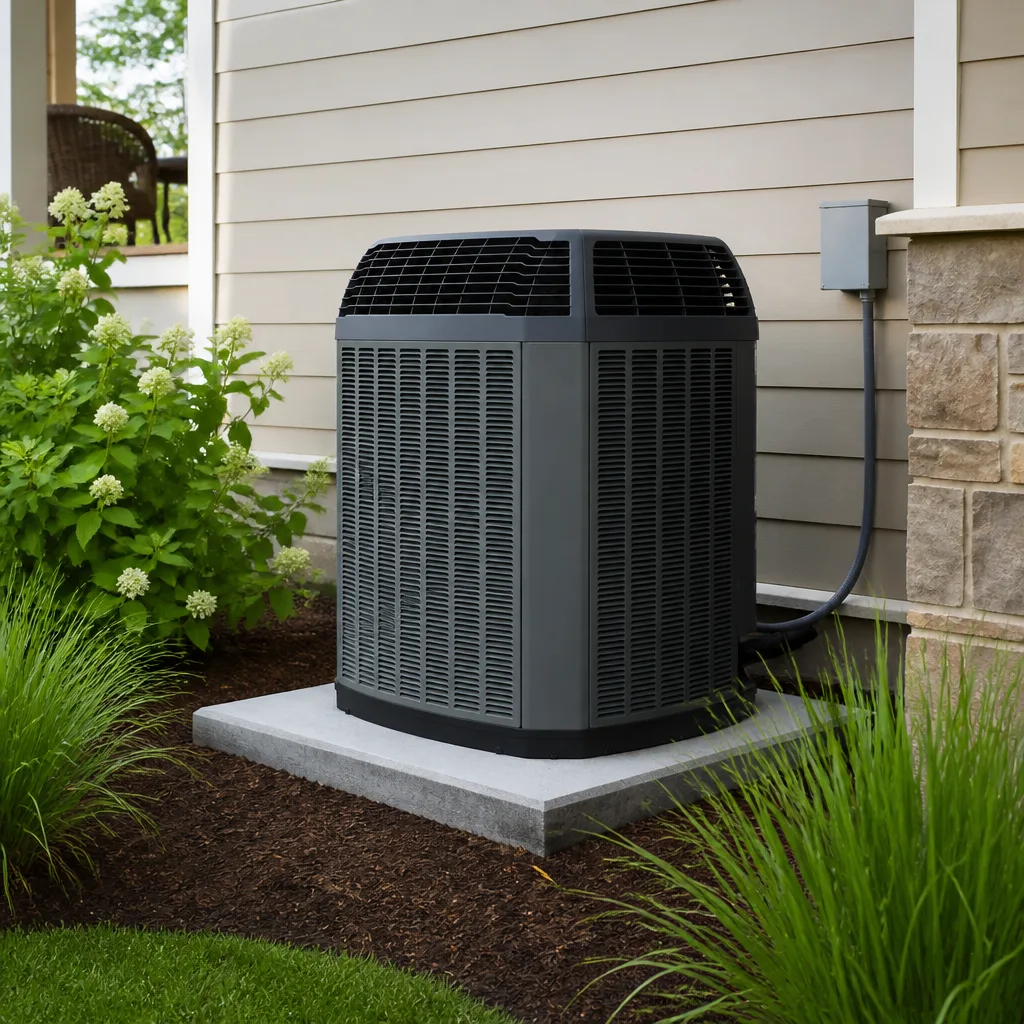 Trane
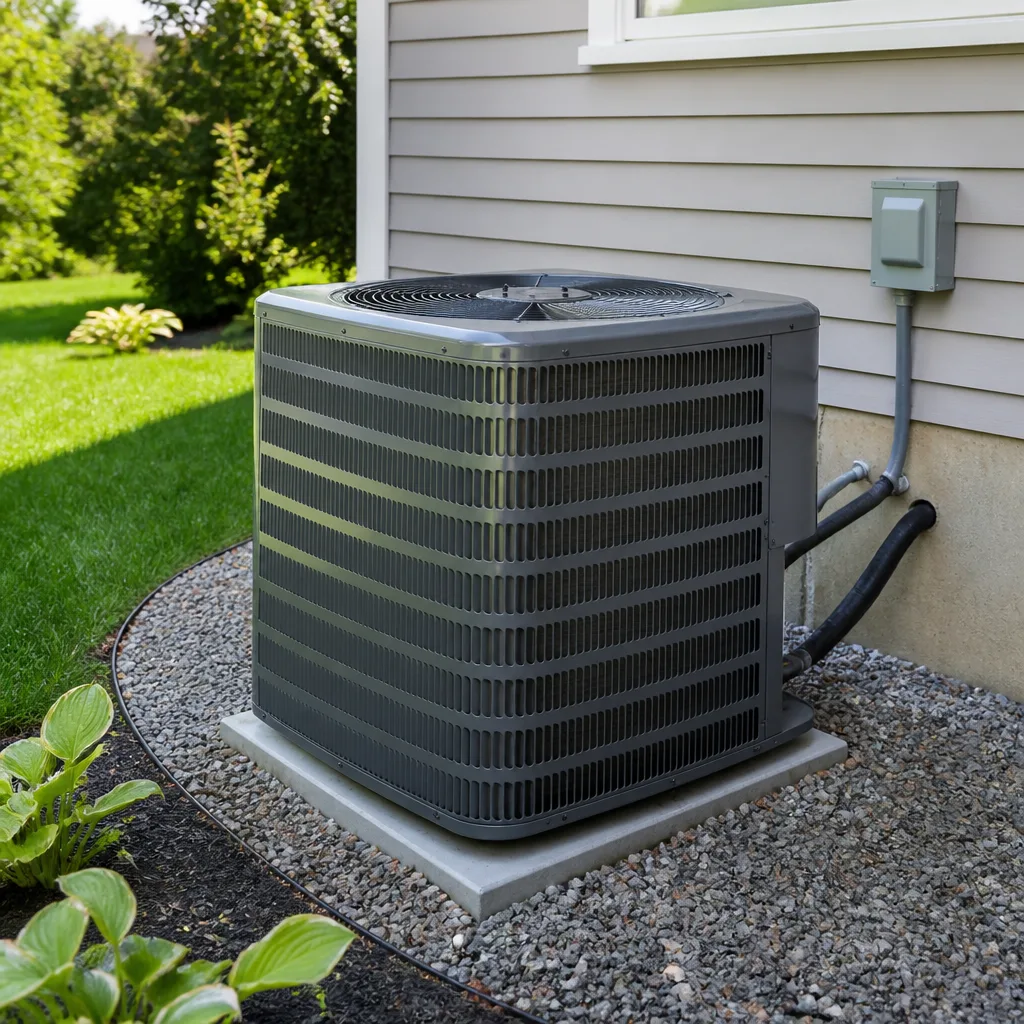 Goodman
Seasonal tune-up and full diagnostic on your Carrier, Trane, or Goodman system - readings shown to you before any repair is proposed
Diagnosis first, numbers second - you approve the repair price before a single part goes in.
Get your free estimateAC Repair Maintenance Checklist for Sunrise Manor Homeowners
The number-one AC repair call we see in Sunrise Manor between June and August isn’t a refrigerant leak or a failed compressor. It’s a frozen evaporator coil, and it almost always traces back to a clogged filter a homeowner skipped because the box said “change every 90 days.” Ninety days in a national average climate is not ninety days in the Mojave Desert, where the same system runs four times as hard and pulls a steady stream of wind-blown dust off the foothills. That mismatch is the whole problem. This guide is built backward from the failures our technicians actually find in Sunrise Manor, organized by what breaks first in desert heat. You’ll get a month-by-month calendar tuned to our real seasons, the filter ratings that balance dust against airflow, and the documentation habits that get you an accurate phone estimate instead of “we’ll have to see when we get there.”
Quick Answer
For Sunrise Manor homeowners, the effective AC maintenance checklist is: swap the filter every 30 to 45 days in summer (not 90), wash the outdoor condenser coil every 1 to 2 months during dust season, and have a full system inspection done once a year, in March or April before the first 100-degree week. The tasks that matter most are the ones that protect airflow, because airflow loss is what freezes coils and kills compressors in desert heat.
Styles & brands we work with
- AC repair
- Furnace & heating
- Heat pumps
- Ductless mini splits
- Carrier
- Trane
- Goodman
Table of Contents
- Why Standard Maintenance Schedules Fail in Sunrise Manor
- The Month-by-Month AC Checklist for Sunrise Manor
- Filter Selection: MERV Ratings That Balance Dust and Airflow
- Condenser Coil Cleaning: Desert Frequency vs. the Manual
- Reading Your Electric Bill as an Early Warning System
- What to Photograph Before You Call a Technician
- The Pre-Season Walkthrough: A Numbered Checklist
- Common Mistakes to Avoid
- When to Call a Professional
- Frequently Asked Questions
Why Standard Maintenance Schedules Fail in Sunrise Manor
Most maintenance calendars in your owner’s manual were written for a place with a mild summer and a wet spring. Sunrise Manor is neither. Our cooling season starts earlier, ends later, and asks the equipment to hold a temperature differential of 25 to 30 degrees for weeks at a stretch. A system that runs 12 hours a day in a temperate market might run 18 hours a day here during July. Every hour of runtime is an hour of filter loading, coil fouling, and electrical wear.
The dust is the other half of the story. Sunrise Manor sits where valley wind meets open desert, and fine particulate moves constantly. That dust does two things. It coats the outdoor condenser coil, which is a heat exchanger (the part that sheds heat into the outside air). A dirty coil can’t shed heat efficiently, so the compressor works longer and hotter. It also loads the indoor filter far faster than a suburban yard with mature trees and irrigation would.
So when a manufacturer prints “change filter every 90 days,” that’s a baseline for average conditions. In our experience across Sunrise Manor, a filter that’s fine at day 30 is often visibly gray by day 45 in June. Treat the manual as the floor, not the schedule. If you want the full picture of how we approach repairs when airflow problems have already started, our AC Repair in Sunrise Manor page covers the diagnostic side. The point of this checklist is to keep you out of that situation.
- Runtime, not calendar days, drives wear. Count how many hours your system runs, not how many weeks since the last service.
- Dust season is real. Spring wind events can load a filter in days, not months.
- Heat stress compounds. A coil that’s 10% fouled in mild weather can push a compressor into shutdown when it’s 112 degrees outside.
The Month-by-Month AC Checklist for Sunrise Manor
Here’s the calendar we’d hand a Sunrise Manor neighbor. It’s built around our actual seasons, not a four-season template. Print it, put it on the fridge, and let it drive your reminders.
January through February
- Check the filter after any stretch where the system ran (heating or cooling). Desert winters still move dust.
- Clear debris and stored items from around the outdoor unit. Two feet of clearance, minimum.
- Look for rust, ice, or water staining near the indoor air handler.
March through April (the important window)
- Book your annual full inspection before the first 100-degree week. March and early April are the calm before the rush.
- Replace the filter at the start of the cooling season.
- Rinse the outdoor condenser coil (garden hose, low pressure, power off at the breaker first).
- Test the thermostat in cooling mode and confirm it holds setpoint.
- Clear the condensate drain line. In dry heat, a clogged drain is an overflow waiting to happen.
May through September (peak load)
- Filter every 30 to 45 days. Monthly in July and August if you have pets or live near open desert edge.
- Visual coil check every 2 to 4 weeks (described below).
- Hose the condenser coil every 4 to 6 weeks during dust season.
- Log your electric bill monthly so you can spot a jump early.
October through December
- Final filter change of the cooling season.
- One more coil rinse after the last heavy dust event.
- If you heat with the same system, this is the moment to check that side too. Our Furnace Repair in Sunrise Manor guide covers the heating-season version of this calendar.
Filter Selection: MERV Ratings That Balance Dust and Airflow
MERV stands for Minimum Efficiency Reporting Value, which is a scale for how well a filter catches particles. Higher MERV catches more, but it also restricts airflow more. In Sunrise Manor, that tradeoff matters more than in most places, because your system is already fighting dust and running near-continuous in summer. A filter that chokes airflow is worse than a filter that catches slightly less.
Here’s the honest guidance. For most homes here, MERV 8 to MERV 11 is the sweet spot. MERV 8 catches the dust that actually fouls your evaporator coil while keeping static pressure (the resistance to airflow) low. MERV 11 adds a bit more protection for allergy-sensitive households without strangling the system. MERV 13 and above is where we start seeing problems: on a system designed for a basic filter, a high-MERV media filter can cut airflow enough to cause coil icing, especially when it’s 110 degrees and the system can’t afford any restriction.
- MERV 8: Best default for most Sunrise Manor homes. Cheap enough to change monthly without flinching.
- MERV 11: Good for households with allergies. Watch for any rise in runtime or reduced airflow at the vents.
- MERV 13+: Only if your system was designed for it. Ask before switching. This is where frozen coils often come from.
- Pleated vs. fiberglass: Pleated catches more and lasts longer; fiberglass is cheap but lets more through. Pleated MERV 8 is the practical pick here.
One more thing: check the filter slot size before you buy a year’s supply. A wrong-size filter that sits loose lets air bypass it entirely, which defeats the purpose. The most common sizes in Sunrise Manor homes are 16×20, 20×20, and 20×25, but measure before you commit. Our technicians note the correct size on every job so you never guess again. If you’re unsure what your system is rated for, our AC Installation in Sunrise Manor team can tell you what the equipment was designed to use.
Condenser Coil Cleaning: Desert Frequency vs. the Manual
Most manuals say “clean condenser coil annually.” In Sunrise Manor, annually is too slow. Between spring wind events and the constant dust that settles on any outdoor surface, we recommend a rinse every 4 to 6 weeks during the cooling season. It sounds like a lot until you realize a dirty condenser coil is the second-most-common cause of high energy bills and premature compressor failure we see in the field.
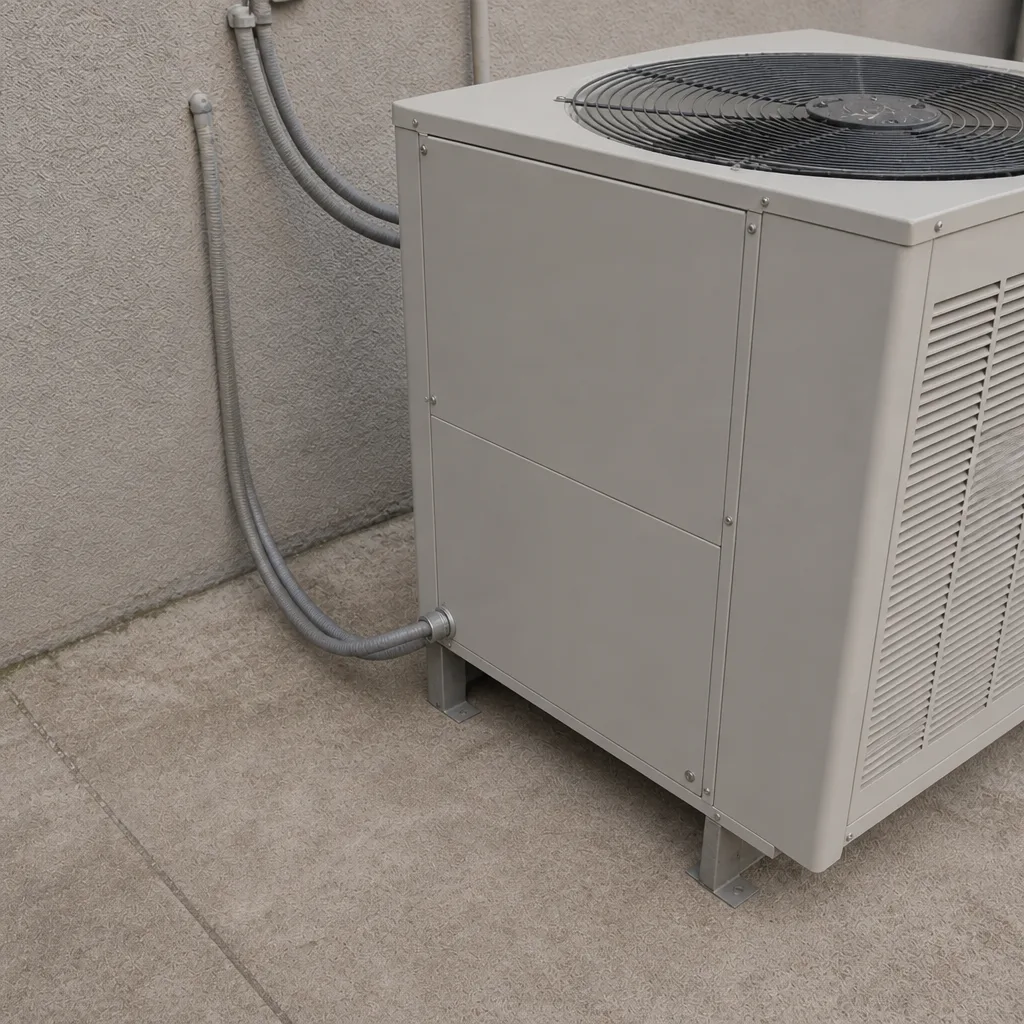
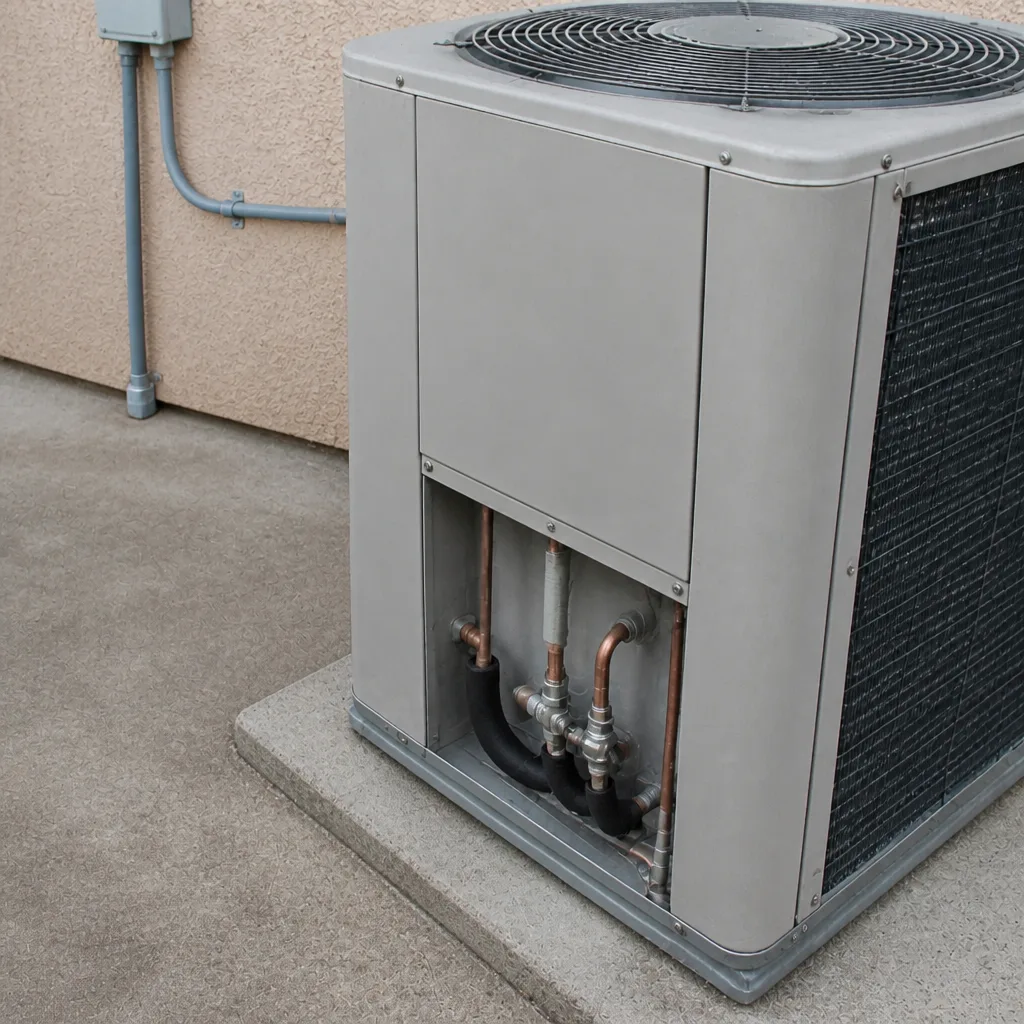
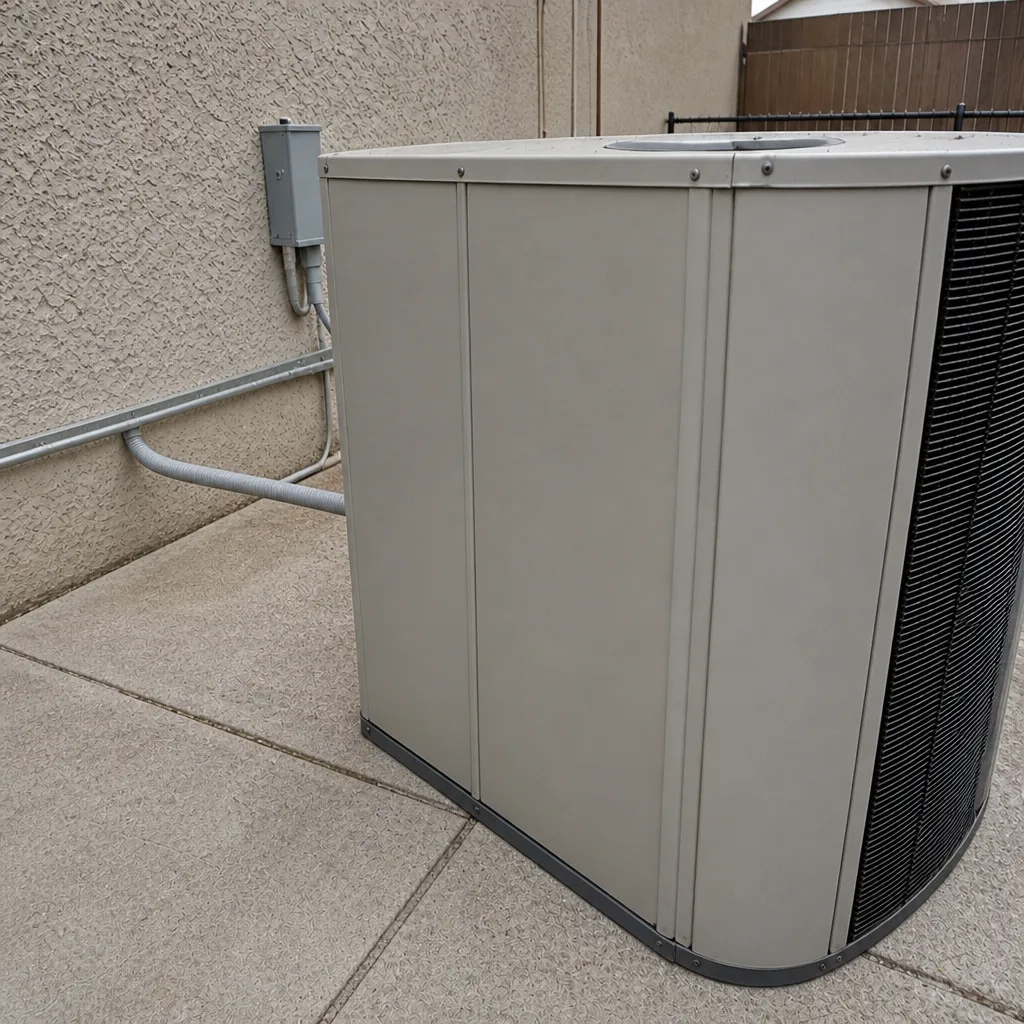
Here’s the visual test any homeowner can do. Walk outside and look at the condenser unit (the big box with the fan on top).
- Power it off at the disconnect or the breaker. Never work on it while it can start.
- Look at the fins through the side louvers. If they look matte gray, dusty, or fuzzy with cottonwood seed, they need a rinse.
- Run a finger along a fin edge. If it comes away with a visible film, that’s the same film insulating your coil.
- Look at the bottom tray for accumulated dust or debris. A clogged tray signals restricted airflow.
To clean it safely: power off, use a garden hose on low pressure, and spray from the inside out (top down through the fan opening) so you push debris out the way it came in. Never use a pressure washer, which bends the fins and ruins the coil. High-pressure water is the most common way homeowners turn a $40 rinse into a $400 coil repair. If the coil looks caked or the fins are bent, leave it to a technician. This is one of the tasks where a little caution saves money. Some units, particularly Lennox and Goodman models with tight fin spacing, need a chemical coil cleaner that we don’t recommend homeowners handle. If your unit falls in that category, we’ll note it on the inspection report.
Reading Your Electric Bill as an Early Warning System
Your electric bill is the cheapest diagnostic tool you own. When AC efficiency drops, the system runs longer to hit the same setpoint, and that shows up in your kWh usage before it shows up as a breakdown. In Sunrise Manor, most homes see their usage climb in June and peak in July or August. What you’re watching for is a jump that doesn’t match the weather.
Here’s how to use it:
- Log the kWh (not the dollar amount) each month during cooling season. Dollars vary with rate changes; kWh tracks actual usage.
- Compare year over year. If July this year ran 15% more kWh than July last year with similar temperatures, something changed in the equipment.
- Compare month over month within a season. A jump from June to July is normal. A jump from June to early July that’s out of line with the temperature climb is a flag.
- Cross-check with runtime. If the system is running noticeably longer to hold the same setpoint, suspect a dirty filter, a fouled condenser coil, or low refrigerant charge. All three show up as higher bills first.
A 15% to 20% rise in summer usage with no weather explanation is our rule of thumb for “get it checked.” That’s the window where a $150 filter-and-coil service prevents a $900 compressor situation. We’ve seen this exact pattern in Sunrise Manor homes repeatedly: a homeowner calls in August about a system that “just quit,” and the usage log shows it had been struggling since June. The bill knew first. If your usage is climbing and you’ve done the filter and coil work, that’s a sign to bring in a technician rather than wait.
What to Photograph Before You Call a Technician
This is the step almost nobody does, and it’s the one that turns a vague phone estimate into a real number. When you call Halden Heating & Air Sunrise Manor, we want to give you an upfront written price before any work starts. The more we can see before we arrive, the more accurate that price is. A technician who shows up blind has to diagnose on site; a technician who’s seen your photos can often quote the likely fix on the phone.
Here’s what to capture:
- The data plate on the outdoor unit. This is a metal label with the model and serial number. It tells us the brand (Carrier, Trane, Rheem, York, and others), the tonnage, and the age.
- The data plate on the indoor air handler or furnace. Same idea. Match it to the outdoor unit.
- The filter itself, plus the size printed on its edge. We can tell a lot from how loaded it is and what’s on it.
- The condenser coil fins, close up. Show us the dirt level.
- Any frost or ice. A frozen line or coil is a specific diagnosis (usually airflow or charge), and a photo confirms it.
- The thermostat display and your setpoint. Tells us whether the system is even trying to run.
- The breaker panel, if a breaker tripped. Show us which one.
- A quick video of the outdoor fan spinning (or not). Ten seconds is enough.
With those in hand, a call to (833) 892-8106 gets you a real conversation, not a “we’ll have to see.” We answer live, 24/7, and we’ll give you an honest read on whether it’s a filter-and-coil issue you can handle or something that needs a technician today.
The Pre-Season Walkthrough: A Numbered Checklist
Before the first 100-degree week in Sunrise Manor, run this walkthrough. It takes about 45 minutes and catches most of what fails in July.
- Replace the filter. Use MERV 8 or 11, correctly sized, snug in the slot.
- Clear the outdoor unit. Two feet of clearance on all sides, no stored items, no vegetation touching the cabinet.
- Rinse the condenser coil with a garden hose, power off, low pressure, inside out.
- Check the condensate drain. Pour a cup of water in the pan and confirm it drains freely. Clear any algae or dust blockage.
- Test the thermostat in cooling mode. Set it 5 degrees below room temp and confirm the system starts within a minute or two.
- Feel the supply air at a register. It should be noticeably cold (15 to 20 degrees below room temp is normal). Weak airflow is a flag.
- Listen at the outdoor unit. A healthy compressor hums; ticking, rattling, or short cycling means call a technician.
- Log your starting kWh. Write it down so you have a baseline for the efficiency watch.
If any step fails, don’t force it. Note what you saw and call. This is also the right moment to confirm your system’s brand-specific maintenance needs. Rheem and York units have their own coil-cleaner recommendations, and we adjust the walkthrough accordingly on the inspection. For the broader picture of how we handle a full service visit, see our Halden Heating & Air Sunrise Manor home page.
Common Mistakes to Avoid
- Following the “90-day filter” label literally. In Sunrise Manor’s dust and runtime, 90 days is often 30 days too long. Change monthly in peak summer and you’ll prevent most frozen-coil calls we see.
- Buying the highest MERV filter you can find. A MERV 13 in a system designed for MERV 8 restricts airflow and can ice the coil. Match the filter to the equipment, not to the marketing.
- Pressure-washing the condenser coil. Bent fins and a damaged coil cost far more than the cleaning saved. Low-pressure garden hose only.
- Ignoring a rising electric bill. A 15% jump with no weather explanation is the cheapest warning you’ll get. Waiting for the breakdown turns a small service into a compressor replacement.
- Stacking items against the outdoor unit. We regularly find stored lumber, pool equipment, or trash cans blocking airflow on Sunrise Manor units. That’s a self-inflicted efficiency loss.
- Running the system with a tripped breaker reset “just to see.” A breaker that trips repeatedly is a symptom, not a nuisance. Repeated resets can damage the compressor.
- Calling without photos. A vague “my AC isn’t working” call gets you a wide estimate range. Photos get you a real number before anyone drives out.
When to Call a Professional
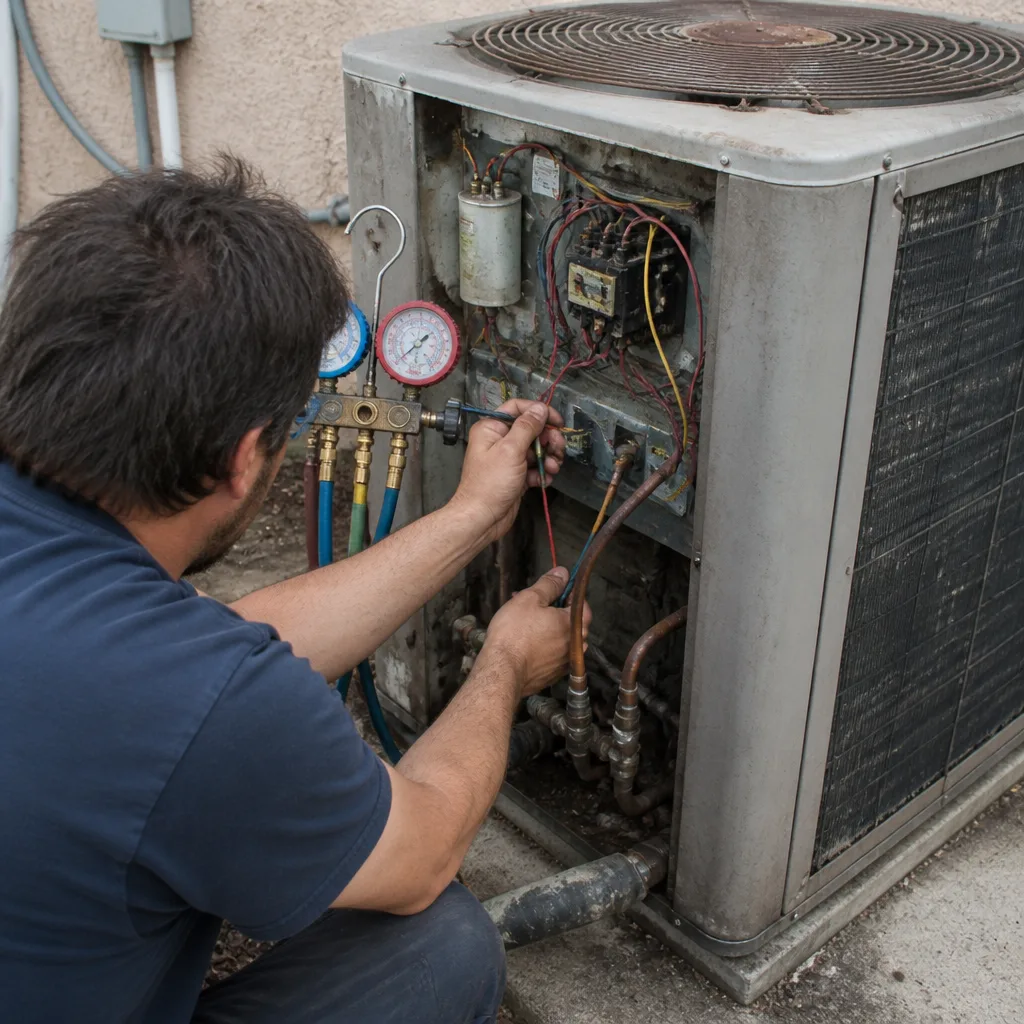
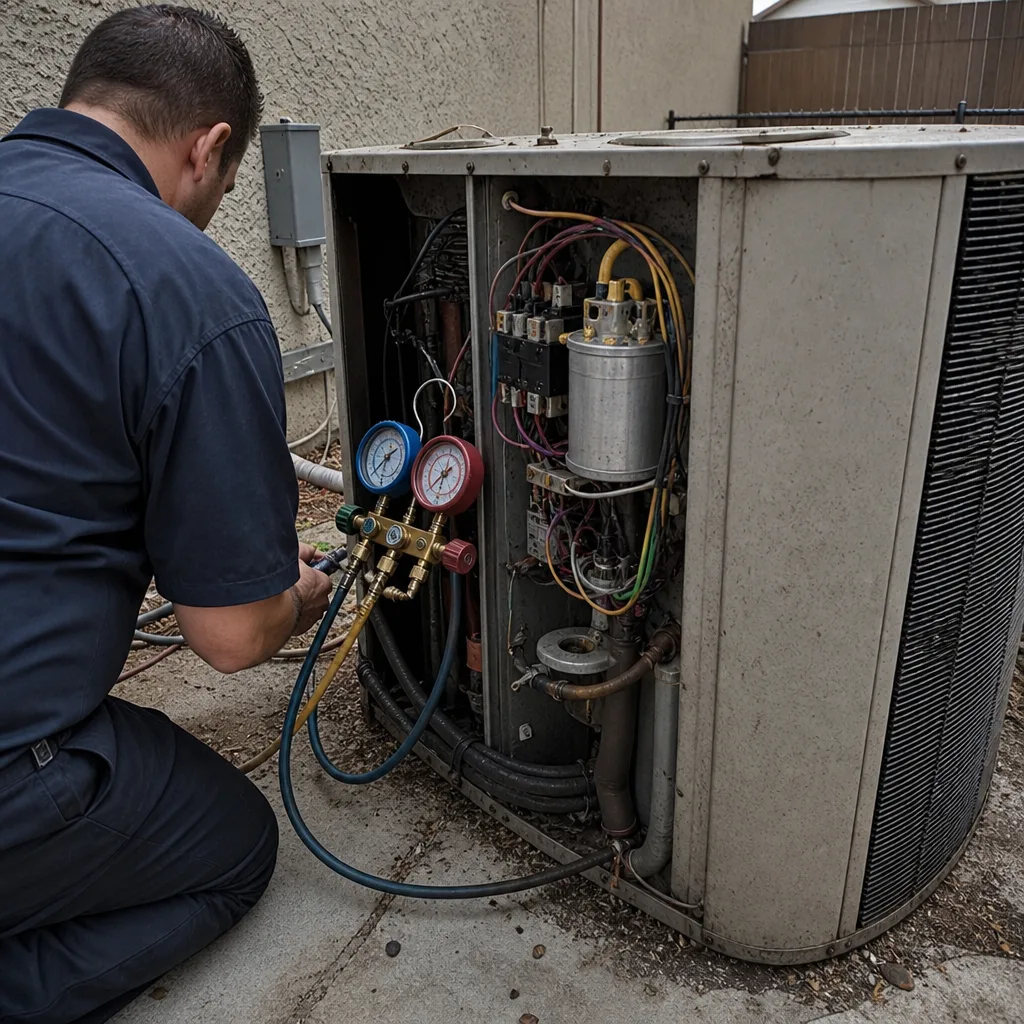
Some tasks belong in your hands. Others don’t. Call a licensed technician when you see ice or frost on the refrigerant lines or indoor coil (a sign of airflow or charge problems that need gauges to diagnose), when the outdoor fan won’t spin, when the breaker trips more than once, when you smell burning or hear grinding at the compressor, or when your electric usage climbs after you’ve done the filter and coil work. Refrigerant handling is regulated work; don’t attempt it. And if your system is over 15 years old and needs a major repair, it’s worth a conversation about whether repair or replacement makes more sense. Halden Heating & Air Sunrise Manor offers free estimates in Sunrise Manor. Call (833) 892-8106 and a real person picks up, any hour. Every job comes with a written price before work starts and a written guarantee, and if a repair fails, we come back at no charge. Our technicians have up to 22 years of experience and are certified on Carrier, Trane, Lennox, Goodman, Rheem, York, Daikin, Bryant, and American Standard equipment.
Frequently Asked Questions
Every 30 to 45 days during cooling season, and monthly in July and August if you have pets or live near open desert. The 90-day label on the filter box assumes an average climate and average runtime. Sunrise Manor runs hotter and dustier than that, so the filter loads faster. A clogged filter is the leading cause of frozen evaporator coils here, and a frozen coil is the leading reason we get called in summer.
MERV 8 to MERV 11 for most Sunrise Manor homes. MERV 8 catches the dust that fouls your coil while keeping airflow high, which matters when your system runs near-continuous in summer. MERV 13 and up can restrict airflow on a system not designed for it, and that restriction causes coil icing. If you want a higher rating, confirm with a technician that your equipment can handle it first. Call (833) 892-8106 for a free estimate and we’ll tell you what your system is rated for.
Every 4 to 6 weeks during the cooling season, not once a year as most manuals suggest. Desert dust and spring wind events coat the coil much faster here than in temperate markets. A dirty condenser coil can’t shed heat, so the compressor runs longer and hotter, which drives up your bill and shortens equipment life. Do the visual test monthly and rinse when the fins look dusty.
You can safely change the filter, clear the outdoor unit, and rinse the condenser coil with a garden hose on low pressure with the power off. Don’t open the refrigerant circuit, don’t pressure-wash the coil, and don’t dig into electrical components. If you’re not sure, leave it to a technician. The cost of a professional inspection is small next to a compressor replacement. Call (833) 892-8106 for a free estimate.
Almost always restricted airflow: a clogged filter, a fouled evaporator coil, a blocked return, or a collapsed duct. Less often it’s low refrigerant charge. When airflow drops, the coil gets too cold, and moisture in the air freezes on it, which makes airflow worse, which makes more ice. It’s a feedback loop. Turn the system off, change the filter, and if it freezes again, call a technician. Estimates are free at (833) 892-8106.
Yes, and March or April is the time to do it. A pre-season inspection catches the filter, coil, drain, and electrical issues before the first 100-degree week, when a breakdown is most expensive and least convenient. It’s also when we can confirm your filter rating and coil cleaning schedule for your specific equipment. Call (833) 892-8106 for a free estimate on a spring visit.
The Bottom Line
The Sunrise Manor AC maintenance checklist isn’t complicated, it’s just calibrated differently than the manual. Filter every 30 to 45 days in summer, condenser coil rinse every 4 to 6 weeks in dust season, a full inspection in March or April before the heat arrives, and an electric bill log as your early warning system. Photograph the data plates and the problem before you call, and you’ll get an accurate number instead of a guess. Do those things and you’ll prevent the frozen coil that sends most of your neighbors to the phone in July. If your system is already struggling, book a visit with a live arrival time and a written price before work starts. Call (833) 892-8106 for a free estimate.
Written by the team at Halden Heating & Air Sunrise Manor.
See the difference
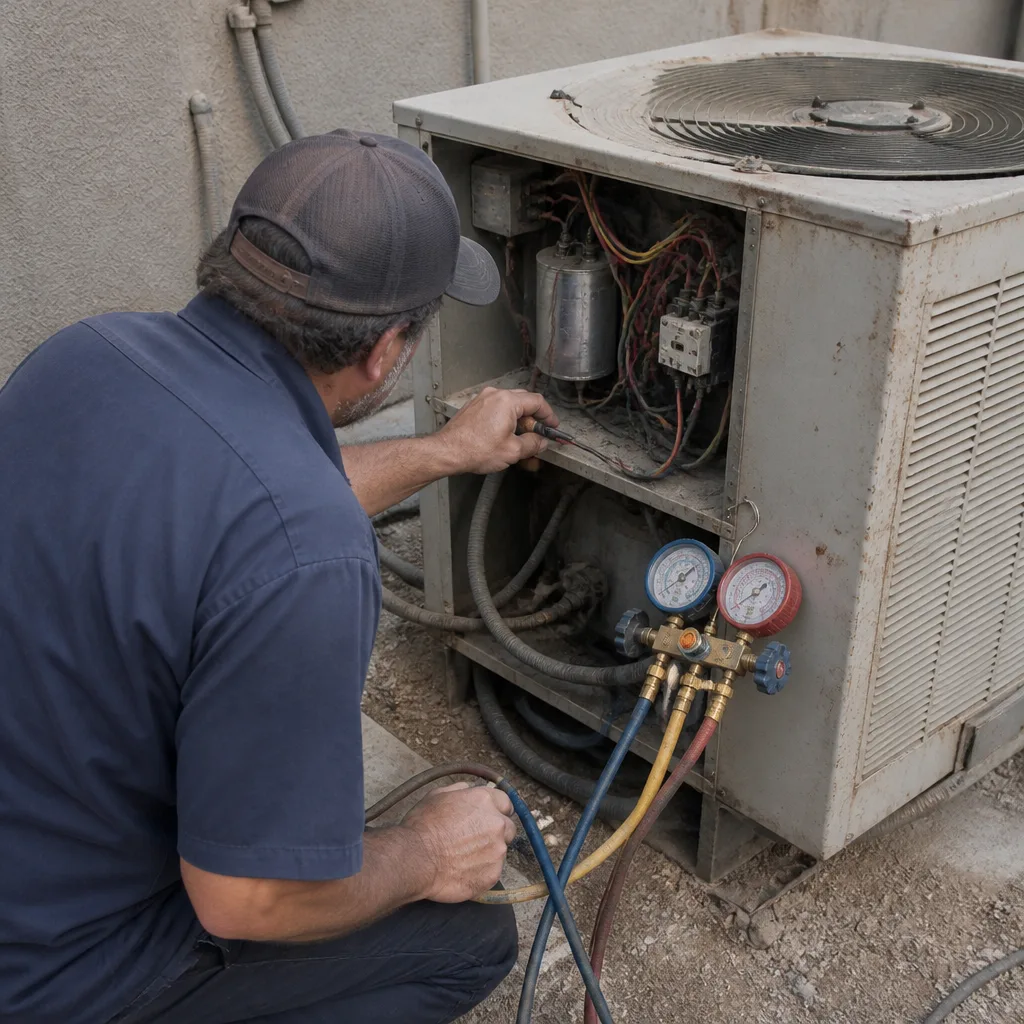 Before
 After
 Before
 After
 Before
 After